Good Fish Guide
Alaska pollock
(Theragra chalcogramma)
Also known as: Walleye pollock
Overview
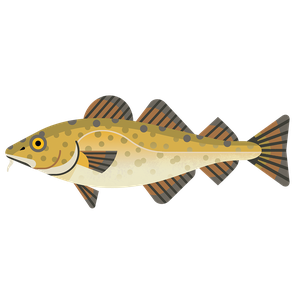
A member of the cod family, Alaska pollock is found throughout temperate and colder waters of the north Pacific and is the most abundant fish species in the Bering Sea, including areas under U.S. fisheries management jurisdiction. It is a relatively fast growing and short lived species and is sexually mature at around 3-4 years. Pollock have high fecundity or potential reproductive capacity - female pollock can produce more than two million eggs over the course of several weeks. It spawns in early spring from February to April and they can grow to about 90 cm and attain ages of 15-17 years. A more typical age is 5-6. Found in depths down to 900 m the species is also known as walleye pollock because of its large, distinctive eyes.
Ratings
Showing 7 results for Alaska pollock
Best Choice
OK - Needs Improvement
Avoid
Under review
Wild-caught
Location: Certified fleets only
Method: Net (pelagic trawl)
Certification: Marine Stewardship Council (MSC)
More infoGulf of Alaska - Wild-caught
Location: Certified fleets only
Capture methods: Net (pelagic trawl)
Certification: Marine Stewardship Council (MSC)
The stock of Alaska pollock in the Gulf of Alaska is above target levels and fishing pressure is within sustainable limits. A wide range of appropriate management measures are in place, enforced and fully effective. Management accounts for impacts on the pollock stock and the wider ecosystem. This fishery is Marine Stewardship Council (MSC) certified and covers nearly 100% of the catch in the area. Alaska pollock is caught by towing nets through the water. There is little or no impact on the seabed. There is occasional bycatch, but measures are in place to monitor and reduce it.Rating last updated May 2025.
Wild-caught
Location: Certified fleets only
Method: Net (pelagic trawl)
Certification: Marine Stewardship Council (MSC)
More infoSea of Okhotsk - Wild-caught
Location: Certified fleets only
Capture methods: Net (pelagic trawl)
Certification: Marine Stewardship Council (MSC)
The Alaska pollock stock in the Sea of Okhotsk is in a good state but fishing pressure is above sustainable limits. A number of appropriate management measures are in place. However, there are some concerns about the bycatch of juveniles. Most pollock is caught by mid-water trawling. There are no known habitat impacts, and bycatch is low. Most of the Sea of Okhotsk fishery is Marine Stewardship Council (MSC) certified.Rating last updated May 2025.
Wild-caught
Location: Certified fleets only
Method: Net (pelagic trawl)
Certification: Marine Stewardship Council (MSC)
More infoBering Sea (West): Navarinsky stock - Wild-caught
Location: Certified fleets only
Capture methods: Net (pelagic trawl)
Certification: Marine Stewardship Council (MSC)
The Alaska pollock stock in the Navarinsky zone of the western Bering Sea is in a good state and fishing pressure is within sustainable limits. A number of appropriate management measures are in place, and the fishery is MSC-certified. However, there are some concerns about the bycatch of juveniles. Most pollock is caught by mid-water trawling. There are no known habitat impacts, and bycatch is low.Rating last updated May 2025.
Wild-caught
Location: Certified fleets only
Method: Net (pelagic trawl)
Certification: Marine Stewardship Council (MSC)
More infoBering Sea and Aleutian Islands - Wild-caught
Location: Certified fleets only
Capture methods: Net (pelagic trawl)
Certification: Marine Stewardship Council (MSC)
The stocks of Alaska pollock in East Bering Sea and Aleutian Islands are slightly smaller than target levels, but fishing pressure is within sustainable limits. A wide range of appropriate management measures are in place, enforced and fully effective. Management accounts for impacts on the pollock stock and the wider ecosystem. This fishery has been independently certified to Marine Stewardship Council (MSC) standards and covers nearly 100% of the catch in the area. Alaska pollock is caught by towing nets through the water. There is little or no impact on the seabed. There is occasional bycatch, but the fishery is well monitored to ensure impacts are low.Rating last updated May 2025.
Bering Sea (West) - Wild-caught
Location: All areas
Capture methods: Net (pelagic trawl)
Western Bering Sea pollock is abundant and fishing pressure is within sustainable limits. Some appropriate management measures are in place. However, catch limits have been exceeded in recent years, which could be a threat to the population. Most Alaska pollock in this area is caught by mid-water trawling, which does not have habitat impacts. Impacts on vulnerable species are thought to be minimal.Rating last updated September 2022.
Gulf of Alaska - Wild-caught
Location: All areas
Capture methods: Net (pelagic trawl)
Updated: June 2020.
The stock of Alaskan pollock in the Gulf of Alaska is in a good state and fishing pressure is within sustainable limits. The Fishery Management Plan for groundfish in the Gulf of Alaska includes a total allowable catch, spatial and temporal closures and monitoring through high observer coverage and vessel monitoring systems. The majority of the targeted pollock fishery in this area is taken by pelagic trawls and as the fishery is pelagic, there is little impact with the seabed. Alaskan fisheries are thought to have low relative bycatch while landing more target catch than all other US regions as they target a highly productive, yet less biodiverse assemblage. There are defined limits for most bycatch species, and catches are well below these limits, therefore, bycatch are levels unlikely to be causing populations to decline.
Bering Sea and Aleutian Islands - Wild-caught
Location: All areas
Capture methods: Net (pelagic trawl)
Updated: June 2020.
The stock of Alaskan pollock in the East Bering Sea and Aleutian Islands is in a good state and fishing pressure is within sustainable limits. The Fishery Management Plan for Groundfish in this area includes a total allowable catch, spatial and temporal closures and monitoring through high observer coverage and vessel monitoring systems. In this fishery, pollock is exclusively targeted by pelagic trawl gear and there is little impact with the seabed. Alaskan fisheries are thought to have low relative bycatch while landing more target catch than all other US regions as they target a highly productive, yet less biodiverse assemblage. There are defined limits for most bycatch species, and catches are well below these limits, therefore, bycatch are levels unlikely to be causing populations to decline.
Sustainable swaps
Walleye pollock
Quickly check the sustainability of your fish or seafood with our step-by-step tool.
Find your fish or seafoodLearn more about how we calculate our sustainability ratings.
How our ratings work