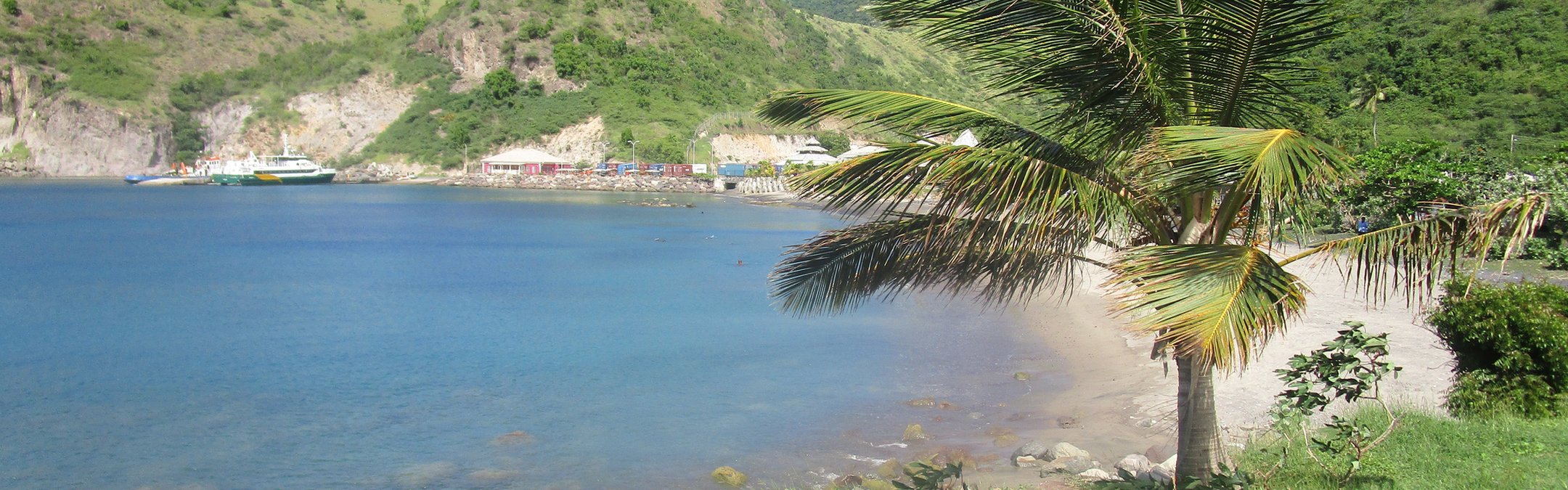
A sunny view of a calm, turquoise bay with a sandy beach and lush green hills in the background. A large palm tree is in the right foreground, and a ferry is docked on the left side of Little Bay in Montserrat.

Our work in the UKOTs

For over 20 years, we’ve been working in the Caribbean UK Overseas Territories of Anguilla, British Virgin Islands, Cayman Islands, Montserrat and Turks and Caicos Islands.

Our work in the Caribbean originally began with four years of working with local fishers and wider communities to help support and better manage turtle fisheries.

Now our key focus is to support our Caribbean UKOT partners in significantly improving management of their existing marine protected area (MPA) networks.

Our Caribbean UKOT MPA programme started in 2019, and our work is highlighting the urgent actions that need to be taken to significantly improve marine protected area management across the territories.

    We connect the Caribbean UKOTs to UK-based experts and we work hard to emphasise to ministers in Westminster the need to support the management of MPAs in our Caribbean Territories.

    Amdeep Sanghera, UK Overseas Territories Conservation Officer
    Great Blue Ocean Coalition

    Great Blue Ocean is a coalition between the Marine Conservation Society, the Blue Marine Foundation, Greenpeace, the Pew Trusts, the Royal Society for the Protection of Birds and the Zoological Society of London.

    Together, we’ve seen great successes as several large Marine Protected Areas have been designated in the waters of participating territories.

    Find out more about the Great Blue Ocean Coalition
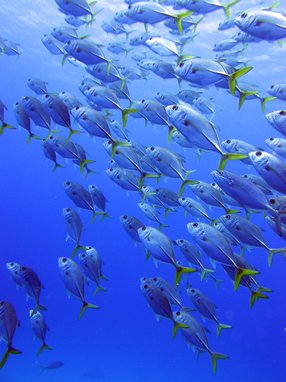
    Shoal of horse-eye jack

    Shoal of horse-eye jack  |  Image credit: David M. Stone
    Protecting turtles

    Marine turtles have been around for millions of years, covering great distances in our ocean and playing a crucial role in marine and coastal ecosystems.

    Through various projects, we're supporting our UKOT partners in the protection and management of their fragile environments and species. Our projects in the British Virgin Islands, Turks and Caicos, and Montserrat work alongside local communities to develop management and conservation measures to ensure a future for these incredible species.

    Discover how we protect turtles
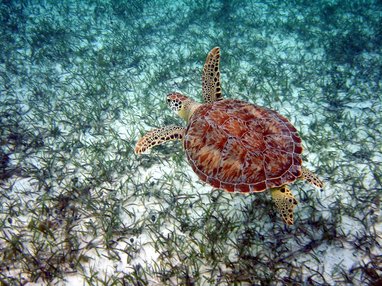
    A top down view of a green turtle swimming above a seagrass meadow

    Green turtle swimming above seagrass around the Turks and Caicos Islands  |  Image credit: Peter Richardson
    Conserving East Caicos wilderness area

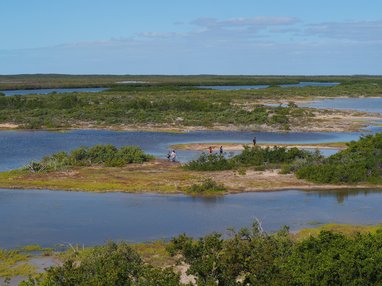
    East Caicos is the largest uninhabited island in the Caribbean. However, only 18% of the island is protected. As East Caicos is quite remote and difficult and expensive to get to, it has resulted in the majority of TCI’s population having never set foot on or experienced the island.​​​​​​

    Together with our partners, we’re helping to secure the future of this biodiversity hotspot.

    Find out about East Caicos
    East Caicos

    East Caicos  |  Image credit: Joe Jeffcoate
    Coral disease in Turks & Caicos

    With our financial support, one of our key allies, the Turks and Caicos Reef Fund (TCRF), have been tackling a highly lethal coral disease: Stony Coral Tissue Loss Disease (SCTLD).

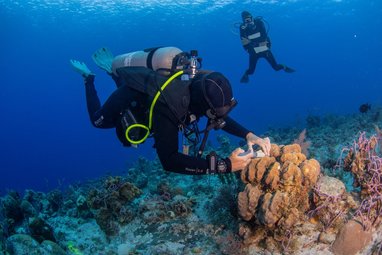
    SCTLD affects over 20 species of reef-building corals and was first discovered in the TCI in 2019. Once a coral colony is infected, without diagnosis and treatment the entire colony is expected to die within days.

    Learn about how we've tackled coral disease
    An underwater photograph of two scuba divers near a coral reef. The diver in the foreground, wearing a black wetsuit and fins, is injecting medicine into a large coral formation. Another diver is visible swimming in the blue water in the background.

    A diver applying treatment to counter coral disease in Turks & Caicos  |  Image credit: David Gallardo
    Sharks and rays in Anguilla

    We’re working with communities and local partners in Anguilla to improve awareness and understanding of sharks, their role in local ecosystems and livelihoods, and how best to protect them. Using the Community Voice Method for extensive consultation with people around Anguilla, we're taking account of views, values, perceptions and local knowledge about sharks and rays.

    Discover our work about protecting sharks and rays
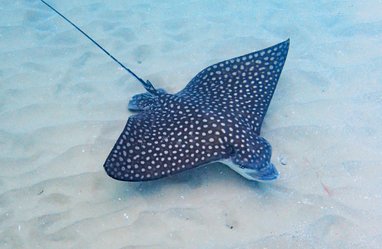
    A spotted eagle ray

    A spotted eagle ray  |  Image credit: Peter Richardson


    Get involved in your community