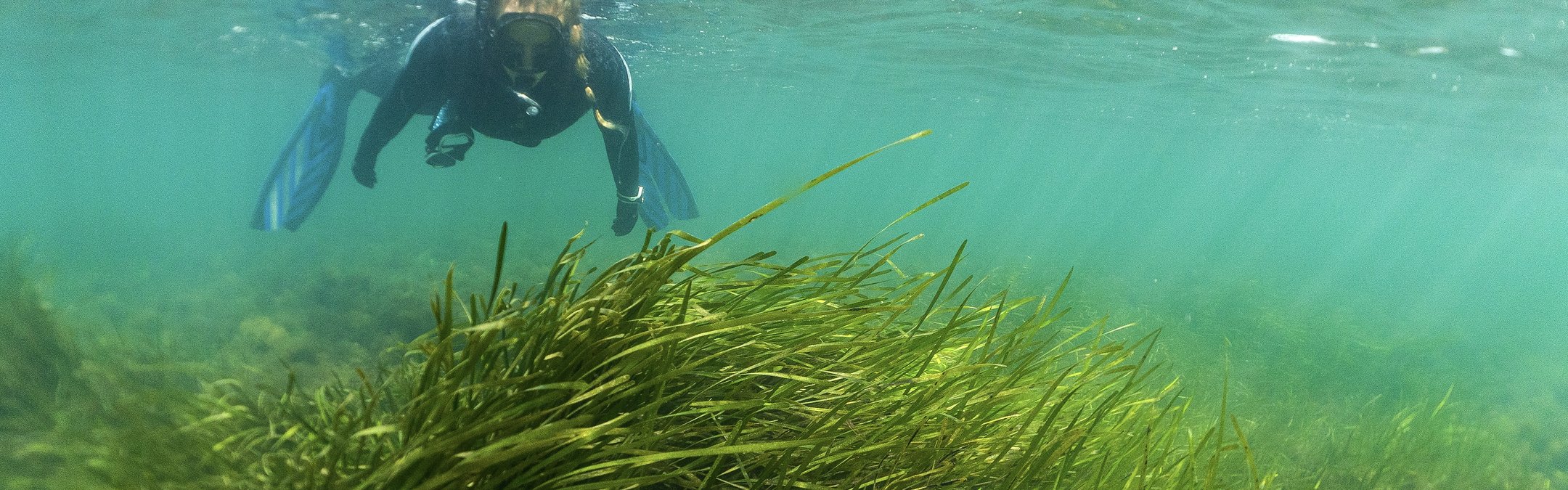
Saving seagrass in Plymouth
We've worked with partners to replace traditional mooring systems, replant seagrass in the area and raise awareness of seagrass conservation issues.
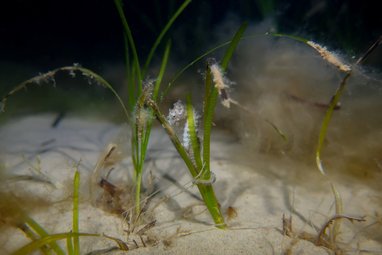
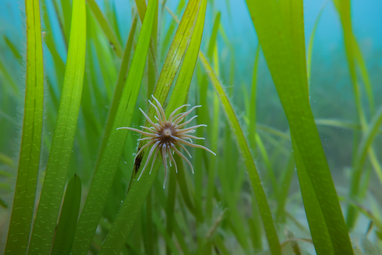
Spiny seahorses (one of the two seahorses found in the UK) live in seagrass beds | Image credit: Georgie Bull
Why are we protecting seagrass?
Seagrass and rich sediment inshore seabeds can lock in huge amounts of carbon. Not only that, seagrass also stabilises the sand around exposed coasts, protecting beaches from erosion. They are important nursery grounds for cuttlefish, feeding grounds for bass, crab and snails and they strip the water column of excess nutrients.
In order to make a real difference to the recovery of carbon storage habitats like seagrass beds, we need to repair the ones we have, and grow new beds. We also need the recreational boating community to demand a change to mooring systems that don’t damage the seafloor. We need to make as many boaters as possible aware of the implications of anchoring on seagrass beds to avoid unwanted damage.
We worked alongside Natural England, The Ocean Conservation Trust, The Royal Yachting Association, Plymouth City Council and Tamar Estuaries Consultative Forum as part of the ‘ReMEDIES’ (Reducing and Mitigating Erosion and Disturbance Impacts affEcting the seabed) project to achieve these goals.
For our part in the ReMEDIES project, we raised awareness of seagrass conservation issues through our Sea Champion network and online training and events. The wider ReMEDIES project is tasked with replanting and protecting up to 8 ha of seagrass in five English south coast Marine Protected Areas by the end of 2023.