

What is blue carbon?
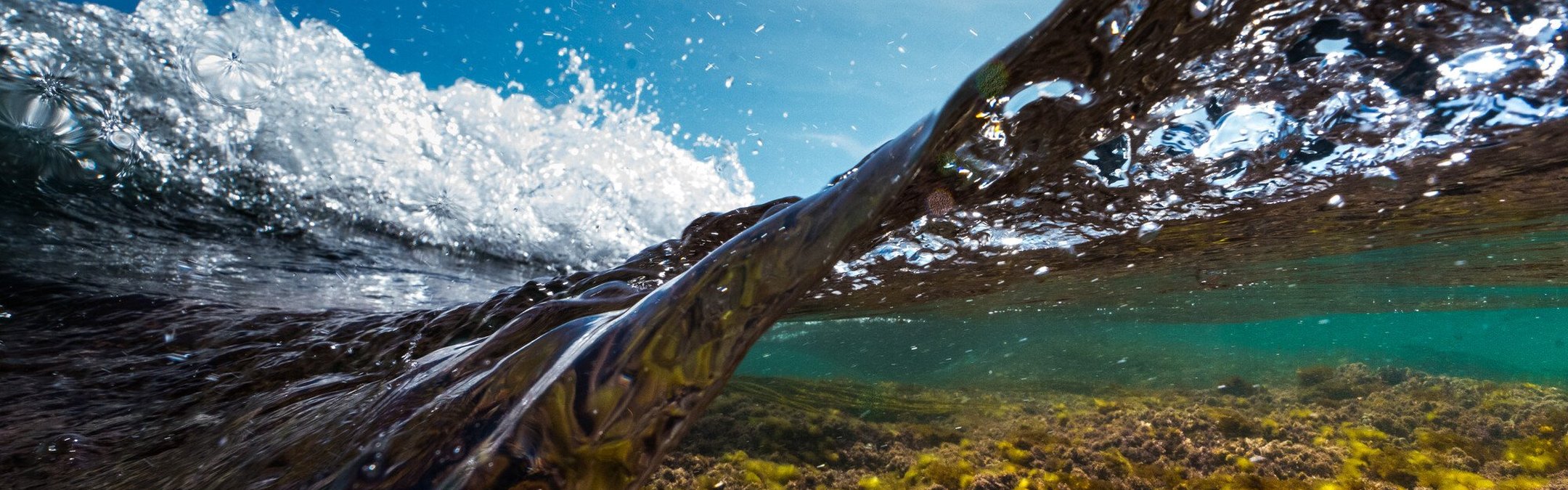
Marine ecosystems like seagrass meadows, saltmarshes and mangroves absorb or ‘draw down’ carbon dioxide from the water and atmosphere, just like plants and trees on land. The storage of carbon in marine habitats is called blue carbon. The storage of blue carbon can be in the plants themselves, like seaweed and seagrass; in the seafloor sediment where plants are rooted; or even in the animals which live in the water, including seabirds, fish and larger mammals.
Blue carbon is simply carbon absorbed from the water and atmosphere stored in the world’s seas and coasts.
Why blue carbon matters
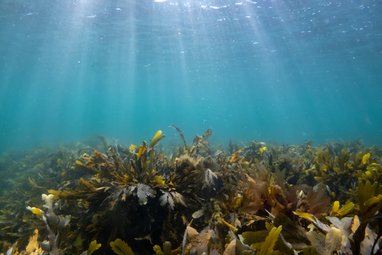
Image credit: Georgie Bull
- Globally, saltmarshes and seagrass – blue carbon sinks – draw down and store between them 235-450 million tonnes of carbon a year; almost half the emissions from the entire global transport sector.
- Scientists estimate that saltmarsh and seagrass habitats fix and store (or sequester) carbon at two to four times the rate of mature tropical forests. This means the UK’s saltmarshes and seagrass beds have the carbon storage potential of between 1,000 and 2,000 km2 of tropical forests.
- The UK’s shelf seas cover some 500,000 km2 and are estimated to store 205 million tonnes of carbon in seabed sediments – approximately 50 million tonnes more than held within our entire stock of standing forests – along with coastal seagrass and saltmarsh habitats, UK marine ecosystems store about 220 million tonnes of carbon.
The significant role of the world’s forests in reducing carbon emissions has been formally recognised through numerous initiatives and reforesting projects intended to keep carbon locked into the world’s forests on land.
Unfortunately, equivalent solutions in the ocean are often overlooked. If the UK is to reach its goal of net zero by 2050, blue carbon solutions must be considered in tandem with those on land.
Rewilding our waters
Rewilding Britain defines the concept of 'rewilding' as:
“The large-scale restoration of ecosystems to the point where nature is allowed to take care of itself. Rewilding seeks to reinstate natural processes and, where appropriate, missing species – allowing them to shape the land and sea and the habitats within.
"Rewilding encourages a balance between people and the rest of nature so that we thrive together. It can provide opportunities for communities to diversify and create nature-based economies; for living systems to provide the ecological functions on which we all depend; and for people to reconnect with wild nature."
Marine rewilding is the same idea applied to a marine environment. In some areas, this means ceasing all harmful activity, including damaging commercial fishing methods, such as bottom trawling, aggregate extraction, dredging or oil or gas exploitation and allowing the ecosystem to recover. In others, it may mean giving recovery a helping hand, through active restoration: reseeding an area with seagrass or returning lost species such as oysters.
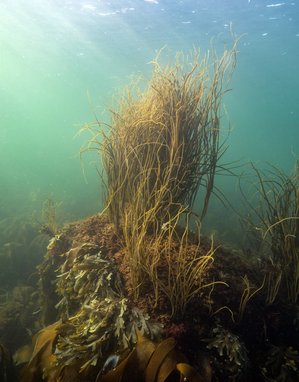
Image credit: James Lynott
What we're calling for
The development of a comprehensive Blue Carbon Strategy by the UK Government and devolved administrations, focusing on three key nature-based action areas:
- Scaling up marine rewilding for biodiversity and blue carbon benefits
- Integrating blue carbon protection and recovery into climate mitigation and environmental management policies
- Working with the private sector to develop and support sustainable and innovative low-carbon commercial fisheries and aquaculture
UK governments must act with urgency to invest in, co-develop and implement a four nation Blue Carbon Strategy.
Carbon contained in marine and coastal ecosystems must be considered in the same way as our woodlands and peatbogs…critical to the UK’s carbon strategy.
Our Blue Carbon report outlines how vital blue carbon solutions are to an effective strategy which reaches net zero by 2050.
The time is now
The time to act on blue carbon is now before it becomes too late. Coastal and marine ecosystems like mangroves, seagrasses, and salt marshes are all disappearing at an alarming rate, and with them, one of our most powerful tools to fight climate change.
The ocean and its blue carbon stores are a crucial part of the many urgent and varied solutions required to address the climate crisis. With the UK having already committed to significantly increase its spending on nature-based solutions, including those offered by the ocean, the time is now.
The Marine Conservation Society and Rewilding Britain are calling on UK governments to adopt ocean-based solutions at pace and scale by 2030.
Test your knowledge on blue carbon with our quiz
Co-funded and made possible with the support of EU Sealife funding

You might also be interested in...
Blue finance
The ocean is fundamental to all life on earth, but ocean health receives very little funding. Blue finance can change the fortunes of our seas and help to turn the tide on climate change with corporate help.

Building a sustainable blue economy
A sustainable blue economy can meet political and environmental goals. It can create economic growth, new jobs and financial resilience. This requires a shift towards a regenerative rather than extractive relationship towards our marine environment.

Blue economy podcast
In partnership with international law firm Simmons & Simmons, we were proud to create a podcast series dedicated to the blue heart of our planet.

