

Good Fish Guide
Atlantic cod
(Gadus morhua)
Overview
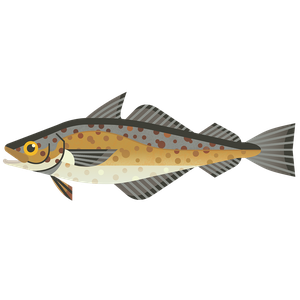
Cod belongs to a family of fish known as gadoids, which also includes species such as haddock, pollack, pouting and ling. It is a cold-temperate (boreal) marine, demersal (bottom-dwelling) species. Also found in brackish water. Their depth range is 0 - 600 m, but they are more usually found between 150 and 200 m. They have a common length of 100 cm. Maximum length 200 cm. Maximum published weight 96 kg and a maximum reported age of 25 years. In the North Sea cod mature at 4-5 years at a length of about 50 cm. They spawn in winter and the beginning of spring from February to April. Fecundity ranges from 2.5 million eggs in a 5 kg female to a record of 9 million eggs in a 34 kg female. Sex ratio is nearly 50%, with slight predominance of females. The fish has a protruding upper jaw, a conspicuous barbel on the lower jaw (used to look for food), and a light lateral line, curved above the pectoral fins. Widely distributed in a variety of habitats, from the shoreline down to the continental shelf. Juveniles prefer shallow (less than 10-30 m depth) sublittoral waters with complex habitats, such as seagrass beds, areas with gravel, rocks, or boulder, which provide protection from predators. Adults are usually found in deeper, colder waters. During the day, cod form schools and swim about 30-80 m above the bottom, dispersing at night to feed.
Ratings
Showing 32 results for Atlantic cod
Best Choice
OK - Needs Improvement
Avoid
Irish Sea - Wild-caught
Location: All areas
Capture methods: Bottom trawl (otter)
Irish Sea cod are below safe biological levels and there is no recovery plan in place to help the population recover. Therefore, it receives a critical fail for stock status and is a default red rating. Atlantic cod is listed by OSPAR as a threatened and/or declining species.Rating last updated August 2024.
Wild-caught
Location: All areas
Method: Bottom trawl (beam), Bottom trawl (otter), Hook & line (handline), Net (demersal seine), Net (gill or fixed)
More infoCeltic Seas (southern), English Channel (west) - Wild-caught
Location: All areas
Capture methods: Bottom trawl (beam), Bottom trawl (otter), Hook & line (handline), Net (demersal seine), Net (gill or fixed)
The Celtic Sea cod population is at dangerously low levels, and there is no plan in place to help it recover. Therefore, it is Fish to Avoid.Rating last updated: January 2023
Northern Shelf: Southern substock - Wild-caught
Location: All areas
Capture methods: Bottom trawl (otter)
The Southern substock of Northern Shelf cod is below safe biological levels and fishing pressure is too high. There is no precautionary recovery plan in place. Therefore, this substock receives a critical fail for stock status and is a Fish to Avoid.Rating last updated August 2024.
West of Scotland - Wild-caught
Location: All areas
Capture methods: Bottom trawl (otter)
West of Scotland cod is below safe biological levels and there is no recovery plan in place to help the population grow back. Therefore, it receives a critical fail for stock status and is a default red rating. Atlantic cod is listed by OSPAR as a threatened and/or declining species.Rating last updated: July 2022
North Sea, English Channel (East), Skagerrak - Wild-caught
Location: All areas
Capture methods: Net (gill or fixed)
North Sea cod is below safe biological levels and there is no recovery plan in place to help the population grow back. Therefore, it receives a critical fail for stock status and is a default red rating. Atlantic cod is listed by OSPAR as a threatened and/or declining species.Rating last updated: July 2022
Wild-caught
Location: All areas
Method: Bottom trawl (otter)
Certification: Fishery Improvement Project (FIP)
More infoNorth Sea, English Channel (East), Skagerrak - Wild-caught
Location: All areas
Capture methods: Bottom trawl (otter)
Certification: Fishery Improvement Project (FIP)
North Sea cod is below safe biological levels and there is no recovery plan in place to help the population grow back. Therefore, it receives a critical fail for stock status and is a default red rating. Atlantic cod is listed by OSPAR as a threatened and/or declining species.Rating last updated: July 2022
Celtic Seas (southern), English Channel (west) - Wild-caught
Location: Cornwall
Capture methods: Net (gill or fixed)
For more information about this rating please visit: http://www.cornwallgoodseafoodguide.org.uk/fish-guide/cod.php
Celtic Seas (southern), English Channel (west) - Wild-caught
Location: All areas
Capture methods: Bottom trawl (beam)
The Celtic Sea cod population is at dangerously low levels, and there is no plan in place to help it recover. Therefore, it is Fish to Avoid.Rating last updated: January 2023
Celtic Seas (southern), English Channel (west) - Wild-caught
Location: All areas
Capture methods: Net (demersal seine)
The Celtic Sea cod population is at dangerously low levels, and there is no plan in place to help it recover. Therefore, it is Fish to Avoid.Rating last updated: January 2023
Kattegat - Wild-caught
Location: All areas
Capture methods: Bottom trawl (otter)
Default red rating : Cod in the Kattegat is at a historically low level, as is recruitment of young fish entering the stock, and the advice is for 0 catch in 2020. Fishing pressure has recently increased. Cod is mainly caught as bycatch in the Nephrops fishery. While there used to be incentives for highly selective gear that would reduce cod catches, these have been removed. Discards of cod include a high proportion of young fish (aged 1 and 2). There is no management or recovery plan in place for this stock, resulting in a Critical Fail.Rating last updated: July 2020
Kattegat - Wild-caught
Location: All areas
Capture methods: Net (gill or fixed)
Default red rating. Cod in the Kattegat is at a historically low level, as is recruitment of young fish entering the stock, and the advice is for 0 catch in 2020. Fishing pressure has recently increased. Cod is mainly caught as bycatch in the Nephrops fishery. While there used to be incentives for highly selective gear that would reduce cod catches, these have been removed. Discards of cod include a high proportion of young fish (aged 1 and 2). There is no management or recovery plan in place for this stock, resulting in a Critical Fail.Rating last updated: July 2020
Kattegat - Wild-caught
Location: All areas
Capture methods: Net (demersal seine)
Default red rating. Cod in the Kattegat is at a historically low level, as is recruitment of young fish entering the stock, and the advice is for 0 catch in 2020. Fishing pressure has recently increased. Cod is mainly caught as bycatch in the Nephrops fishery. While there used to be incentives for highly selective gear that would reduce cod catches, these have been removed. Discards of cod include a high proportion of young fish (aged 1 and 2). There is no management or recovery plan in place for this stock, resulting in a Critical Fail.Rating last updated: July 2020
Baltic Sea (East) (Subdivisions 24-32) - Wild-caught
Location: All areas
Capture methods: Bottom trawl (otter)
Default red rating. This stock is below its lower limit (Blim, meaning its ability to reproduce may be impaired) and there is no recovery plan in place. Advice is for zero catch, but a Total Allowable Catch of 7,500 tonnes was set for 2020. The lack of recovery plan and catches against advice result in this rating receiving a Critical Fail with regard to stock status.Rating last updated: June 2020
Under review
Northeast Arctic (Barents and Norwegian Sea) - Wild-caught
Location: All areas
Capture methods: Bottom trawl (otter)
The population of cod in the northeast Arctic is subject to overfishing and is being overfished. There is a management plan, which is responsive to stock status to an extent, but it has not protected the stock from overexploitation. Most Arctic cod catches are by otter trawls, which are likely to cause some damage to the seabed. There are measures to protect habitats and reduce bycatch in this fishery. However, there is unsustainable bycatch of endangered golden redfish, which is of significant concern.Rating last updated August 2025.
Rockall - Wild-caught
Location: All areas
Capture methods: Bottom trawl (otter)
Data surrounding Rockall cod is limited. There is concern for both biomass and fishing pressure. The Rockall cod stock is at a very low level, although recent data indicate that it may be starting to increase. Landings have been above the advice since 2016, and fishing pressure is currently unknown related to reference points, therefore there is concern for fishing pressure. Landings of cod from this area in the 1980s-90s were relatively high, often between 1,500-2,000 tonnes. However since 2004 the landings have been consistently below 100 tonnes. This dramatic decline in landings is likely indicative of a depleted stock. Total Allowable Catches and landings are above recommended limits, although effort in the fishery has decreased since 2010. The main management measures relate to catch limits, which have been set significantly higher than scientific advice in recent years. Management is therefore not following scientific advice. Most Rockall cod are caught by otter trawls as bycatch, which is likely to cause some damage to the seabed. Bycatch is moderate and may include vulnerable species such as blue and flapper skate.Rating last updated August 2024.
Faroe Plateau - Wild-caught
Location: All areas
Capture methods: Hook & line (longline)
The Faroe Plateau cod stock overfished and subject to overfishing. Some management measures are in place and a management plan was introduced in 2021. However, catches have exceeded advice in recent years. Most Faroe Plateau cod is caught by longlining. This method has a bycatch of northern fulmars, and more data is needed to fully understand the impact on the population.Rating last updated December 2025.
Faroe Plateau - Wild-caught
Location: All areas
Capture methods: Hook & line (jig)
The Faroe Plateau cod stock overfished and subject to overfishing. Some management measures are in place and a management plan was introduced in 2021. However, catches have exceeded advice in recent years. Some Faroe Plateau cod is caught by jigging. This is a low impact method that is not thought to have bycatch or habitat impacts.Rating last updated December 2025.
Faroe Plateau - Wild-caught
Location: All areas
Capture methods: Bottom trawl (otter)
The Faroe Plateau cod stock overfished and subject to overfishing. Some management measures are in place and a management plan was introduced in 2021. However, catches have exceeded advice in recent years. Some Faroe Plateau cod is caught by otter trawls, which are likely to cause some damage to the seabed. Bycatch is moderate and may include vulnerable species. Monitoring of bycatch is poor and better data is needed.Rating last updated December 2025.
Wild-caught
Location: Certified fleets only
Method: Hook & line (longline)
Certification: Marine Stewardship Council (MSC)
More infoIceland - Wild-caught
Location: Certified fleets only
Capture methods: Hook & line (longline)
Certification: Marine Stewardship Council (MSC)
Icelandic cod is abundant and not subject to overfishing. There is a management plan in place, which has successfully reduced fishing pressure. Some Icelandic cod is caught by longlining. This method can have a bycatch of vulnerable species, including spotted wolffish. All Icelandic cod landed by the Icelandic fleet is MSC certified. Certification is conditional on having a strategy to avoid bycatch, and better data to prove that it is not having a detrimental impact on Endangered, Threatened or Protected species.Rating last updated July 2023.
Wild-caught
Location: Certified fleets only
Method: Net (gill or fixed)
Certification: Marine Stewardship Council (MSC)
More infoIceland - Wild-caught
Location: Certified fleets only
Capture methods: Net (gill or fixed)
Certification: Marine Stewardship Council (MSC)
Icelandic cod is abundant and not subject to overfishing. There is a management plan in place, which has successfully reduced fishing pressure. Some cod is caught by gillnetting, which can have a bycatch of marine mammals and seabirds. All Icelandic cod landed by the Icelandic fleet is MSC certified. Certification is conditional on having a strategy to avoid bycatch, and better data to prove that it is not having a detrimental impact on Endangered, Threatened or Protected species.Rating last updated July 2023
Wild-caught
Location: Certified fleets only
Method: Bottom trawl (otter)
Certification: Marine Stewardship Council (MSC)
More infoIceland - Wild-caught
Location: Certified fleets only
Capture methods: Bottom trawl (otter)
Certification: Marine Stewardship Council (MSC)
Icelandic cod is abundant and not subject to overfishing. There is a management plan in place, which has successfully reduced fishing pressure. Most Icelandic cod is caught by longlining. This method can have a bycatch of vulnerable species, including spotted wolffish and beaked redfish. All Icelandic cod landed by the Icelandic fleet is MSC certified. Certification is conditional on having a strategy to avoid bycatch, and better data to prove that it is not having a detrimental impact on Endangered, Threatened or Protected species.Rating last updated July 2023
West Greenland: Inshore (Southern) - Wild-caught
Location: All areas
Capture methods: Fish trap
West Greenland inshore cod is being overfished, but the southern stock component is abundant. Few appropriate management measures are in place. There is no management plan and catch limits have substantially exceeded scientific advice. Most inshore west Greenland cod is caught by traps known as poundnets, which are a relatively low-impact way of fishing.Rating last updated July 2023
Wild-caught
Location: All areas
Method: Hook & line (handline), Hook & line (longline), Net (gill or fixed)
Certification: Fishery Improvement Project (FIP)
More infoNewfoundland and Labrador (Northern stock, 2J3KL) - Wild-caught
Location: All areas
Capture methods: Hook & line (handline), Hook & line (longline), Net (gill or fixed)
Certification: Fishery Improvement Project (FIP)
This rating is under review.
Wild-caught
Location: Certified fleets only
Method: Bottom trawl (otter)
Certification: Marine Stewardship Council (MSC)
More infoNortheast Arctic (Barents and Norwegian Sea) - Wild-caught
Location: Certified fleets only
Capture methods: Bottom trawl (otter)
Certification: Marine Stewardship Council (MSC)
The population of cod in the northeast Arctic is subject to overfishing and is being overfished. There is a management plan, which is responsive to stock status to an extent, but it has not protected the stock from overexploitation. Most Arctic cod catches are by otter trawls, which are likely to cause some damage to the seabed. There are measures to protect habitats and reduce bycatch in this fishery. However, there is unsustainable bycatch of endangered golden redfish, which is of significant concern.Rating last updated August 2025.
Wild-caught
Location: Certified fleets only
Method: Hook & line (longline)
Certification: Marine Stewardship Council (MSC)
More infoNortheast Arctic (Barents and Norwegian Sea) - Wild-caught
Location: Certified fleets only
Capture methods: Hook & line (longline)
Certification: Marine Stewardship Council (MSC)
The population of cod in the northeast Arctic is subject to overfishing and is being overfished. There is a management plan, which is responsive to stock status to an extent, but it has not protected the stock from overexploitation. Some Arctic cod is caught by longlining. This method is thought oto have low levels of bycatch, but the impacts of the fishery are not fully understood. This rating covers MSC-certified longline Arctic cod fisheries only.Rating last updated August 2025.
West Greenland: Offshore - Wild-caught
Location: All areas
Capture methods: Bottom trawl (otter)
West Greenland offshore cod is being overfished and is depleted. Few appropriate management measures are in place. There is no management plan and catch limits have substantially exceeded scientific advice. Most offshore west Greenland cod is caught by trawling, which is likely to cause some damage to the seabed.Rating last updated July 2023.
West Greenland: Inshore (Northern) - Wild-caught
Location: All areas
Capture methods: Fish trap
West Greenland inshore cod is being overfished, and the northern stock component is depleted. Few appropriate management measures are in place. There is no management plan and catch limits have substantially exceeded scientific advice. Most inshore west Greenland cod is caught by traps known as poundnets, which are a relatively low-impact way of fishing.Rating last updated July 2023
Northern Shelf: Northwestern substock - Wild-caught
Location: All areas
Capture methods: Bottom trawl (otter)
The northwestern substock of Northern Shelf cod is abundant, but fishing pressure is too high. Management has not historically been appropriate for protecting and recovering cod stocks in this area. Most cod catches are by otter trawls, which are likely to cause some damage to the seabed and bycatch other species.Rating last updated August 2024.
Northern Shelf: Viking substock - Wild-caught
Location: All areas
Capture methods: Bottom trawl (otter)
The Viking substock of Northern Shelf cod is overfished and fishing pressure is too high. Management has not historically been appropriate for protecting and recovering cod stocks in this area. Most cod catches are by otter trawls, which are likely to cause some damage to the seabed. Bycatch is moderate and may include vulnerable species such as blue and flapper skate. There may also be bycatch of cod from the highly depleted Southern substock.Rating last updated August 2024.
East Greenland - Wild-caught
Location: All areas
Capture methods: Fish trap
Cod in East Greenland is very data limited. For this reason, we consider there to be concern for the biomass and fishing pressure. Few appropriate management measures are in place. There is a management plan but, historically, catch limits have substantially exceeded scientific advice. Most East Greenland cod is caught by traps known as poundnets. This is a generally low impact method of fishing.Rating last updated May 2024.
Baltic Sea (West) (Subdivisions 22-24) - Wild-caught
Location: All areas
Capture methods: Bottom trawl (otter)
Western Baltic cod is overfished and subject to overfishing, although the stock status seems to be improving. In 2020 the biomass of the stock remains below, but close to, MSY Btrigger, and is at the highest level since 2008. The stock has been subject to overfishing since the 1980s, although fishing pressure (F) has been declining since 2013. In 2019, fishing pressure was above FMSY but below Flim, and the lowest for over 30 years. Management measures are in place, and catch limits have followed scientific advice for the last two years. However, management has not yet succeeded in bringing fishing pressure and stock size to their respective targets. There has been a recent increase in unreported catches owing to restrictions on targeted fishing in some areas, while a closure to protect spawning cod has recently ceased. Recreational catches are significant, adding to the fishing pressure on this stock. This stock is caught by demersal trawling and gillnets. Trawling can have benthic impacts, while gillnetting can bycatch numerous vulnerable species, including harbour porpoise and seabirds.Rating last updated: June 2020
Baltic Sea (West) (Subdivisions 22-24) - Wild-caught
Location: All areas
Capture methods: Net (gill or fixed)
Western Baltic cod is overfished and subject to overfishing, but is in a better state than Eastern cod and the stock status seems to be improving. In 2020 the spawning stock biomass remains below, but close to, MSY Btrigger. Management measures are in place, and catch limits have followed scientific advice for the last two years. However, fishing pressure and stock size remain above and below their respective targets. There has been a recent increase in unreported catches owing to restrictions on targeted fishing in some areas, while a closure to protect spawning cod has recently ceased. Recreational catches are significant, adding to the fishing pressure on this stock. This stock is caught by demersal trawling and gillnets. Trawling can have benthic impacts, while gillnetting can bycatch numerous vulnerable species, including harbour porpoise and seabirds.Rating last updated: June 2020
Sustainable swaps
Atlantic cod
Quickly check the sustainability of your fish or seafood with our step-by-step tool.
Find your fish or seafoodLearn more about how we calculate our sustainability ratings.
How our ratings work
