
Good Fish Guide

Black bream

(Spondyliosoma cantharus)

Also known as: Porgy, Seabream

Think before you buy!
Some sources of this species are more sustainable than others. View ratings.

Overview

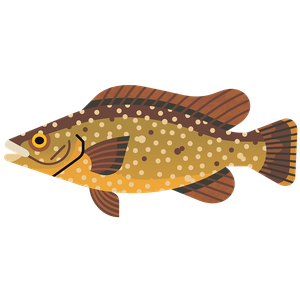
A member of a group of fish known as Sparidae, the black bream is one of two species commonly found in northern European seas. Found off south-west Britain and east Ireland in the English Channel and the Irish Sea. Spawning occurs in April and May in a number of inshore waters, such as the English Channel. Since black bream aggregate to spawn in predictable times and locations, the species can be vulnerable to high pressure from anglers. They are called black bream because they turn a jet black colour when they are courting. Black seabream are unusual in that they are sequential hermaphrodites (undergoing a sex change during their lives), maturing as females at a length of 23cm, then as males at around 30cm. All fish over 40cm are males. The maximum reported age, length and weight are 15 years, 60cm and 1.2kg respectively. They are found over seagrass beds and rocky and sandy bottoms between about 5m to 300m. Black bream lay eggs in a nest that the male has excavated on sand with its tail. The larger the female, the more fecund or more eggs she lays, e.g. a female of 18.5cm will lay aroud 31,000 eggs compared to a female of 33.5cm which lays around to 554,000 eggs. Gregarious, sometimes in large schools but the males can also be very aggressive when they are protecting the nests. Omnivorous, feeding on seaweeds and small invertebrates, especially crustaceans. Likely predators on black bream eggs are clawed crustaceans. Adult black bream have few predators, however a few are likely to be taken by seabirds and marine mammals.

Ratings

Showing 15 results for Black bream
Best Choice

Rated 1-2
Showing 0 of 15 results

OK - Needs Improvement

Rated 3-4
Showing 0 of 15 results

Avoid

Rated 5
Showing 0 of 15 results

Under review

Ratings that are Under Review
Showing 15 of 15 results
?

Wild-caught

Location: Southern IFCA District (0-6nm)

Method: Hook & line (pole & line)

More info
?

Wild-caught

Location: Southern IFCA District (0-6nm)

Method: Net (pelagic trawl)

More info
?

Wild-caught

Location: Southern IFCA District (0-6nm)

Method: Net (gill or fixed)

More info
?

Wild-caught

Location: Southern IFCA District (0-6nm)

Method: Net (demersal seine)

More info
?

Wild-caught

Location: Sussex IFCA District (0-6nm)

Method: Hook & line (pole & line)

More info
?

Wild-caught

Location: Sussex IFCA District (0-6nm)

Method: Net (pelagic trawl)

More info
?

Wild-caught

Location: Sussex IFCA District (0-6nm)

Method: Net (gill or fixed)

More info
?

Wild-caught

Location: Sussex IFCA District (0-6nm)

Method: Net (demersal seine)

More info
?

Wild-caught

Location: All areas except Sussex, Southern, and Cornwall IFCA districts

Method: Net (pelagic trawl)

More info
?

Wild-caught

Location: All areas except Sussex, Southern, and Cornwall IFCA districts

Method: Net (demersal seine)

More info
?

Wild-caught

Location: All areas except Sussex, Southern, and Cornwall IFCA districts

Method: Hook & line (pole & line)

More info
?

Wild-caught

Location: All areas except Sussex, Southern, and Cornwall IFCA districts

Method: Net (gill or fixed)

More info
?

Wild-caught

Location: Cornwall IFCA District (0-6nm)

Method: Net (gill or fixed)

More info
?

Wild-caught

Location: Cornwall IFCA District (0-6nm)

Method: Hook & line (pole & line)

More info
?

Wild-caught

Location: Cornwall IFCA District (0-6nm)

Method: Bottom trawl (otter)

More info
Also known as

Porgy

Seabream

Need help finding the right rating?

Quickly check the sustainability of your fish or seafood with our step-by-step tool.

Find your fish or seafood
How do we work out our ratings?

Learn more about how we calculate our sustainability ratings.

How our ratings work