
Good Fish Guide
Giant river prawn
(Macrobrachium rosenbergii)
Overview
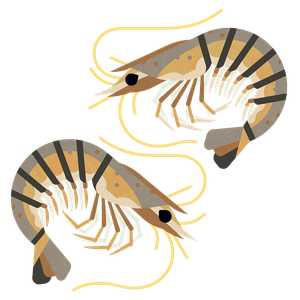
This large freshwater shrimp is native to the Indo-Pacific region, northern Australia and Southeast Asia. Males can reach total length of 320 mm; females 250 mm. Body usually greenish to brownish grey, sometimes more bluish, darker in larger specimens. Morphologically complex: eleven larval stages ; adult males of 3 types: 'Small males' which , if conditions allow, metamorphose into bigger 'Orange Claws' which in turn can become 'Blue Claws' whose striking second, claw-bearing legs may become twice as long as their body. All 3 types are sexually active. While M. rosenbergii is considered a freshwater species, eggs are laid in estuaries & the larval stage of the animal depends on brackish water . The female carries the fertilised eggs with her until they hatch; the time may vary, but is generally less than three weeks. Females lay 10,000 to 50,000 eggs up to five times per year. Once the individual shrimp has grown beyond the planktonic stage and become a juvenile, it will live entirely in freshwater. Adult prawns can walk as well as swim and can climb up vertical surfaces (small waterfalls, weirs, etc.) and cross land. Farmed animals have escaped into the wild. Larvae mostly consume zooplankton (mainly minute crustaceans), very small worms, and larval stages of other crustaceans. Post larvae and adults are omnivorous, eating algae, aquatic plants, molluscs, aquatic insects, worms, and other crustaceans
Ratings
Showing 1 result for Giant river prawn