Good Fish Guide
Lemon sole
(Microstomus kitt)
Overview
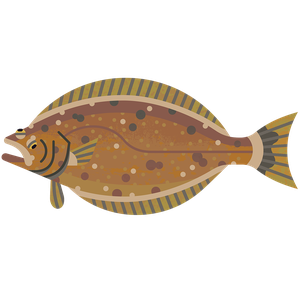
Lemon sole is a widely distributed flatfish which is found in shelf waters of the North Atlantic, from the White Sea and Iceland southward to the Bay of Biscay. Lemon sole appears to prefer sandy and gravelly substrates, living deeper and at higher salinity and lower temperature than plaice or sole. Sexual maturity occurs in males at 3-4 years and at 4-6 years in females and between 20-30 cm. Lemon sole may live for about 17 years and can attain lengths of over 60 cm. They spawn in spring and summer, April to August.
Ratings
Showing 6 results for Lemon sole
Best Choice
OK - Needs Improvement
Avoid
Under review
North Sea, Skagerrak and Kattegat, English Channel (East) - Wild-caught
Location: All areas
Capture methods: Bottom trawl (otter)
This stock is data limited and reference points have not been defined. There is no concern for fishing pressure but there is concern for biomass. There is some management of lemon sole in this region. Although largely a bycatch species, there is a novel species-specific TAC in place but the stock is in decline. Most lemon sole landings are from otter trawling, but this gear type is likely to cause some damage to the seabed. Bycatch is moderate and may include vulnerable species.Last updated July 2025
North Sea, Skagerrak and Kattegat, English Channel (East) - Wild-caught
Location: All areas
Capture methods: Bottom trawl (beam)
This stock is data limited and reference points have not been defined. There is no concern for fishing pressure but there is concern for biomass. There is some management of lemon sole in this region. Although largely a bycatch species, there is a novel species-specific TAC in place but the stock is in decline. Over a fifth of lemon sole catches in this region are from beam trawls, which can have significant impacts on the seabed, including damage to benthic communities and vulnerable marine habitats. They can also have high bycatch, potentially of vulnerable species.Last updated July 2025.
Cornwall - Wild-caught
Location: All areas
Capture methods: Bottom trawl (otter)
For more information about this rating please visit: https://www.cornwallgoodseafoodguide.org.uk/fish-guide/lemon-sole.php
Cornwall - Wild-caught
Location: All areas
Capture methods: Bottom trawl (beam)
For more information about this rating please visit: https://www.cornwallgoodseafoodguide.org.uk/fish-guide/lemon-sole.php
North Sea, Skagerrak and Kattegat, English Channel (East) - Wild-caught
Location: All areas
Capture methods: Net (demersal seine)
This stock is data limited and reference points have not been defined. There is no concern for fishing pressure and no concern for the biomass. There is no management plan in place for this stock. The stock is currently managed under a combined total allowable catch (TAC) with witch and while this is considered insufficient to manage catches, ICES have advised that the removal of the TAC for lemon sole would present a low risk of the stock being exploited unsustainably. Benthic seines interact with the seabed and have the potential to cause some damage to sea floor habitats, but the majority of the interaction comes from ropes which have a lighter impact than otter and beam trawl fisheries.There is a Fishery Improvement Project (FIP) in place for some UK fleets that are making progress towards being eligible for Marine Stewardship Council (MSC) certification.Rating last updated July 2022.
North Sea, Skagerrak and Kattegat, English Channel (East) - Wild-caught
Location: All areas
Capture methods: Net (gill or fixed)
This stock is data limited and reference points have not been defined. There is no concern for fishing pressure and no concern for the biomass. There is no management plan in place for this stock. The stock is currently managed under a combined total allowable catch (TAC) with witch and while this is considered insufficient to manage catches, ICES have advised that the removal of the TAC for lemon sole would present a low risk of the stock being exploited unsustainably. Whilst gill net fisheries can be very selective with regards to targeted fish species, they can encounter bycatch of vulnerable species including porpoise, sharks and seabirds. Bycatch of harbour porpoise in the North Sea is not considered to be a threat to the population, but localised depletion may be an issue in some areas.Rating last updated July 2022.
Sustainable swaps
Lemon sole
Quickly check the sustainability of your fish or seafood with our step-by-step tool.
Find your fish or seafoodLearn more about how we calculate our sustainability ratings.
How our ratings work