

Good Fish Guide
Pacific cod
(Gadus macrocephalus)
Overview
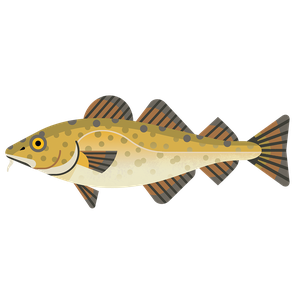
Pacific cod are also known as grey cod. They are found on the shelf edge and upper slope (100-250 m) in the winter, moving to shallower waters (<100 m) in the summer. Pacific cod are a demersal species, found near the sea floor. They are a moderately fast growing, short-lived species, reaching an average length of 19 cm in their first year and have a maximum age of 18 years. Half of the females reach sexual maturity at 4.4 years in the Gulf of Alaska and 4.9 years in the Bering Sea. Females grow significantly faster in the Bering Sea, compared to the Gulf of Alaska. They produce around 1 million eggs. Pacific cod prey includes clams, worms, crabs, shrimp, and juvenile fish. Their predators generally include halibut and marine mammals.
Ratings
Showing 12 results for Pacific cod
Best Choice
OK - Needs Improvement
Avoid
Under review
Wild-caught
Location: Certified fleets only
Method: Pot, trap or creel
Certification: Marine Stewardship Council (MSC)
More infoBering Sea - Wild-caught
Location: Certified fleets only
Capture methods: Pot, trap or creel
Certification: Marine Stewardship Council (MSC)
Pacific cod in the Bering Sea is abundant and not subject to overfishing. A number of management measures are in place and compliance is good. The majority of the fishery is Marine Stewardship Council certified. Some Bering Sea cod is caught by potting. There are some interactions with seabirds and marine mammals, but this is not thought to be a threat to populations.Rating last updated April 2025.
Wild-caught
Location: Certified fleets only
Method: Hook & line (longline)
Certification: Marine Stewardship Council (MSC)
More infoBering Sea - Wild-caught
Location: Certified fleets only
Capture methods: Hook & line (longline)
Certification: Marine Stewardship Council (MSC)
Pacific cod in the Bering Sea is abundant and not subject to overfishing. A number of management measures are in place and compliance is good. The majority of the fishery is Marine Stewardship Council certified. Most Bering Sea cod is caught by demersal longline. Bycatch is monitored, however seabird bycatch is common, but it does not appear to be having population-level impacts.Rating last updated April 2025.
Wild-caught
Location: Certified fleets only
Method: Bottom trawl (otter)
Certification: Marine Stewardship Council (MSC)
More infoBering Sea - Wild-caught
Location: Certified fleets only
Capture methods: Bottom trawl (otter)
Certification: Marine Stewardship Council (MSC)
Pacific cod in the Bering Sea is abundant and not subject to overfishing. A number of management measures are in place and compliance is good. The majority of the fishery is Marine Stewardship Council certified. Some Bering Sea cod is caught by otter trawls, which are likely to cause some damage to the seabed. However, the footprint of this fishery is small, and bycatch is low.Rating last updated April 2025.
Wild-caught
Location: Certified fleets only
Method: Hook & line (longline)
Certification: Marine Stewardship Council (MSC)
More infoBering Sea (West) and Chukotskaya, Karaginskaya & Petropavlovsko-Komandorskaya subzones - Wild-caught
Location: Certified fleets only
Capture methods: Hook & line (longline)
Certification: Marine Stewardship Council (MSC)
Pacific cod in the western north Pacific is abundant and not subject to overfishing. A number of management measures are in place and compliance is good. Catches are below scientifically recommended limits. Some western Bering Sea cod is caught by demersal longline. There is a small bycatch of seabirds and Pacific sleeper shark. The certified fishery is taking steps to improve monitoring and mitigation.Rating last updated January 2023.
Wild-caught
Location: Certified fleets only
Method: Bottom trawl (otter)
Certification: Marine Stewardship Council (MSC)
More infoGulf of Alaska - Wild-caught
Location: Certified fleets only
Capture methods: Bottom trawl (otter)
Certification: Marine Stewardship Council (MSC)
Pacific cod in the Gulf of Alaska is depleted, but is not subject to overfishing. A number of management measures are in place and compliance is good. Catches are below scientifically recommended limits. The majority of the fishery is Marine Stewardship Council certified. Some Bering Sea cod is caught by otter trawls, which are likely to cause some damage to the seabed. However, the footprint of this fishery is small, and bycatch is low.Rating last updated April 2025.
Wild-caught
Location: Certified fleets only
Method: Hook & line (longline)
Certification: Marine Stewardship Council (MSC)
More infoGulf of Alaska - Wild-caught
Location: Certified fleets only
Capture methods: Hook & line (longline)
Certification: Marine Stewardship Council (MSC)
Pacific cod in the Gulf of Alaska is depleted, but is not subject to overfishing. A number of management measures are in place and compliance is good. Catches are below scientifically recommended limits. The majority of the fishery is Marine Stewardship Council certified. Some Gulf of Alaska cod is caught by demersal longline. Bycatch is monitored. Seabird bycatch occurs at low levels. It does not appear to be having population-level impacts.Rating last updated April 2025.
Wild-caught
Location: Certified fleets only
Method: Pot, trap or creel
Certification: Marine Stewardship Council (MSC)
More infoGulf of Alaska - Wild-caught
Location: Certified fleets only
Capture methods: Pot, trap or creel
Certification: Marine Stewardship Council (MSC)
Pacific cod in the Gulf of Alaska is depleted, but is not subject to overfishing. A number of management measures are in place and compliance is good. Catches are below scientifically recommended limits. The majority of the fishery is Marine Stewardship Council certified. Some Gulf of Alaska cod is caught by potting. There are some interactions with seabirds, but this is not thought to be a threat to populations.Rating last updated April 2025.
Wild-caught
Location: Certified fleets only
Method: Bottom trawl (otter)
Certification: Marine Stewardship Council (MSC)
More infoAleutian Islands - Wild-caught
Location: Certified fleets only
Capture methods: Bottom trawl (otter)
Certification: Marine Stewardship Council (MSC)
Pacific cod in the Aleutian Islands is data limited. There is concern that the stock size may be too small, but it is not being overfished. A number of management measures are in place. The majority of the fishery is Marine Stewardship Council certified. Most Aleutian Islands cod is caught by otter trawls, which are likely to cause some damage to the seabed. However, the footprint of this fishery is small, and bycatch is low.Rating last updated April 2025
Wild-caught
Location: Certified fleets only
Method: Hook & line (longline)
Certification: Marine Stewardship Council (MSC)
More infoAleutian Islands - Wild-caught
Location: Certified fleets only
Capture methods: Hook & line (longline)
Certification: Marine Stewardship Council (MSC)
Pacific cod in the Aleutian Islands is data limited. There is concern that the stock size may be too small, but it is not being overfished. A number of management measures are in place. The majority of the fishery is Marine Stewardship Council certified. Some Aleutian Islands cod is caught by demersal longline. Bycatch is monitored. Seabird bycatch is common, but it does not appearing to be having population-level impacts.Rating last updated April 2025.
Wild-caught
Location: Certified fleets only
Method: Pot, trap or creel
Certification: Marine Stewardship Council (MSC)
More infoAleutian Islands - Wild-caught
Location: Certified fleets only
Capture methods: Pot, trap or creel
Certification: Marine Stewardship Council (MSC)
Pacific cod in the Aleutian Islands is data limited. There is concern that the stock size may be too small, but it is not being overfished. A number of management measures are in place. The majority of the fishery is Marine Stewardship Council certified. Some Aleutian Islands cod is caught by potting. There are some interactions with seabirds and marine mammals, but this is not thought to be a threat to populations.Rating last updated April 2025.
Bering Sea (West) and Chukotskaya, Karaginskaya & Petropavlovsko-Komandorskaya subzones - Wild-caught
Location: All areas
Capture methods: Bottom trawl (otter)
Pacific cod in the western north Pacific is abundant and not subject to overfishing. A number of management measures are in place and compliance is good. Catches are below scientifically recommended limits. Some west Bering Sea cod is caught by otter trawls, which are likely to cause some damage to the seabed. There may also be bycatch of vulnerable species. Data on this fishery is scarce.Rating last updated January 2023.
Bering Sea (West) and Chukotskaya, Karaginskaya & Petropavlovsko-Komandorskaya subzones - Wild-caught
Location: All areas
Capture methods: Net (demersal seine)
Pacific cod in the western north Pacific is abundant and not subject to overfishing. A number of management measures are in place and compliance is good. Catches are below scientifically recommended limits. Some west Bering Sea cod is caught by demersal seine, which can have seabed impacts. Data on this fishery is scarce.Rating last updated January 2023.
Sustainable swaps
Pacific cod
Quickly check the sustainability of your fish or seafood with our step-by-step tool.
Find your fish or seafoodLearn more about how we calculate our sustainability ratings.
How our ratings work
