Good Fish Guide
Pink salmon
(Oncorhynchus gorbuscha)
Also known as: Humpback salmon, Spring salmon
Overview
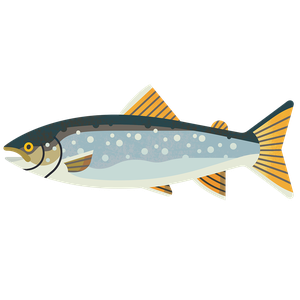
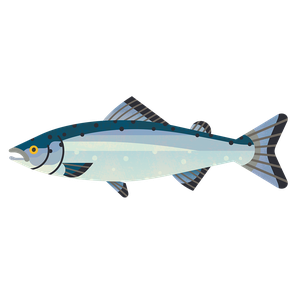
Pink salmon, also called Humpback salmon (or humpy for short) are the smallest of the salmon species, but the most harvested. They have been caught for canning since the late 1800s. They start of life completely silver, turning bright greeny-blue with silver sides as adults, and turning colours again as they migrate back to their native rivers to spawn. They are named pink salmon after their pink flesh but are also named 'humpy' as the males develop a very large hump on their backs and hooked jaws when they return to the rivers in the spawning season. They feed on plankton, marine shrimp, krill, small fish, squid and aquatic insects; their predators include killer whales, bears and birds.
Pacific salmon occur from California north along the Pacific coast throughout the Pacific Ocean, Bering Sea and Arctic Ocean waters adjacent to Alaska. Pacific salmon are a shorter lived species and much more prolific breeders than Atlantic salmon.
Pink salmon have the shortest lifespan amongst the Pacific salmon, maturing and completing their life-cycle within two years, and have a rapid rate of growth. Although pinks are anadromous, they do not remain in freshwater for an extended period, and are also semelparous (typically die after spawning). Pinks spawn much closer to the ocean than most other Pacific salmon (usually within 30 miles of the river mouth). Females will lay 1200 to 1900 eggs between late June and early September, and the eggs hatch in late winter or early spring. Although pink salmon have low fecundity they produce large eggs which helps to ensure their resilience. As soon as they emerge from the gravel the fry migrate to the ocean and return to freshwater after 18 months to spawn.
Ratings
Showing 2 results for Pink salmon