

Good Fish Guide
Seabass
(Dicentrarchus labrax)
Also known as: Bass
Overview
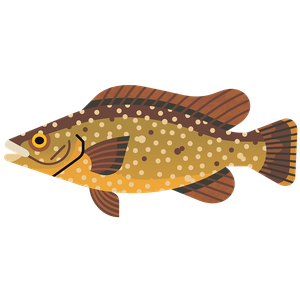
Bass or seabass belongs to a family of spiny-finned fish called Moronidae, which are closely related to groupers. Bass breed from March to mid-June, mostly in April, in British coastal and offshore waters, from January to March in the Bay of Biscay and from February to May in the English Channel and eastern Celtic Sea. It is a long-lived and slow growing species - up to 30 years of age - and can achieve a length of up to 1m with a weight of 12kg. Male bass mature at 31-35cm (aged 3-6 years) and females mature at 40-45cm (aged 5-8 years). Once mature, bass may migrate within UK coastal waters and occasionally further offshore. Increases in sea water temperature in recent decades has likely led to a more northerly distribution of seabass, as it is now found further north into the North Sea. Climate warming may also have lengthened the time adult seabass spend in the summer feeding areas. After spawning, seabass tend to return to the same coastal sites each year.
Ratings
Showing 21 results for Seabass
Best Choice
OK - Needs Improvement
Avoid
Under review
North Sea (Central and South), Irish Sea, English Channel, Bristol Channel, Celtic Sea - Wild-caught
Location: All areas
Capture methods: Net (gill or fixed)
The sea bass stock in this region is harvested sustainably and fully fished. Some, but not all, appropriate management measures are in place for the sea bass stock in this region, including agreed measures between the UK and EU. However, there remains concerns around a lack of recreational fishing data, discard rates, as well as unregulated or unreported catches. Gillnets in this area can encounter bycatch of non-target fish, mammals and birds. This includes the harbour porpoise which is vulnerable in Europe.Last updated July 2025
North Sea (Central and South), Irish Sea, English Channel, Bristol Channel, Celtic Sea - Wild-caught
Location: All areas
Capture methods: Hook & line (handline)
The sea bass stock in this region is harvested sustainably and fully fished. Some, but not all, appropriate management measures are in place for the sea bass stock in this region, including agreed measures between the UK and EU. However, there remains concerns around a lack of recreational fishing data, discard rates, as well as unregulated or unreported catches. Fishing with hook and line is one of the most sustainable and species selective fishing methods available and has no impacts on the seabed.Last updated July 2025
North Sea (Central and South), Irish Sea, English Channel, Bristol Channel, Celtic Sea - Wild-caught
Location: All areas
Capture methods: Bottom trawl (otter)
The sea bass stock in this region is harvested sustainably and fully fished. Some, but not all, appropriate management measures are in place for the sea bass stock in this region, including agreed measures between the UK and EU. However, there remains concerns around a lack of recreational fishing data, discard rates, as well as unregulated or unreported catches. Otter trawls are within the second most popular gear type for catching bass in the region. However, there is concern for the level of benthic disturbance and the bycatch of ETP species, including marine mammals, sharks, and rays.Last updated July 2025
North Sea (Central and South), Irish Sea, English Channel, Bristol Channel, Celtic Sea - Wild-caught
Location: All areas
Capture methods: Net (demersal seine)
The sea bass stock in this region is harvested sustainably and fully fished. Some, but not all, appropriate management measures are in place for the sea bass stock in this region, including agreed measures between the UK and EU. However, there remains concerns around a lack of recreational fishing data, discard rates, as well as unregulated or unreported catches. Demersal seines are responsible for a small portion of bass landings, and have minimal benthic impacts. There are also no reports of bycatch of vulnerable species.Last updated July 2025
Bay of Biscay (North and Central) - Wild-caught
Location: All areas
Capture methods: Net (pelagic trawl)
The sea bass stock in the northern and central Bay of Biscay is harvested sustainably and fully fished. There are management measures in place, which are partly effective in managing the stock. A small amount of sea bass in areas 8a and b in the Bay of Biscay is caught by pelagic trawl, which cause limited damage to the seabed. The gear has low levels of fish bycatch, but there are serious concerns regarding bycatch of common dolphins in this area.Rating last updated April 2025
Bay of Biscay (North and Central) - Wild-caught
Location: All areas
Capture methods: Net (gill or fixed)
The sea bass stock in the northern and central Bay of Biscay is harvested sustainably and fully fished. There are management measures in place, which are partly effective in managing the stock. Over a third of sea bass in areas 8a and b in the Bay of Biscay is caught using nets, which cause limited damage to the seabed. However, this gear can have significant levels of bycatch, including marine mammals, marine reptiles, seabirds, and ETP fish species.Rating last updated April 2025
Bay of Biscay (North and Central) - Wild-caught
Location: All areas
Capture methods: Hook & line (longline)
The sea bass stock in the northern and central Bay of Biscay is harvested sustainably and fully fished. There are management measures in place, which are partly effective in managing the stock. Around a third of sea bass in areas 8a and b in the Bay of Biscay is caught using lines, which cause limited damage to the seabed. However, this gear has high bycatch risks for seabirds and marine reptiles.Rating last updated April 2025
Bay of Biscay (North and Central) - Wild-caught
Location: All areas
Capture methods: Hook & line (handline)
The sea bass stock in the northern and central Bay of Biscay is harvested sustainably and fully fished. There are management measures in place, which are partly effective in managing the stock. Hook-and-line fishing methods have minimal bycatch and no seabed impacts. However, concern exists around the volume of bait used and the impacts on bait species populations.Rating last updated April 2025
Bay of Biscay (North and Central) - Wild-caught
Location: All areas
Capture methods: Net (demersal seine)
The sea bass stock in the northern and central Bay of Biscay is harvested sustainably and fully fished. There are management measures in place, which are partly effective in managing the stock. Only 4% of sea bass in areas 8a and b in the Bay of Biscay is caught using demersal seines. These have limited contact with the seabed but there is some risk of seabird, marine mammal, and marine reptile bycatch.Rating last updated April 2025.
Bay of Biscay (North and Central) - Wild-caught
Location: All areas
Capture methods: Bottom trawl (otter)
The sea bass stock in the northern and central Bay of Biscay is harvested sustainably and fully fished. There are management measures in place, which are partly effective in managing the stock. Around 18% of Biscay sea bass are caught using otter trawls, which cause seabed disturbance and have bycatch of ETP species, including marine mammals, sharks, and rays.Rating last updated April 2025.
Wild-caught
Location: All areas
Method: Bottom trawl (otter), Hook & line (pole & line), Net (demersal seine), Net (gill or fixed)
More infoWest of Scotland, West of Ireland, eastern part of southwest of Ireland - Wild-caught
Location: All areas
Capture methods: Bottom trawl (otter), Hook & line (pole & line), Net (demersal seine), Net (gill or fixed)
With limited data on the seabass population in this area and substantial recreational catches, there is concern for stock biomass and fishing pressures. There is no management plan for seabass in this area and the fishery is not subject to Total Allowable Catch or quotas. A variety of fishing gears (i.e., gillnet, hook and line, trawl and seine) are used to fish seabass, some of which, can have high levels of bycatch of non-target species, and habitat impacts upon the seabed, by abrasion and smothering in this ecoregion.Rating last updated July 2023.
Bay of Biscay (South), Atlantic Iberian waters - Wild-caught
Location: All areas
Capture methods: Net (pelagic trawl)
Updated: July 2020
Sea bass in southern Bay of Biscay and Atlantic Iberian waters is a data limited stock, and stock identity remains poorly understood. The state of the stock and fishery relative to reference points is unknown and information on abundance and catches is unavailable. There is no concern for the stock biomass but concern for fishing pressure, as catches have been significantly above advised limits. The combination of slow growth, late maturity, spawning aggregation and strong site fidelity, increase the vulnerability of sea bass to overexploitation and localized depletion. The EU multiannual plan for stocks in the Western Waters and adjacent waters applies to this stock, however, as a data-limited stock ICES precautionary approach is applied. Sea bass are not subject to EU TACs (Total Allowable Catch) or quotas, and are caught both commercially and recreationally, at similar levels. Sea bass are caught using a variety of fishing gears (e.g. gillnet, hook and line, trawl and seine), some of which, can have high levels of bycatch of non-target species, and habitat impacts upon the seabed, by abrasion and smothering in this ecoregion. Pelagic trawling in the Bay of Biscay is associated with concerning levels of dolphin bycatch and mortality, particularly of common dolphin. Harbour porpoises are being caught as bycatch off Iberia in set-nets to the extent that the local population of the species may become extinct.
Bay of Biscay (South), Atlantic Iberian waters - Wild-caught
Location: All areas
Capture methods: Net (gill or fixed)
Updated: July 2020
Sea bass in southern Bay of Biscay and Atlantic Iberian waters is a data limited stock, and stock identity remains poorly understood. The state of the stock and fishery relative to reference points is unknown and information on abundance and catches is unavailable. There is no concern for the stock biomass but concern for fishing pressure, as catches have been significantly above advised limits. The combination of slow growth, late maturity, spawning aggregation and strong site fidelity, increase the vulnerability of sea bass to overexploitation and localized depletion. The EU multiannual plan for stocks in the Western Waters and adjacent waters applies to this stock, however, as a data-limited stock ICES precautionary approach is applied. Sea bass are not subject to EU TACs (Total Allowable Catch) or quotas, and are caught both commercially and recreationally, at similar levels. Sea bass are caught using a variety of fishing gears (e.g. gillnet, hook and line, trawl and seine), some of which, can have high levels of bycatch of non-target species, and habitat impacts upon the seabed, by abrasion and smothering in this ecoregion. Pelagic trawling in the Bay of Biscay is associated with concerning levels of dolphin bycatch and mortality, particularly of common dolphin. Harbour porpoises are being caught as bycatch off Iberia in set-nets to the extent that the local population of the species may become extinct.
Bay of Biscay (South), Atlantic Iberian waters - Wild-caught
Location: All areas
Capture methods: Hook & line (longline)
Updated: July 2020
Sea bass in southern Bay of Biscay and Atlantic Iberian waters is a data limited stock, and stock identity remains poorly understood. The state of the stock and fishery relative to reference points is unknown and information on abundance and catches is unavailable. There is no concern for the stock biomass but concern for fishing pressure, as catches have been significantly above advised limits. The combination of slow growth, late maturity, spawning aggregation and strong site fidelity, increase the vulnerability of sea bass to overexploitation and localized depletion. The EU multiannual plan for stocks in the Western Waters and adjacent waters applies to this stock, however, as a data-limited stock ICES precautionary approach is applied. Sea bass are not subject to EU TACs (Total Allowable Catch) or quotas, and are caught both commercially and recreationally, at similar levels. Sea bass are caught using a variety of fishing gears (e.g. gillnet, hook and line, trawl and seine), some of which, can have high levels of bycatch of non-target species, and habitat impacts upon the seabed, by abrasion and smothering in this ecoregion. Pelagic trawling in the Bay of Biscay is associated with concerning levels of dolphin bycatch and mortality, particularly of common dolphin. Harbour porpoises are being caught as bycatch off Iberia in set-nets to the extent that the local population of the species may become extinct.
Bay of Biscay (South), Atlantic Iberian waters - Wild-caught
Location: All areas
Capture methods: Hook & line (handline)
Updated: July 2020
Sea bass in southern Bay of Biscay and Atlantic Iberian waters is a data limited stock, and stock identity remains poorly understood. The state of the stock and fishery relative to reference points is unknown and information on abundance and catches is unavailable. There is no concern for the stock biomass but concern for fishing pressure, as catches have been significantly above advised limits. The combination of slow growth, late maturity, spawning aggregation and strong site fidelity, increase the vulnerability of sea bass to overexploitation and localized depletion. The EU multiannual plan for stocks in the Western Waters and adjacent waters applies to this stock, however, as a data-limited stock ICES precautionary approach is applied. Sea bass are not subject to EU TACs (Total Allowable Catch) or quotas, and are caught both commercially and recreationally, at similar levels. Sea bass are caught using a variety of fishing gears (e.g. gillnet, hook and line, trawl and seine), some of which, can have high levels of bycatch of non-target species, and habitat impacts upon the seabed, by abrasion and smothering in this ecoregion. Pelagic trawling in the Bay of Biscay is associated with concerning levels of dolphin bycatch and mortality, particularly of common dolphin. Harbour porpoises are being caught as bycatch off Iberia in set-nets to the extent that the local population of the species may become extinct.
Bay of Biscay (South), Atlantic Iberian waters - Wild-caught
Location: All areas
Capture methods: Net (purse seine or ring)
Updated: July 2020
Sea bass in southern Bay of Biscay and Atlantic Iberian waters is a data limited stock, and stock identity remains poorly understood. The state of the stock and fishery relative to reference points is unknown and information on abundance and catches is unavailable. There is no concern for the stock biomass but concern for fishing pressure, as catches have been significantly above advised limits. The combination of slow growth, late maturity, spawning aggregation and strong site fidelity, increase the vulnerability of sea bass to overexploitation and localized depletion. The EU multiannual plan for stocks in the Western Waters and adjacent waters applies to this stock, however, as a data-limited stock ICES precautionary approach is applied. Sea bass are not subject to EU TACs (Total Allowable Catch) or quotas, and are caught both commercially and recreationally, at similar levels. Sea bass are caught using a variety of fishing gears (e.g. gillnet, hook and line, trawl and seine), some of which, can have high levels of bycatch of non-target species, and habitat impacts upon the seabed, by abrasion and smothering in this ecoregion. Pelagic trawling in the Bay of Biscay is associated with concerning levels of dolphin bycatch and mortality, particularly of common dolphin. Harbour porpoises are being caught as bycatch off Iberia in set-nets to the extent that the local population of the species may become extinct.
Bay of Biscay (South), Atlantic Iberian waters - Wild-caught
Location: All areas
Capture methods: Bottom trawl (otter)
Updated: July 2020
Sea bass in southern Bay of Biscay and Atlantic Iberian waters is a data limited stock, and stock identity remains poorly understood. The state of the stock and fishery relative to reference points is unknown and information on abundance and catches is unavailable. There is no concern for the stock biomass but concern for fishing pressure, as catches have been significantly above advised limits. The combination of slow growth, late maturity, spawning aggregation and strong site fidelity, increase the vulnerability of sea bass to overexploitation and localized depletion. The EU multiannual plan for stocks in the Western Waters and adjacent waters applies to this stock, however, as a data-limited stock ICES precautionary approach is applied. Sea bass are not subject to EU TACs (Total Allowable Catch) or quotas, and are caught both commercially and recreationally, at similar levels. Sea bass are caught using a variety of fishing gears (e.g. gillnet, hook and line, trawl and seine), some of which, can have high levels of bycatch of non-target species, and habitat impacts upon the seabed, by abrasion and smothering in this ecoregion. Pelagic trawling in the Bay of Biscay is associated with concerning levels of dolphin bycatch and mortality, particularly of common dolphin. Harbour porpoises are being caught as bycatch off Iberia in set-nets to the extent that the local population of the species may become extinct.
Farmed
Location: All areas
Production method: Open net pen, marine
Seabass feed is traceable and requirements are in place for responsible ingredient sourcing, however, it is a net consumer of protein. Farming in marine net pens can have a negative environmental impact such as the use of chemicals, and there is a lack of data available of escapes. However, there is no use of freshwater supplies and habitat alteration is small scale. There also not thought to be a widespread issue of parasites or pathogens. There are practices in place for animal welfare and there is adequate management and regulations in place.Rating last updated November 2022.
Farmed
Location: All areas
Production method: Open net pen, marine
Certifications: GLOBALG.A.P.
GLOBALG.A.P. farmed seabass is well managed and management is thought to be fully effective. The standard mitigates many areas of environmental concern in open net pen aquaculture, including discharge of effluents, use of chemicals, escapes, disease and parasite interactions. The GLOBALG.A.P. standard also has criteria in place for welfare and humane slaughter. However, lethal control of predators is permitted. The GLOBALG.A.P. feed standard is lacking in criteria for responsible sourcing for both marine and terrestrial ingredients, and bass and bream are net consumers of protein.This rating is based on full compliance with certification requirements. Commercial buyers should therefore ensure that full compliance has been achieved in order for this rating to be applicable.Rating last updated: November 2022
Farmed
Location: All areas
Method: Open net pen, marine
Certification: Aquaculture Stewardship Council (ASC)
More infoFarmed
Location: All areas
Production method: Open net pen, marine
Certifications: Aquaculture Stewardship Council (ASC)
ASC farmed seabass is well managed and management is thought to be fully effective. The standard mitigates many areas of environmental concern in open net pen aquaculture, including discharge of effluents, use of chemicals, escapes, disease and parasite interactions. Criteria on responsible feed sourcing requires it to be traceable, however, sourcing of marine ingredients is not verified via audit and ASC certified bass can use a high quantity of wild caught fish in their diet. Criteria on animal welfare is also lacking, with no requirements for humane slaughter.This rating is based on full compliance with certification requirements. Commercial buyers should therefore ensure that full compliance has been achieved in order for this rating to be applicable.Rating last updated: November 2022.
Farmed
Location: All areas
Method: Open net pen, marine
Certification: Global Seafood Alliance Best Aquaculture Practices (GAA BAP) 3*, Global Seafood Alliance Best Aquaculture Practices (GAA BAP) 4*
More infoFarmed
Location: All areas
Production method: Open net pen, marine
Certifications: Global Seafood Alliance Best Aquaculture Practices (GAA BAP) 3*, Global Seafood Alliance Best Aquaculture Practices (GAA BAP) 4*
BAP farmed sea bass is well managed and management is thought to be fully effective. The standard mitigates many areas of environmental concern in open net pen aquaculture, including discharge of effluents, use of chemicals, escapes, disease and parasite interactions. However, predators are still allowed to be lethally controlled. There are also criteria in place covering welfare and humane slaughter. Criteria on responsible feed sourcing requires it to be traceable, however, sourcing of marine ingredients is not verified via audit and BAP certified bream can use a high quantity of wild caught fish in their diet.This rating is based on full compliance with certification requirements. Commercial buyers should therefore ensure that full compliance has been achieved in order for this rating to be applicable.Rating last updated: November 2022
Sustainable swaps
Bass
Quickly check the sustainability of your fish or seafood with our step-by-step tool.
Find your fish or seafoodLearn more about how we calculate our sustainability ratings.
How our ratings work
