

Good Fish Guide
Skipjack tuna
(Euthynnus pelamis, Katsuwonus pelamis)
Overview
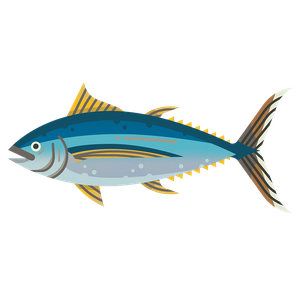
Tuna belong to the family Scombridae. They are large, oceanic fish and are seasonally migratory, some making trans-oceanic journeys. Skipjack tuna are found throughout the world's tropical and warm temperate waters. During the day they school on the surface (often with birds, drifting objects, sharks, whales etc.) but at night can descend to depths of 260m. Skipjack tuna are a very fast growing species, maturing at 2 to 3 years old (40cm in length) and living for up to 12 years. They can grow up to 100cm and 34kg in weight but are rarely found larger than 80cm and 10kg. They spawn all year round and have a medium to high resilience to fishing.
Ratings
Showing 16 results for Skipjack tuna
Best Choice
OK - Needs Improvement
Avoid
Western and Central Pacific - Wild-caught
Location: All areas
Capture methods: Net (gill or fixed)
Some skipjack catches from the west Pacific Ocean are by gillnetting. This receives a default red rating owing to the very high levels of cetacean and turtle bycatch.Rating last updated January 2023
Indian Ocean - Wild-caught
Location: All areas
Capture methods: Net (gill or fixed)
Some skipjack catches from the Indian Ocean are by gillnetting. This receives a default red rating owing to the very high levels of cetacean and turtle bycatch.Rating last updated January 2024.
Under review
Wild-caught
Location: Certified fleets only
Method: Net (purse seine on aggregating devices or free-schooling fish)
Certification: Marine Stewardship Council (MSC)
More infoWestern and Central Pacific - Wild-caught
Location: Certified fleets only
Capture methods: Net (purse seine on aggregating devices or free-schooling fish)
Certification: Marine Stewardship Council (MSC)
Skipjack tuna in the western and central Pacific Ocean is abundant and not subject to overfishing. Some appropriate management measures are in place to control fishing activity. Most of the skipjack tuna catches in the western and central Pacific Ocean are by purse seining. This method is associated with bycatch of species such as sharks, turtles and marine mammals. MSC-certified fleets are taking extra measures to limit skipjack catches, monitor the fishery, and reduce bycatch.Rating last updated January 2023.
Wild-caught
Location: Certified fleets only
Method: Hook & line (pole & line)
Certification: Marine Stewardship Council (MSC)
More infoWestern and Central Pacific - Wild-caught
Location: Certified fleets only
Capture methods: Hook & line (pole & line)
Certification: Marine Stewardship Council (MSC)
Skipjack tuna in the western and central Pacific Ocean is abundant and not subject to overfishing. Some appropriate management measures are in place to control fishing activity. Some skipjack tuna catches in the west Pacific Ocean are by pole & line. This is a generally low-impact method. MSC-certified fleets are taking extra measures to limit skipjack catches and monitor the fishery.Rating last updated January 2023.
Wild-caught
Location: Certified fleets only
Method: Hook & line (pole & line)
Certification: Marine Stewardship Council (MSC)
More infoIndian Ocean - Wild-caught
Location: Certified fleets only
Capture methods: Hook & line (pole & line)
Certification: Marine Stewardship Council (MSC)
Skipjack tuna in the Indian Ocean is not overfished and not subject to overfishing. Some appropriate management measures are in place for certified Indian Ocean skipjack tuna from the Maldives. Certified fisheries are required to meet strict monitoring and reporting requirements that result in better management, although some improvements are still needed. These tuna are caught by pole & line. In the certified fishery, this is a well-monitored and low-impact method.Rating last updated January 2024
Wild-caught
Location: Certified fleets only
Method: Net (purse seine on aggregating devices or free-schooling fish)
Certification: Marine Stewardship Council (MSC)
More infoIndian Ocean - Wild-caught
Location: Certified fleets only
Capture methods: Net (purse seine on aggregating devices or free-schooling fish)
Certification: Marine Stewardship Council (MSC)
Skipjack tuna in the Indian Ocean is not overfished and not subject to overfishing. Some appropriate management measures are in place for MSC certified Indian Ocean skipjack tuna. Certified fisheries are required to meet strict monitoring and reporting requirements that result in better management, although some improvements are still needed. These tuna from the Indian Ocean is caught by purse seining. This method is associated with bycatch of species such as sharks, rays, and turtles, but certified fleets are taking steps to tackle this.Commercial buyers should establish what measures the flag state and fleet relating to their source is taking to reduce impacts to and improve reporting of interactions with vulnerable species. Large buyers should consider supporting such improvements. MCS also advocates specifying the need for vessels, in particular purse seiners, to register on the ISSF Proactive Vessel Register.Rating last updated January 2024.
Wild-caught
Location: All areas
Method: Net (purse seine on aggregating devices or free-schooling fish)
More infoEast Atlantic - Wild-caught
Location: All areas
Capture methods: Net (purse seine on aggregating devices or free-schooling fish)
East Atlantic skipjack tuna is abundant and not subject to overfishing. However, few appropriate management measures are in place. There are no catch limits or stock-specific management measures. Most skipjack tuna from the east Atlantic is caught by purse seining. This method is associated with bycatch of species such as sharks, turtles and marine mammals.Rating last updated January 2023.
East Atlantic - Wild-caught
Location: All areas
Capture methods: Hook & line (pole & line), Hook & line (troll)
East Atlantic skipjack tuna is abundant and not subject to overfishing. However, few appropriate management measures are in place. There are no catch limits or stock-specific management measures. Some skipjack tuna in the east Atlantic are caught by pole & line. This is a generally low-impact method.Rating last updated January 2023.
West Atlantic - Wild-caught
Location: All areas
Capture methods: Hook & line (pole & line)
Western Atlantic skipjack tuna is abundant and not subject to overfishing. However, few appropriate management measures are in place. There are no catch limits or stock-specific management measures. Most skipjack tuna in the west Atlantic are caught by pole & line. This is a generally low-impact method.Rating last updated January 2023.
Wild-caught
Location: All areas
Method: Net (purse seine on aggregating devices or free-schooling fish)
More infoWest Atlantic - Wild-caught
Location: All areas
Capture methods: Net (purse seine on aggregating devices or free-schooling fish)
Western Atlantic skipjack tuna is abundant and not subject to overfishing. However, few appropriate management measures are in place. There are no catch limits or stock-specific management measures. Some skipjack tuna from the west Atlantic is caught by purse seining. This method is associated with bycatch of species such as sharks, turtles and marine mammals.Rating last updated January 2023.
Eastern Pacific - Wild-caught
Location: All areas
Capture methods: Hook & line (pole & line), Hook & line (troll)
The population of skipjack tuna in the Eastern Pacific Ocean is thought to be abundant, and fishing pressure is within sustainable limits. However, few appropriate management measures are in place as there are no catch limits. A very small amount of skipjack catches in the south Eastern Pacific Ocean are by pole and line or troll. These methods generally have a low impact.Rating last updated January 2025.
Wild-caught
Location: All areas
Method: Net (purse seine on aggregating devices or free-schooling fish)
More infoEastern Pacific - Wild-caught
Location: All areas
Capture methods: Net (purse seine on aggregating devices or free-schooling fish)
The population of skipjack tuna in the Eastern Pacific Ocean is thought to be abundant, and fishing pressure is within sustainable limits. However, few appropriate management measures are in place as there are no catch limits. Most skipjack tuna in the eastern pacific Ocean is caught by purse seining. This can bycatch vulnerable species like sharks and turtles.Rating last updated January 2025.
Wild-caught
Location: All areas
Method: Net (purse seine on aggregating devices or free-schooling fish)
More infoWestern and Central Pacific - Wild-caught
Location: All areas
Capture methods: Net (purse seine on aggregating devices or free-schooling fish)
Skipjack tuna in the western and central Pacific Ocean is abundant and not subject to overfishing. Some appropriate management measures are in place to control fishing activity. However, catches have increased to record levels and regulations are not enough to prevent them from increasing further and exceeding sustainable limits. Most of the skipjack tuna catches in the western and central Pacific Ocean are by purse seining. This method is associated with bycatch of species such as sharks, turtles and marine mammals.Rating last updated January 2023.
Western and Central Pacific - Wild-caught
Location: All areas
Capture methods: Hook & line (pole & line)
Skipjack tuna in the western and central Pacific Ocean is abundant and not subject to overfishing. Some appropriate management measures are in place to control fishing activity. However, catches have increased to record levels and regulations are not enough to prevent them from increasing further and exceeding sustainable limits. Some skipjack tuna catches in the west Pacific Ocean are by pole & line. This is a generally low-impact method.Rating last updated January 2023.
Indian Ocean - Wild-caught
Location: All areas
Capture methods: Hook & line (pole & line)
Skipjack tuna in the Indian Ocean is not overfished and not subject to overfishing. Few appropriate management measures are in place for Indian Ocean skipjack tuna. Recent catches have been well above catch limits, and monitoring and enforcement needs to be improved. Some skipjack tuna in the Indian Ocean are caught by pole & line. This is a generally low-impact method.Rating last updated January 2024.
Wild-caught
Location: All areas
Method: Net (purse seine on aggregating devices or free-schooling fish)
More infoIndian Ocean - Wild-caught
Location: All areas
Capture methods: Net (purse seine on aggregating devices or free-schooling fish)
Skipjack tuna in the Indian Ocean is not overfished and not subject to overfishing. Few appropriate management measures are in place for Indian Ocean skipjack tuna. Recent catches have been well above catch limits, and monitoring and enforcement needs to be improved. Some skipjack tuna from the Indian Ocean is caught by purse seining. This method is associated with bycatch of species such as sharks, rays, and turtles.Commercial buyers should establish what measures the flag state and fleet relating to their source is taking to reduce impacts to and improve reporting of interactions with vulnerable species. Large buyers should consider supporting such improvements. MCS also advocates specifying the need for vessels, in particular purse seiners, to register on the ISSF Proactive Vessel Register.Rating last updated January 2024.
Sustainable swaps
Skipjack tuna
Quickly check the sustainability of your fish or seafood with our step-by-step tool.
Find your fish or seafoodLearn more about how we calculate our sustainability ratings.
How our ratings work
