Good Fish Guide
Whiting
(Merlangius merlangus)
Overview
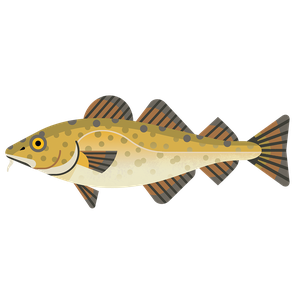
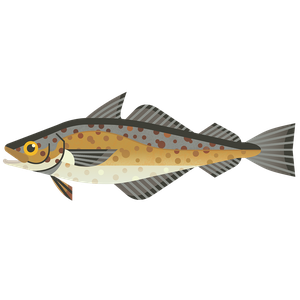
Whiting is a slender bodied, sandy, blue-green coloured fish with conspicuous white sides and belly, silvery when alive. A member of the gadoid family, the same as cod and haddock, it occurs throughout northeast Atlantic waters at a wide range of depths, from shallow inshore waters to depths of 200m. They mature at an age of 2-3 years and at a length of about 30 cm. The average landed length is usually around 30-40 cm, however whiting can grow up to 70 cm and 3 kg. Whiting breeds between January and July, but mostly in spring. The maximum reported age is 20 years.
Ratings
Showing 8 results for Whiting
Best Choice
OK - Needs Improvement
Avoid
Irish Sea - Wild-caught
Location: All areas
Capture methods: Bottom trawl (otter)
Irish Sea whiting is below safe biological levels and there are no measures or plans in place to help it recover. Therefore, it receives a critical fail for stock status and is a default red rating.Rating last updated August 2024.
Celtic Seas (southern), English Channel (west) - Wild-caught
Location: Cornwall
Capture methods: Bottom trawl (beam)
For more information about this rating please visit: http://www.cornwallgoodseafoodguide.org.uk/fish-guide/whiting.php
Celtic Seas (southern), English Channel (west) - Wild-caught
Location: All areas
Capture methods: Bottom trawl (otter)
The Celtic Sea whiting population is at dangerously low levels, and there is no plan in place to help it recover. Therefore, it is Fish to Avoid.Rating last updated November 2025.
Celtic Seas (southern), English Channel (west) - Wild-caught
Location: All areas
Capture methods: Net (demersal seine)
The Celtic Sea whiting population is at dangerously low levels, and there is no plan in place to help it recover. Therefore, it is Fish to Avoid.Rating last updated November 2025.
Under review
West of Scotland - Wild-caught
Location: All areas
Capture methods: Bottom trawl (otter)
The whiting population in the West of Scotland is below target levels, but is not subject to overfishing. Some appropriate management measures are in place for West of Scotland whiting. Historically, the stock has been subject to significant overfishing. Most whiting catches are by trawling, which is likely to cause some damage to the seabed. Bycatch is moderate and may include vulnerable species.Rating last updated August 2025.
North Sea, English Channel (East) - Wild-caught
Location: All areas
Capture methods: Bottom trawl (otter)
North Sea whiting is not overfished and not subject to overfishing. There are some but not all appropriate management measures in place. They are caught as part of a human consumption fishery and catch limits are the main management measure. From 2023 onward, human consumption catch does not have a separate quota. Most whiting catches are by otter trawls, which are likely to cause some damage to the seabed. Bycatch is moderate and may include vulnerable species such as blue and flapper skate, and cod.Rating last updated August 2024.
Rockall - Wild-caught
Location: All areas
Capture methods: Bottom trawl (otter)
There is very little information about Rockall whiting, and both biomass and fishing pressure appear to be of concern. There is no management plan and management requires considerable improvement. The main concern in this fishery is that landings consistently exceed advice. Most whiting in this area are bycatch by otter trawls. There are some vulnerable habitats and species in this area, which could be affected by the fishery.Rating last updated August 2024.
Wild-caught
Location: Certified fleets only
Method: Bottom trawl (otter)
Certification: Marine Stewardship Council (MSC)
More infoNorth Sea, English Channel (East) - Wild-caught
Location: Certified fleets only
Capture methods: Bottom trawl (otter)
Certification: Marine Stewardship Council (MSC)
North Sea whiting is not overfished and not subject to overfishing. There are some but not all appropriate management measures in place. They are caught as part of a human consumption fishery and catch limits are the main management measure. From 2023 onward, human consumption catch does not have a separate quota. Part of the fishery is MSC certified, but the certification is conditional on improving management. Most whiting catches are by otter trawls, which are likely to cause some damage to the seabed. Bycatch is moderate and may include vulnerable species such as blue and flapper skate, and cod. In the certified component of the fishery, vessels have implemented measures to improve monitoring and reduce bycatch.Rating last updated August 2024.
Sustainable swaps
Whiting
Quickly check the sustainability of your fish or seafood with our step-by-step tool.
Find your fish or seafoodLearn more about how we calculate our sustainability ratings.
How our ratings work