Why we do it
The ocean is home to some of the most wonderous species on our planet, and, when healthy, can absorb and store carbon, protect our coasts from erosion and regulate our climate.
We work with partners, communities, industry and governments to protect, conserve and restore our seas – securing today, and a better tomorrow for our ocean, people and planet.
Our greatest ally against climate change
Climate change presents one of the greatest challenges in human history, but the ocean could be the key to overcoming it. It provides crucial protection against the full effects of the crisis, locking away carbon, absorbing heat to help regulate our climate, and buffering the impacts of waves and storms to protect our coasts.
Did you know?
- 30% of our carbon emissions are absorbed by the ocean
- The UK’s deep-sea areas provide £1 billion worth of carbon storage
- The ocean stores more than 18x more carbon than land
- Coastal habitats save up to £33.2 billion pounds in coastal protection compared to the cost of man-made alternatives
- 90% of recent climate warming has been absorbed by the ocean
- Seagrass meadows are estimated to absorb and store 35x more CO2 than rainforests
- Seaweed absorbs carbon more effectively than trees, storing an estimated 175 million tonnes of carbon each year.
Four key ways the ocean helps our planet
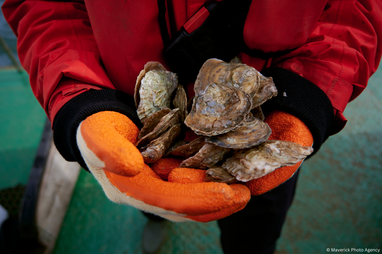
A handful of European flat oysters about to be deployed into the Firth of Forth to help with conservation efforts | Image credit: Maverick Photo Agency
Coastal protections
With more extreme weather events due to climate change - seagrass meadows, seaweed, mangroves, kelp forests, and coral reefs provide another crucial service: protecting our coasts from erosion.
They buffer strong currents and waves, lessening the impacts of erosion, flood and storm damage, providing our coast and its communities with vital protection.
Investing in natural solutions such as protecting these habitats, can offer massive savings to the UK economy compared to man-made alternatives, as well as supporting tourism and livelihoods that coastal areas depend on.
Our blue finance work aims to raise awareness of and drive further investment from the public and private sector in ocean-based solutions to the climate crisis, which are vital, but often overlooked.
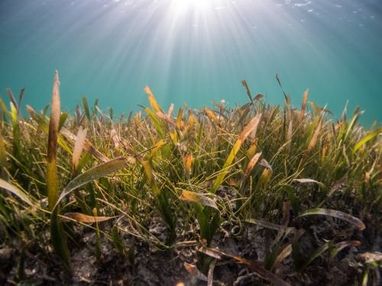
A seagrass bed | Image credit: Benjamin L Jones
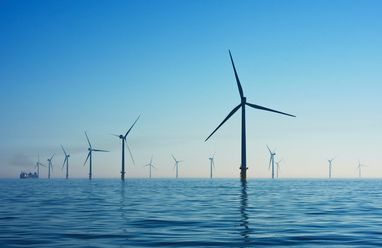
Wind turbines in water at Rampion Offshore Wind Farm, United Kingdom | Image credit: Nicholas Doherty/Unsplash
Sustainable seafood for all
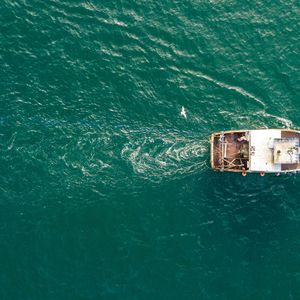
Our ocean's health is vital in tackling the climate crisis, so it’s crucial that the industries operating across our seas play their part in supporting it. The fish that we eat impacts the health of our ocean and the marine life that call it home. According to the UN, unsustainable fishing is the greatest driver of marine biodiversity loss in the world.
- More than 2 billion people globally depend on seafood as their primary source of protein
- 97% of UK households consume fish
- 93% of global fish stocks are either fully or over-exploited
By choosing only sustainable seafood, we can help minimise damage to vulnerable habitats and species. With our Good Fish Guide, we use the latest scientific advice to provide guidance on the sustainability of various seafood options, empowering consumers to make informed, ocean-positive choices.

A hand holding up a mobile phone with the Good Fish Guide app showing | Image credit: Billy Barraclough
The ocean needs our help
For the ocean to help combat climate change, it needs to be healthy. Sadly, this isn’t the case; the way our marine ecosystems are being used threatens their very existence – along with the climate-regulating effects they provide.
- 90% of global warming occurs in the ocean
- 90% of the ocean experienced heatwave conditions during 2023
- 2024 was the world's warmest year on record
The ocean is the solution
The ocean is essential for our survival. As well as providing us with energy, oxygen, food and income, supporting our physical and mental wellbeing, and the livelihoods of coastal communities, it plays a pivotal role in the fight against climate change.
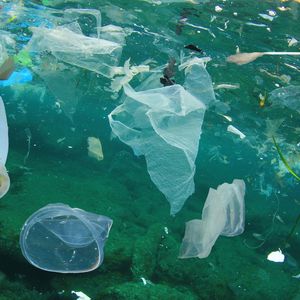
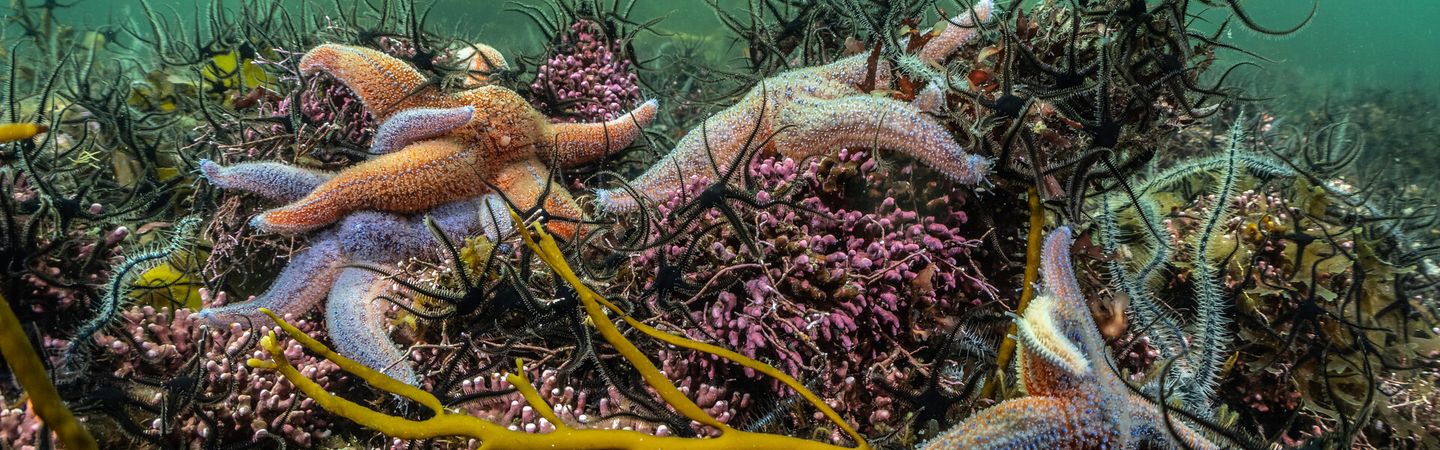
It is now more important than ever to protect, conserve and restore our ocean and its vital ecosystems, so it can continue to provide the countless benefits it brings people, wildlife, and planet. To do this, we’re working to protect and restore marine habitats and species, reduce plastic and chemical pollution, drive investment in sustainable ocean solutions, and raise awareness of the importance of our ocean for a better future.
We’ve spent 40 years regenerating the health of our seas – and we’re not finished yet.