Jellyfish occur throughout UK seas, with large blooms of most species appearing in the spring and lasting through to autumn. Here are some top tips and identifying features to help you decide which species you've spotted.
Types of UK jellyfish you might discover
Thousands of citizen scientists, like you, have shared sightings of jellyfish from around the UK, helping to build a huge data set of six jellyfish and two jellyfish-like hydrozoan species.
Hydrozoans can be either solitary individual animals or, like the two species we're recording, can live in colonies. In colonies, groups of microscopic individuals live and work together, each with a different role to play including feeding, reproducing and protecting.
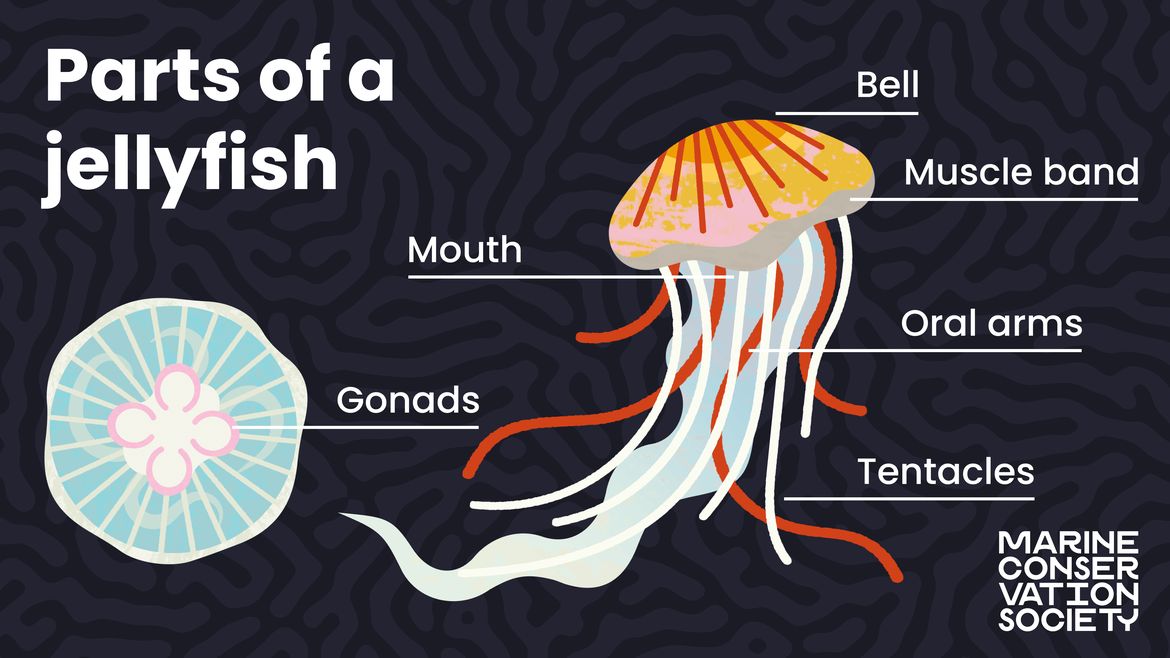
Here are some top tips and identifying features to help you decide which species you've spotted.
A barrel jelyfish | Image credit: Cathy Lewis
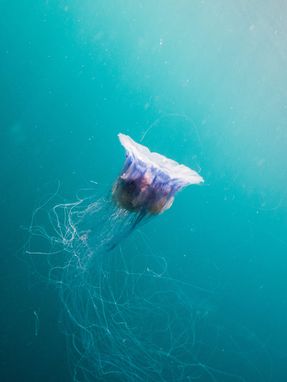
Blue jellyfish in Scotland | Image credit: Mark Harris
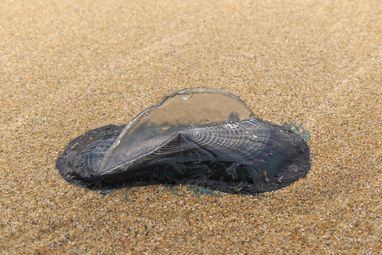
A washed up by-the-wind sailor | Image credit: Graeme MacDonald
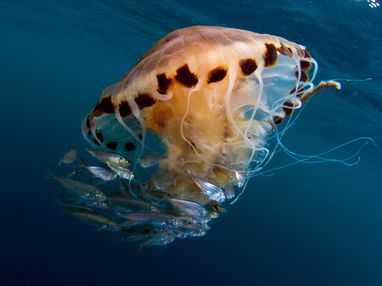
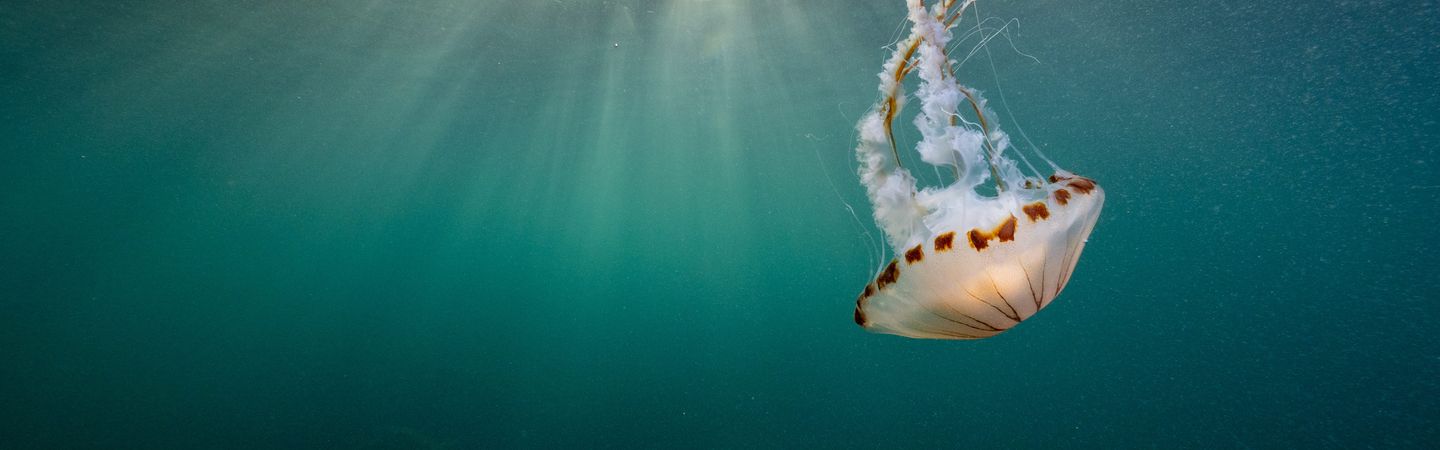
A compass jellyfish | Image credit: Mak Kirkland
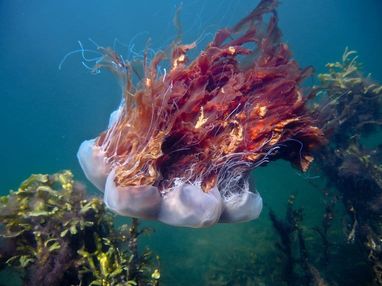
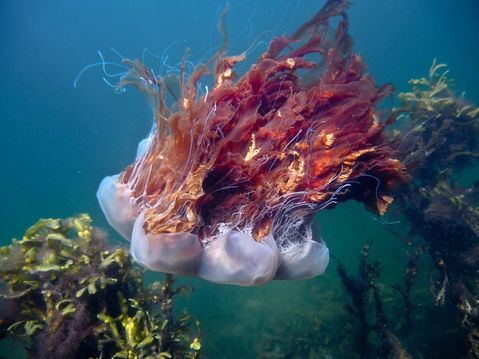
A lion's mane jellyfish | Image credit: Peter Bardsley
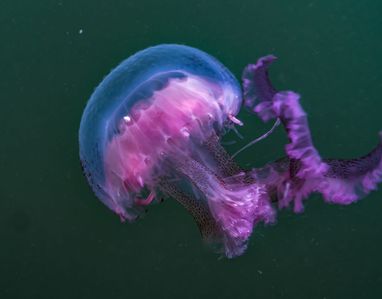
A mauve stinger | Image credit: Peter Bardsley
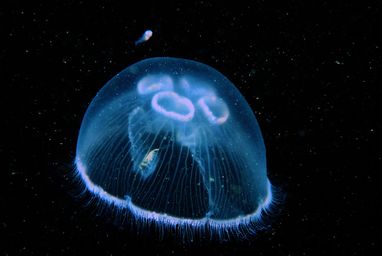
A moon jellyfish | Image credit: Paul Naylor
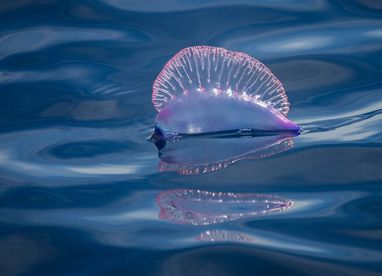
A Portuguese man o' war bobbing in water | Image credit: Gonzalo Jara
What to do if you get stung by a jellyfish
If you do get stung, while swimming in the ocean or walking on the beach (even a dead jellyfish can sting), here's what you should do:
- Don't panic: remember that most jellyfish stings are not emergencies.
- Get out of the water as soon as possible.
- Tell a lifeguard if there is one on duty, so they can warn other bathers.
- Follow the NHS guidance on treating a jellyfish sting.
Take our jellyfish quiz
How well do you know the incredible invertibrates? Put your jellyfish ID skills to the test and learn some fun facts along the way.
Learn more about jellyfish
Jellyfish play a huge role in lots of marine food chains and provide habitats for smaller species which shelter under jellyfish bells, protected from predators by their tentacles.
They are also a great indicator of change in our ocean, so tracking their numbers each year can help us to spot changes in climate, fishing activity or ecosystems.
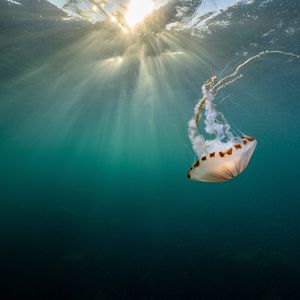
Jellyfish facts
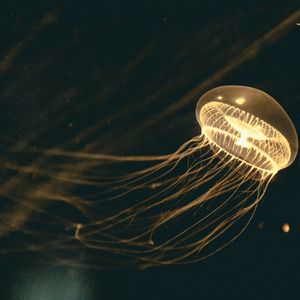
Less common jellyfish in UK waters
Our seas are full of jellyfish but there are some species which are less often seen, but just as fascinating. Check out these less widely seen jellies
Jellyfish: Helpful hero, not stinging villain
Jellyfish often get bad press for their stinging sensibilities. But they’re actually remarkable creatures which not only benefit our seas, but the wider environment, too.