

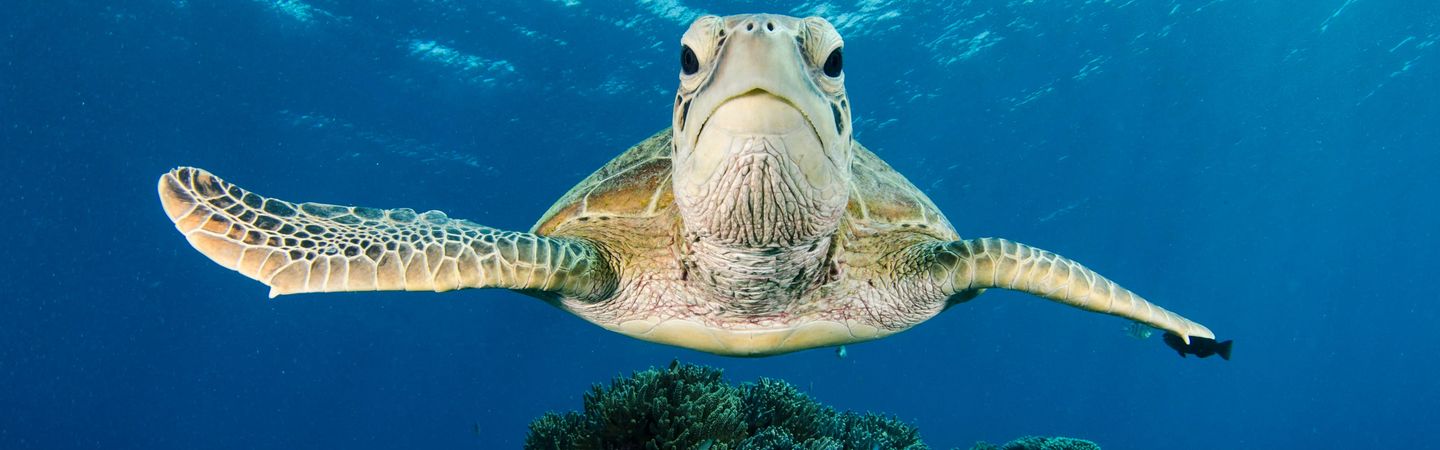
Marine turtles have been around for millions of years and play a vital role in balancing marine ecosystems, especially controlling jellyfish numbers. You can help protect endangered marine sea turtles by providing information about your encounters with these spectacular creatures in UK waters.
Our Turtle Code includes a turtle ID guide and what to do if you come across a turtle on the shore.
6 marine turtles recorded in the UK
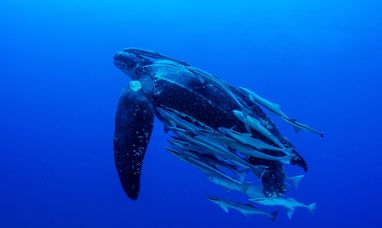
A leatherback turtle swimming in the ocean, surrounded by remora fish | Image credit: ACEgan
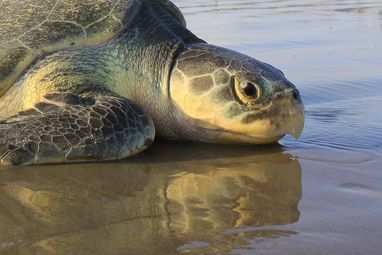
A Kemp's ridley turtle laying on a beach | Image credit: Ron Wooton
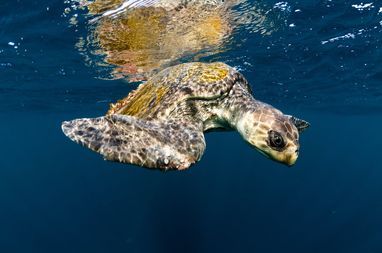
An olive ridley sea turtle swimming just below the ocean surface | Image credit: Joost Van Uffelen
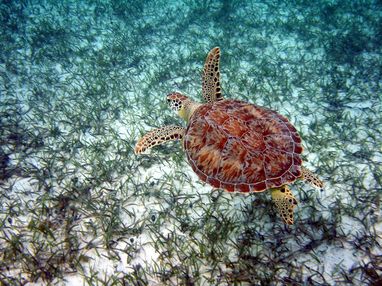
A green turtle swimming above a seagrass meadow | Image credit: Peter Richardson
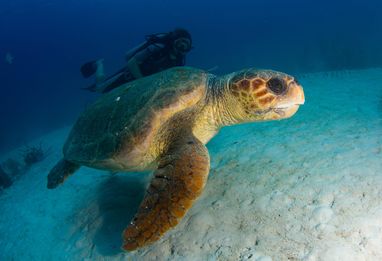
A loggerhead turtle swimming along the seabed | Image credit: Nat Taylor
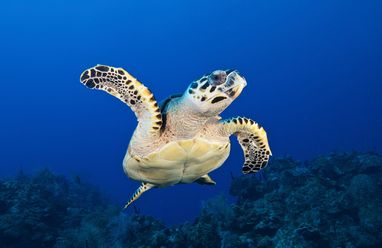
A hawksbill turtle swimming above an ocean reef | Image credit: Gregory Piper/Ocean Image Bank
One marine turtle not reported in the UK
Flatback
The flatback turtle is the only species which hasn’t been recorded in UK waters to date. It has the smallest geographic range of all marine turtle species and is restricted to the coastal waters of Australia and Papua New Guinea.
If you have any photos to submit, please email them to info@mcsuk.org tag us on social media @mcsuk with the hashtag #TurtleSighting
What to do if you find a sick, stranded or entangled turtle
You might come across turtles out at sea or beached on the shore. Here are some tips on what to do should you encounter one that needs help.
- At sea: Marine turtles will drown if trapped underwater, but prompt action can save them. AVOID TOWING TURTLES TO SHORE. They should be disentangled and released at sea wherever possible. Leatherback turtles should NOT be hauled aboard a boat.
- On shore: Do NOT return any hard-shelled species to the water (in the UK), they are usually young turtles that are stunned by the cold water. Wrap the turtle in a dry towel, without covering the nostrils. Report the turtle as soon as possible.
A turtle that is entangled or trapped is likely to be stressed so always approach calmly and cautiously. Large turtles deliver a serious bite and a blow from a flipper can be painful, so be careful.
For detailed information about who to contact if you find a sick, stranded or entangled turtle, download our Turtle code leaflet.
Threats to marine turtles
Over the last 200 years, human activities have had a negative effect on their survival with six out of seven species now threatened with extinction.
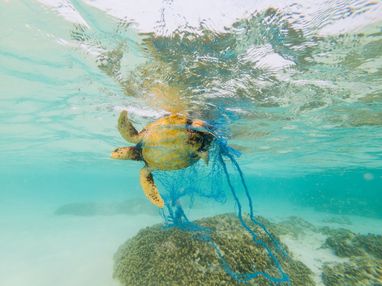
A hawksbill turtle entangled in a discarded fishing net | Image credit: Mohamed Abdulraheem
Marine turtles are protected
Marine turtles are legally protected but there is no offence if turtles are caught accidentally in fishing gear. Nor is it an offence to help turtles if entangled or stranded, or to temporarily hold dead turtles for later examination by experts.
This project is funded by the Government's Green Recovery Challenge Fund. The fund was developed by Defra and its Arm's-Length Bodies. It is being delivered by The National Lottery Heritage Fund in partnership with Natural England, the Environment Agency and Forestry Commission.

Discover more about turtles
Marine turtles: Your questions answered
Ever wondered what the difference between a turtle and tortoise is? Find out as we answer your commonly asked questions about turtles.
Why marine turtles are important to the ocean
For millions of years, marine turtles have proven themselves to be valuable creatures that provide benefits to marine ecosystems, the wider environment, and us humans, too.
Turtle projects in the UKOTs
We're supporting our UKOT partners in the protection and management of their fragile environments and species like marine turtles.

