

Angelshark
Squatina squatina
IUCN Status:Critically Endangered
Where can they be found?
All around the UK, but extremely rare.
Please note: this map is intended as a guide for general locations rather than detailed localised populations.
Did you know... Though usually solitary animals, up to one hundred Angel sharks have been observed off Gran Canaria in the Summer.
Key facts about Angelsharks
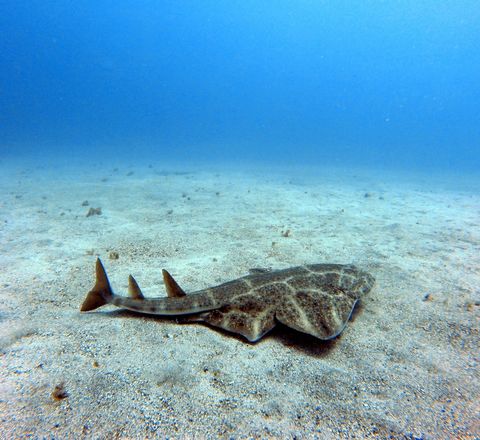
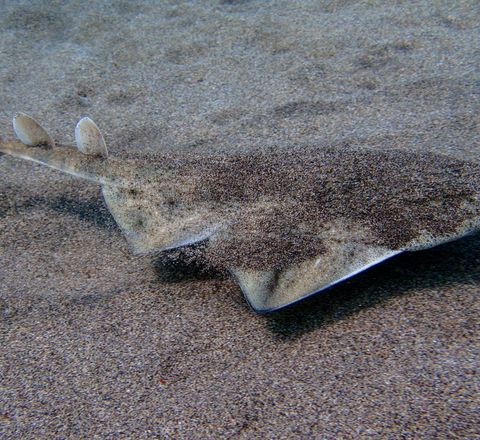
The angel shark has a flattened, ray-like body with large pectoral and pelvic fins, yet can be recognised as a shark by its sturdy tail. Its coloration ranges from greyish to reddish-brown, patterned with small dark and light spots which helps it remain camouflaged amongst the sandy or muddy seabed.
In the UK, it was historically referred to as “monkfish”, however this name is now given to anglerfish.
Angel sharks are a master of disguise making them a remarkable ambush predator. They feed primarily at night, preying on bottom-dwelling fish like flounder, plaice, and sometimes crustaceans and small sharks. Hiding along the seabed with only their eyes showing, they wait until their lunch comes to them before sucking up prey into their mouth, using a flexible “neck” that allows quick upward jaw thrusts.
Unfortunately, they are extremely vulnerable to bottom-trawling. They are victims of by-catch but also are unable to hide if the seabed they used as camouflage is destroyed. This leaves them unable to hunt successfully.
| IUCN status | Critically Endangered |
|---|---|
| Age | They live for around 30 years. |
| Diet | Angelshark enjoy bottom-dwelling bony fishes, especially flatfishes, though they also prey on skates and invertebrates. |
| Habitat | Open ocean, subtidal, seabed |
| Length | 2.4m |
| Speed and distance | Angelsharks are not fast swimmers at all, as their body shape is adapted for ambush rather than pursuit. They spend their time in one spot waiting for prey to come too close rather than sustained swimming. Therefore, exact speeds aren’t well documented. Because they rely on ambushing within the seabed, angel sharks do not travel very far. They may move occasionally when they are discovered, but they will only move a few kilometres before burying themselves in the sand again. |
| Weight | 80kg |

