

Ballan wrasse
Labrus bergylta
IUCN Status:Least Concern
Where can they be found?
All UK, especially North and East
Please note: this map is intended as a guide for general locations rather than detailed localised populations.
Did you know... Ballan wrasse start life as a female but may turn male as they grow older. This is usually caused by the loss of the male within the group - fascinating!
Key facts about Ballan wrasses
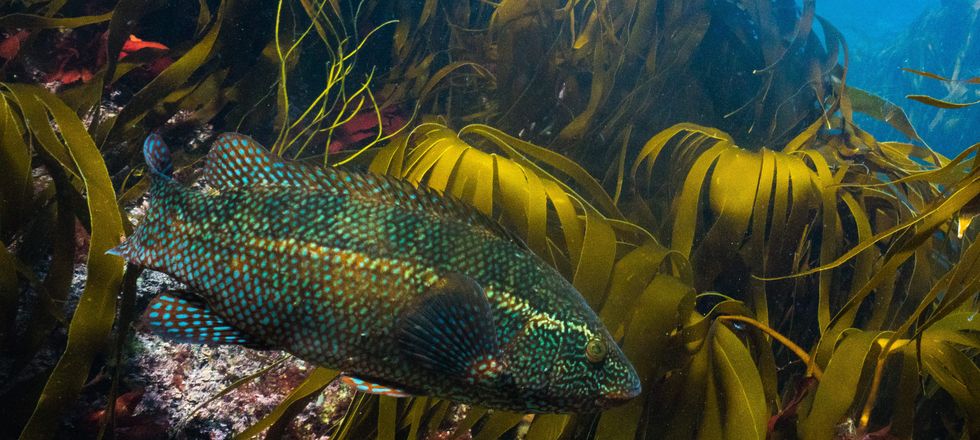
The ballan wrasse is the largest wrasse species in UK waters, instantly recognisable by its chunky, muscular body, broad head, and strong jaws. Its sides are slightly flattened, giving it a powerful, torpedo‑like profile built for weaving through rocky reefs and dense kelp forests. One of its most striking features is its incredible variety of colours and patterns. They can be mottled green, brown, orange, or reddish, often decorated with spots, stripes, or pale patches which make each fish look almost unique.
Ballan wrasse are also known for their curious and confident nature. Snorkellers and divers often find that these fish will approach them from a respectful distance, to investigate them before darting back into the shelter of rocks and swaying kelp. Their inquisitiveness makes them one of the most engaging species to encounter along Britain’s coasts.
Ballan wrasse live in small groups structured around a single dominant male. This male defends a territory that contains several females, maintaining order within the group.
| IUCN status | Least Concern |
|---|---|
| Age | Ballan wrasse can live for an incredibly long time. Their average lifespan is 25 - 30 years old! |
| Diet | Ballan wrasse enjoy meals of small crustaceans and hard shelled invertebrates. |
| Habitat | Rocky shore, subtidal |
| Length | 30-50cm |
| Speed and distance | While the exact speed of a ballan wrasse isn't widely documented, we do know that they're not very strong swimmers - preferring to swim in slow moving water. |
| Weight | up to 1.8kg |

