

Brown crab
Cancer pagurus
IUCN Status:Least Concern
Where can they be found?
All UK. The lower you can go on the shore improves your chances of finding the really big specimens that inhabit rocky crevices close to the low tideline.
Please note: this map is intended as a guide for general locations rather than detailed localised populations.
Did you know... Brown crabs spend most of the day hidden under rocks or buried in sand, coming out at night to hunt. Although they could definintley give you a nasty pinch, they are a docile species and prefer to hide rather than fight.
Key facts about Brown crabs
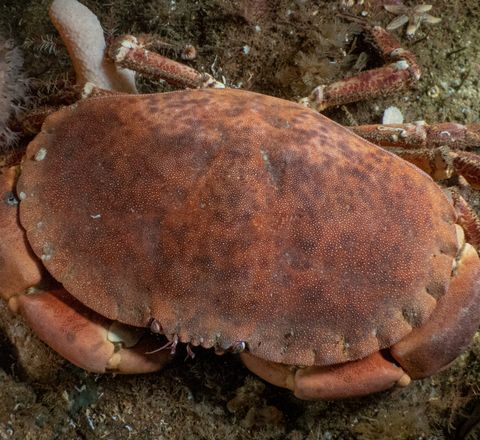
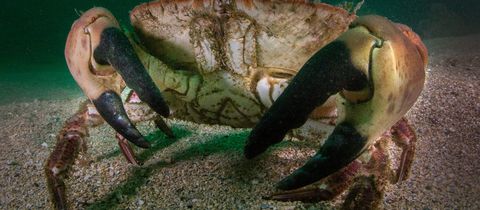
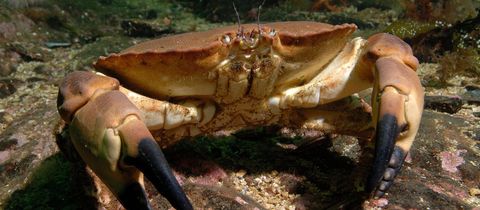
Found from the Shetland Isles to the English Channel, this hardy crustacean thrives in our cold, nutrient-rich waters. With its pinkish-brown shell edged like a pie crust and powerful black-tipped claws, the brown crab is a familiar sight among beachgoers.
Though hardy, like all crabs, it must moult; shedding its protective shell to grow. During this stage, it becomes a vulnerable “softy,” hiding under beach boulders until its new armour hardens over a few days. This natural cycle makes it highly susceptible to predators and environmental stress during this time.
Brown crabs are also known as ‘edible crabs’ as they are heavily fished for their prized meat. While they currently remain common, overharvesting and habitat disruption can threaten local populations.
| Also known as | Edible crab |
|---|---|
| IUCN status | Least Concern |
| Age | This cornish pasty-looking crab can live for an incredible 25-30 years, though some specimens prevously found have thought to be around 100 years old. Mind boggling! |
| Diet | Similar to other crabs, the brown crab's diet consists of mainly molluscs and smaller crustaceans. |
| Habitat | Rocky shore |
| Length | 10-30cm |
| Speed and distance | On the slower end of the crab scale, the brown crab travels at roughly 10cm a second. |
| Weight | 1-3kg |

