
Lion's mane jellyfish
Cyanea capillata
IUCN Status:Not Evaluated
Where can they be found?
North UK seas – May to October. Found in the cold waters of Arctic, North Atlantic, and North Pacific seas, but have been seasonally seen in warmer southern waters.
Please note: this map is intended as a guide for general locations rather than detailed localised populations.
Did you know... The largest one recorded had tentacles 36.6 metres long! They’re a favourite food for the leatherback turtle.
Key facts about Lion's mane jellyfishs
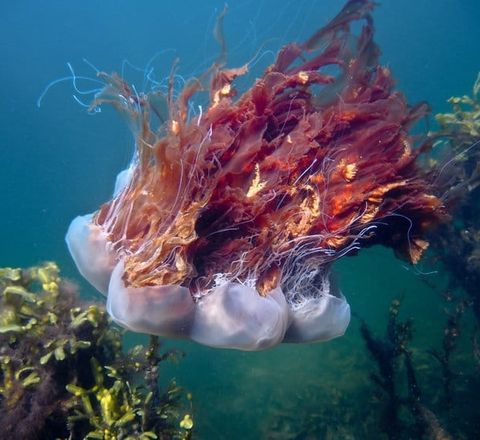
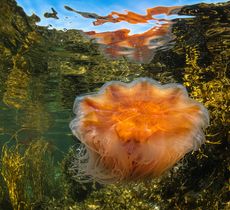
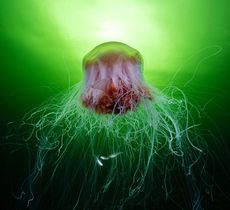
Always an exciting find for beach combers, the lion’s mane jellyfish lives up to its name, with fantastic deep-red, fiery tentacles. Be careful though – even beached they can deliver a painful sting.
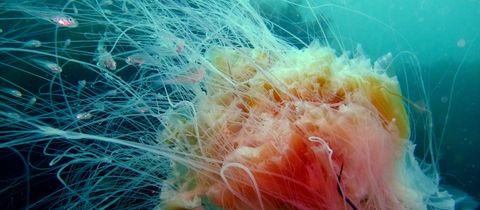
Spot them by their large reddish-brown, umbrella shaped bell, and from their mass of short, thick, folded arms as well as long hair-like tentacles.
| IUCN status | Not Evaluated |
|---|---|
| Age | Jellyfish generally don’t have very long lifespans, but while some species only live a few hours, the lion’s mane is comparatively long at a few years. |
| Diet | Jellyfish often prey on other jellyfish, with the lion’s mane’s diet including the smaller moon jellyfish. They also eat small fish, tiny crustaceans, zooplankton, fish larvae and eggs. To catch their food, they use specialised "harpoon-like" stinging cells (nematocysts) that shoot out and inject venom when touched, to hold and immobalise their prey. |
| Habitat | Open, cooler seas |
| Length | Typically 50cm but can reach 2 metres in diameter. |
| Speed and distance | Like many species of jellyfish, Lion's Mane jellies are not strong enough to swim easily against the water current, so often turn up on beaches at lower tides. However, they can move slowly through the water by contracting and relaxing their "bell", which helps propel them. |
| Weight | Varies greatly, but have been recorded to reach over 1,000 KG! |