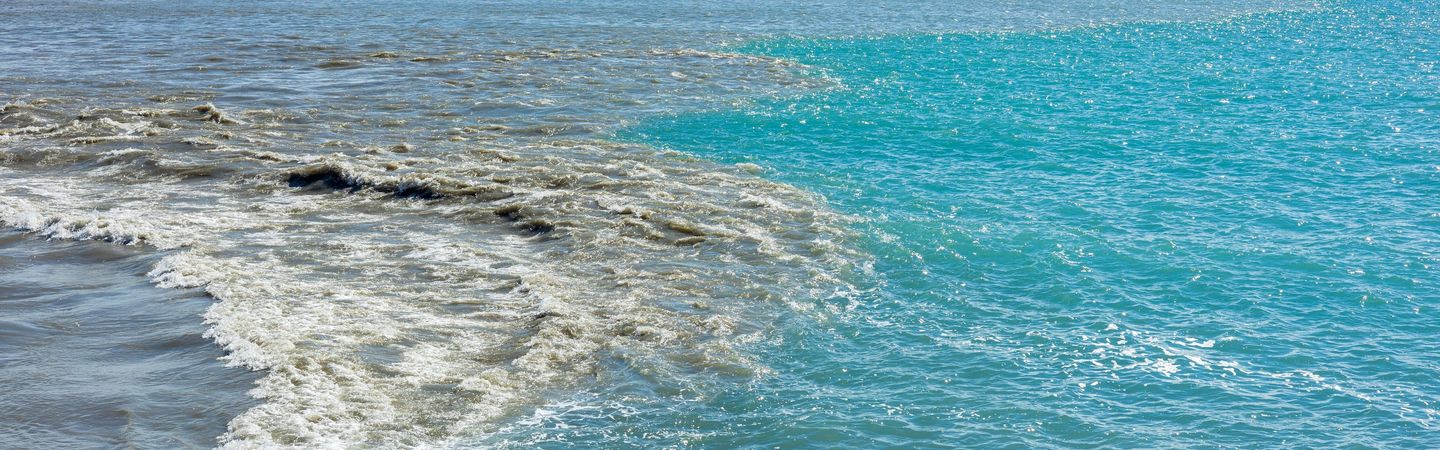
Clean, turquoise sea water near a beach. From the left dark, murky sewage or dirty runoff water is merging creating a dirty mixture between the contrasting blue ocean

Cleaning up our seas

Whether collecting and presenting evidence, taking the government to court, or collaborating with fellow eNGOs, we are putting pressure on the UK to clean up our seas and hold water companies to account.

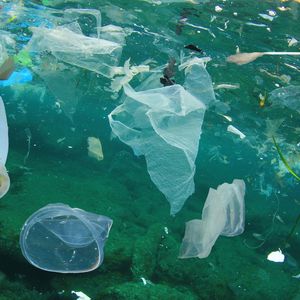
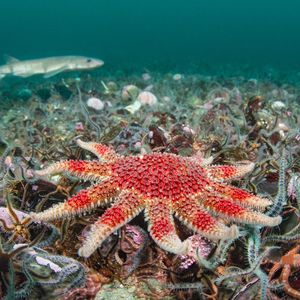
Road run-off, sewage and chemical pollution are creating a cocktail of viruses, bacteria and harmful contaminants/substances in our precious waters. With threats to people, wildlife and habitats, we need urgent action to protect our ocean and improve water quality.

    Storm Overflows Discharge Reduction Plan
    We succeeded in urging the UK Government to rewrite its Storm Overflows Discharge Reduction Plan, which set targets for water companies to reduce storm overflow spills. These ‘spills’ release plastic, chemicals and bacteria into our waters, polluting our seas and shoreline and threatening the health of people and wildlife. 

    We took the UK Government to High Court in a joint claim to urge it to impose tighter deadlines on water companies and add England's coastal waters and estuaries to the Plan, which were almost entirely excluded prior to the court case.

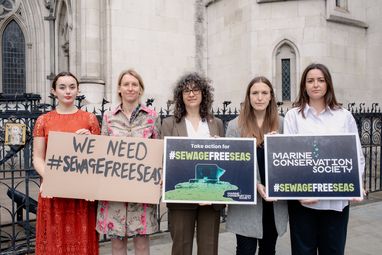
    5 members of the Marine Conservation Society team standing outside Royal courts of Justice, holding signs that read 'Sewage Free Seas'. Sandy Luk, the CEO stands in the middle.

    Members of the Marine Conservation Society team campaigning for sewage-free seas  |  Image credit: Billy Barraclough
    Although the case was dismissed, the evidence we provided as part of our legal challenge was so compelling that, in the run-up to the hearing, the UK Government launched a consultation which reviewed expanding the Storm Overflows Discharge Reduction Plan to include all English estuarine and coastal waters. 

    On 25th September 2023, the UK Government responded to the public consultation by announcing that all storm overflows in England will now be included in the Plan, including all coastal waters and estuaries. This was a win for us, for water users across the country, and for our vulnerable marine species and habitats.

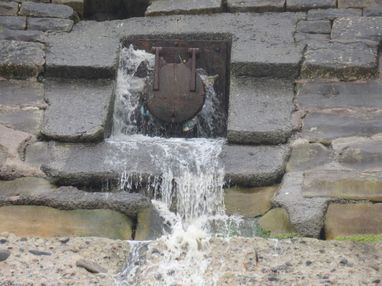
    Dirty water is flowing from a rusty metal flap gate in a concrete and stone wall, it is splashing onto the beach below

    A combined sewage overflow pipe leading sewage and rainwater into the sea after heavy rainfall  |  Image credit: Catherine Gemmell

    The Water (Special Measures) Bill
    The Water (Special Measures) Act aims to strengthen the power of water industry regulators and address “poor performance from water companies”, including “poor financial management and water pollution. 

    As the Act progressed through Parliament, we were busy behind the scenes, advocating for stronger environmental protections. 

    We sent a briefing to the Lords outlining the changes that needed to be made to the Bill (as it was at the time) to better preserve our ocean, including the need to monitor and report all sewage outflows by 2030 and for sewerage companies to publish annual progress reports. We spent time meeting with peers and empowering them with the knowledge they needed to see these amendments through.

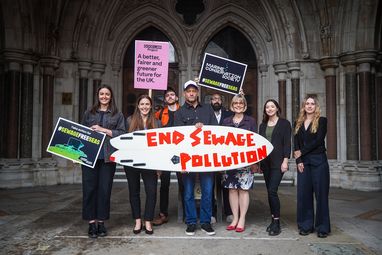
    Members of the Marine Conservation Society team stand with other NGOs outside Westminster holding a surf board reading 'end sewage pollution'.

    End sewage pollution campaigners  |  Image credit: Good Law Project

    We were pleased to see both amendments adopted and Baroness Young of Old Scone echoing our concerns about PFAS pollution in the House of Lords, highlighting the need for swift Government action on chemical pollution.

    94

    %

    of UK water firms showed PFAS detected at source

    Check out our other big wins