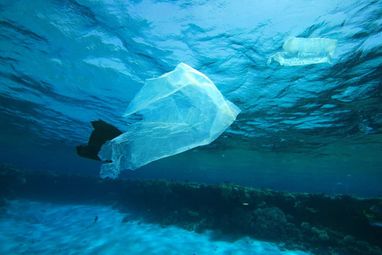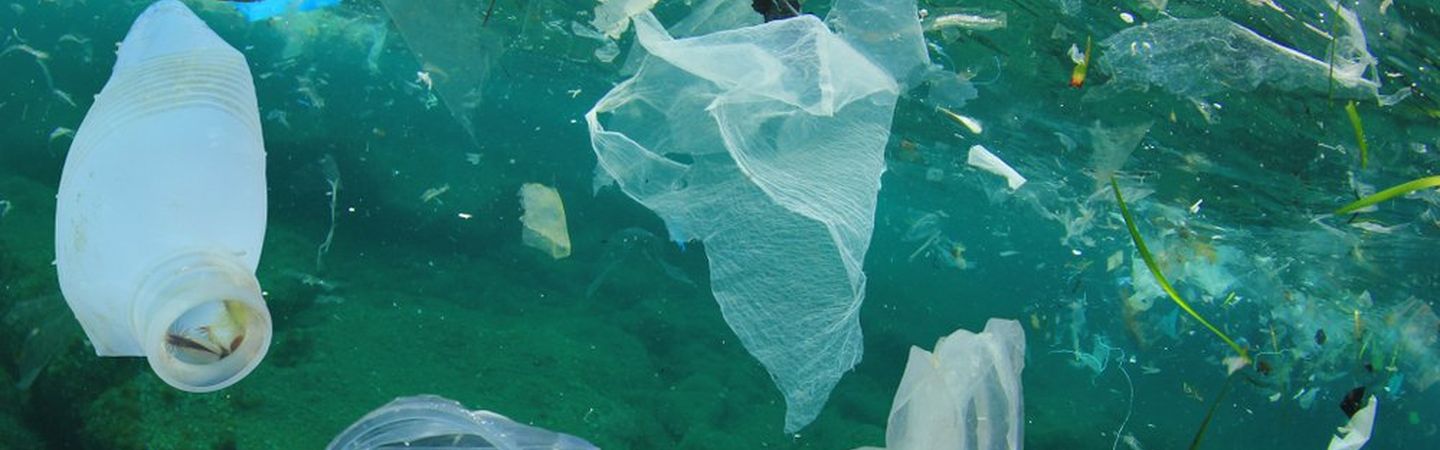
Different types of plastic including bags, cups and straws are pictured under the ocean, highlighting the plastic pollution problem

Tackling plastic pollution

Plastic pollution is one of the greatest challenges our ocean faces right now. From single-use plastics to disposable vapes, we influence policies, secure bans and work to introduce ocean-friendly changes to turn the tide on the plastic problem.

    Deposit Return Schemes

    After almost a decade of campaigning, we’re delighted that all four UK nations have committed to introducing Deposit Return Schemes (DRS) by October 2027 for metal and plastic drinks containers. 

    We were a founding member of the ‘Have You Got the Bottle Campaign?’ in 2015, led by Action to Protect Rural Scotland, which led to Scotland becoming the first UK nation to commit to introducing a Deposit Return Scheme. We then launched our Bottles for Change campaign in 2018, which gathered strong support for return schemes for all drinks containers in England, Wales and Northern Ireland.

    Since then, we’ve been hosting parliamentary events, writing briefings, responding to government consultations and using our Beachwatch data to demonstrate the urgent need for DRS across the UK.

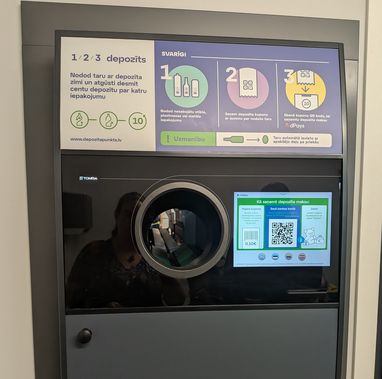
    A shot of a reverse vending machine at the Deposit Return Centre in Latvia. A description of how to use it is clear on the top of the machine.

    A reverse vending machine at the Deposit Return Centre in Latvia  |  Image credit: Catherine Gemmel
    Our Youth Ocean Network has played an important role, speaking out, raising awareness and creating a video to highlight the importance of DRS which was shown by Reloop at its deposit return event at the 2024 Labour Party Conference.

    We’ve raised awareness about drinks-related litter and the benefits of DRS among our supporters, volunteers, corporate partners, and wider society, and our DRS Fan Club evidences the widespread support. 

    While we wait for the new schemes to come into effect, we’ll continue keep up the pressure to make sure DRS become a reality in all four nations by the 2027 deadline.

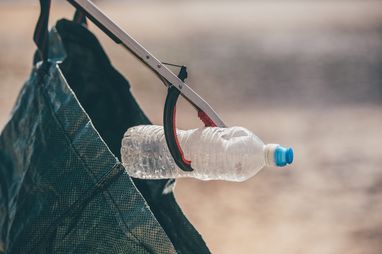
    A close-up of a person using a litter picker tool to place a clear plastic water bottle with a blue cap into a dark green reusable bag. The person is out of shot.

    A plastic bottle recorded at a Marine Conservation Society beach clean  |  Image credit: Aled Llywelyn

    Single-use plastics
    Our Beachwatch data has played an influential role in securing bans on single-use plastics across the UK by evidencing how prolific this type of pollution is. 

    Thanks to our dedicated volunteers, we have been able to highlight the most problematic single-use plastic items washing up on our shores, including cotton buds, straws and ‘on the go’ items like cutlery and food containers. We use this data to call for bans and respond to government consultations. 

    In October 2020, England banned single-use plastic cotton buds, stirrers and straws. In 2023, single-use items including plastic plates, trays, bowls, cutlery, balloon sticks, and certain types of polystyrene cups and food containers were also banned.

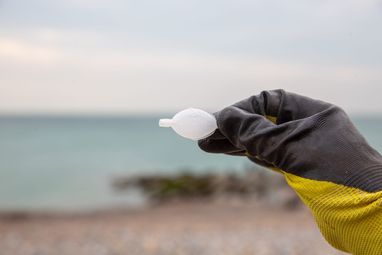
    A gloved yellow hand holding an empty single-use plastic fish-shaped soy sauce container. In the background is a beach

    An empty single-use plastic fish-shaped soy sauce container found on a beach  |  Image credit: Billy Barraclough
    Scotland banned single-use plastic cotton buds in 2019, before implementing a further ban on some of the most problematic single-use plastics in 2022. The Scottish Government has committed to meet, or go further than, the Single-Use Plastic (SUP) Directive, which we’ll be holding them to. 

    Wales became the latest nation to take a stance on the plastic problem, by legislating against a comprehensive list of single-use plastic items in 2022, including plastic cotton bud sticks, thin plastic carrier bags, and products made of oxo-degradable plastic. 

    We’re continuing to monitor the single-use plastic items recorded on UK beaches to see what impact the bans are having, and we’ll continue to campaign for bans on other problematic litter to keep our marine environment cleaner, safer and healthier for us all.

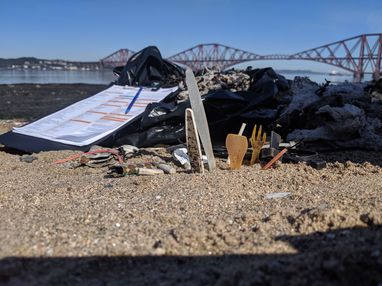
    Single-use plastic on some sand. Next to it is a Marine Conservation Society beach clean survey form. The Forth bridge in Scotland can be seen behind it.

    Single-use plastic near Forth bridge, Scotland  |  Image credit: Catherine Gemmell

    Disposable vapes
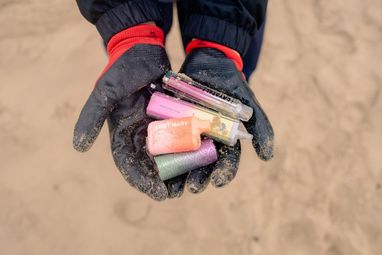
    From the 1st of June 2025, disposable vapes were banned across the UK. A fantastic win for environmental activist Laura Young, whose campaign we supported with our volunteers and Youth Ocean Network members working tirelessly to raise awareness of discarded vapes washing up on our beaches. 

    The ban is a great step in removing single-use products from the market and helping to protect marine species and environments. We must now move away from using other single-use products, including plastic cigarette filters, and towards a circular economy – one in which refilling and reusing is the norm, rather than throwing away and polluting our environment. 

    A pair of gloved hands holding multiple-coloured vapes. The photo is from a top down view.

    Disposable vapes found at Portsmouth Beach  |  Image credit: Billy Barraclough

    Plastic in wet wipes
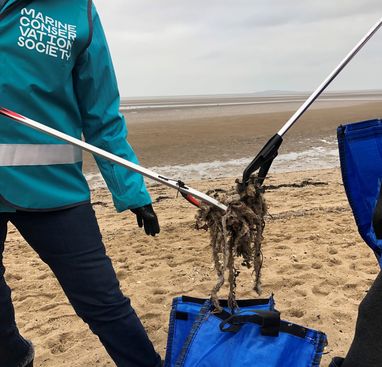
    In November 2025, the UK Government passed legislation banning the sale and supply of wet wipes containing plastic in England – a huge win following our joint campaign with Fleur Anderson MP. 

    Four years previously, we proudly backed Fleur Anderson MP’s wet wipe bill as she presented it in UK Parliament, with our Beachwatch data evidencing the issue of wet wipe pollution over decades. 

    The ban, which will come into effect in May 2027, follows legislation for a ban in Wales, and marks a major milestone in tackling plastic pollution in our seas. In the meantime, we will keep pushing for clearer labelling and a stronger definition of plastic

    2 volunteers picking up soiled wet wipes using litter pickers

    Wet wipes found at Cramond beach clean  |  Image credit: Kirsty Crawford

    We’ve been raising the issue of single-use plastic wet wipes in Scotland for over a decade, and successfully called on Scottish Government to ban them through our work on the Marine Litter Strategy and liaison with Scottish Water, including supporting their Nature Calls campaign. The regulations are still to be confirmed.

    72

    %

    of beaches surveyed in 2023 found sewage-related items like wet wipes

    Plastic carrier bag charge

    We successfully campaigned for carrier bag charges across the UK – including the increase from 5p to 10p – by using the data gathered by our Beachwatch volunteers to evidence the scale of plastic bag pollution for public and political campaigning.  

    The “Break the Bag Habit” national campaign, which we launched with partners including The Campaign to Protect Rural England, Keep Britain Tidy, Surfers Against Sewage, Thames 21 and Greener upon Thames, also helped to raise awareness and gather public support for the charges.

    An underwater photo of 3 plastic bags floating in the ocean.

    Plastic Bags in the ocean  |  Image credit: Rich Carey

    We were delighted to see the results of our efforts, with every country in the UK implementing the charges. Since then, data from our volunteers has shown the number of carrier bags washed up on beaches has reduced by a whopping 80% in the past decade! This is a wonderful result and demonstrates just how effective policies to reduce plastic consumption and pollution can be.


    Check out our other big wins