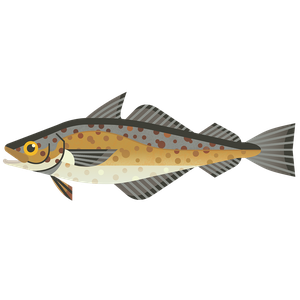
Atlantic cod
What to check for
Location
Iceland
Technical location
Atlantic, Northeast, Iceland Grounds
Caught by
Bottom trawl (otter)
Certification
 Marine Stewardship Council (MSC)
Rating summary
Icelandic cod is abundant and not subject to overfishing. There is a management plan in place, which has successfully reduced fishing pressure. Most Icelandic cod is caught by longlining. This method can have a bycatch of vulnerable species, including spotted wolffish and beaked redfish. All Icelandic cod landed by the Icelandic fleet is MSC certified. Certification is conditional on having a strategy to avoid bycatch, and better data to prove that it is not having a detrimental impact on Endangered, Threatened or Protected species.Rating last updated July 2023
Technical consultation summary
Icelandic cod is abundant and not subject to overfishing. The spawning-stock biomass (SSB) was 368,345t in 2023. It remains 39% above target levels (MSY BTrigger, 265,000t). The Harvest Rate (HR) in 2023 was 0.20. This is 91% of HR MSY. There is a management plan in place, which has successfully reduced fishing pressure. Catch limits are set in line with scientific advice and are expected to keep the stock at target levels. All Icelandic cod landed by the Icelandic fleet is MSC certified. There are no requirements or recommendations to make any improvements to management. However, management is not adequately controlling the impacts of the fishery on bycatch species. Most Icelandic cod catches are by otter trawling, which is likely to cause some damage to the seabed. Bycatch of spotted wolffish and beaked redfish is of concern. Both species have been steadily declining following recruitment failure and are now at very low levels. Wolffish is mainly caught as bycatch and has a recommended catch limit of around 300t. The certification report suggests a bycatch in the certified cod longline and trawl fleets of over 600 tonnes each in 2020/21. Demersal beaked redfish now has a zero catch recommendation. Certification reports suggest the certified cod trawl fishery caught around 10,000t per year from 2016-2020. This is equivalent to the total reported catch. Status quo fishing pressure is projected to result in a continued decline. It seems likely that this fishery is contributing to the unsustainable fishing pressure on both species and could be preventing recovery. There are no conditions on the certified fishery relating to the impacts of trawling, despite the levels of bycatch.