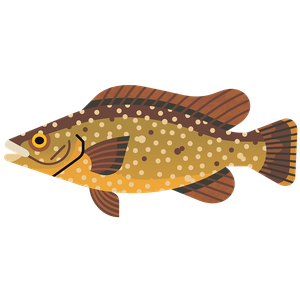
Black bream is a data limited species in the English Channel. There is concern for the biomass, but no concern for fishing pressure.Route 2 (data limited) scoring has been applied to this rating due to the absence of a stock assessment and biomass reference points. Black bream in the English Channel is considered to have medium resilience to fishing pressure, but their stock status remains unknown. Although black bream abundance along the south UK coast and in the southern North Sea has increased over the past century, this is more likely a result of climate-driven range shifts with rising sea temperatures rather than genuine stock growth.Black bream is vulnerable due to its life history. During the spawning season, from April to July, adults form inshore aggregations and seek out specific habitats – level bedrock with a thin layer of gravel or sand – to form nests. These nests are sensitive to disturbance, and habitat degradation can negatively impact recruitment. There is also evidence of nest site fidelity in black bream, meaning adults return to the same spawning areas annually. This behaviour leads to spatial structuring and a basis for genetic differentiation within the English Channel population. As a result, there is an increased risk of local depletion and potential loss of niche adaptations, especially as fishing effort is greatest during the spawning season.Black bream are also protogynous hermaphrodites, meaning all individuals are born female and transition to male at a certain size and age. Fishing pressure is skewed towards larger males, yet these mature males are crucial in black bream reproduction as they guard nests of fertilised eggs. Their removal can reduce recruitment by leaving eggs vulnerable to predators and smothering. Given these vulnerabilities and the lack of biomass indicators, there is concern for black bream biomass in the English Channel.Black bream are caught by both commercial and recreational fisheries. In 2023, approximately 491 tonnes were captured cross the UK, with 36% landed by commercial vessels, 23% kept by recreational fishers, and 41% returned by recreational fishers. Recreational removals in 2023 were estimated at 114 tonnes, slightly above the 2016-2023 average of 102 tonnes, but below the 2021 peak of 133 tonnes. Over this period, an average of 63.6% of recreationally-caught fish were released, and the remainder removed. Commercial landings have varied between 2019 and 2023, with a recent peak of 179 tonnes in 2023, well above the five-year average of 123 tonnes. However, since 2018, most landings of ‘black sea bream’ have been grouped into the category of ‘sea breams’, which includes other species and may be responsible for the apparent increase in landings. Although black bream is not a major commercial species, high market prices for sea breams (£22-45/kg) create an economic incentive to target this non-TAC (Total Allowable Catch) species. Despite these pressures, there is currently no evidence to suggest that black bream is overfished, and given their medium resilience to fishing, fishing pressure is not currently considered a concern.