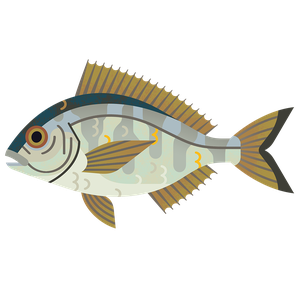
Coley
What to check for
Location
Northeast Arctic (Barents and Norwegian Sea)
Technical location
Atlantic, Northeast, Barents Sea, Norwegian Sea, Spitzbergen, and Bear Island
Caught by
Net (gill or fixed)
Rating summary
The population of coley, or saithe, in the northeast Arctic is abundant and fishing is within sustainable limits. Some appropriate management measures are in place. However, management has not adequately addressed bycatch issues. Some Arctic saithe catches are by gillnets, which could have a bycatch of endangered golden redfish.Rating last updated July 2023.
Technical consultation summary
The population of coley, or saithe, in the northeast Arctic is abundant and fishing is within sustainable limits. The most recent stock assessment was carried out by the International Council for the Exploration of the Sea (ICES) in 2023 using data up to 2022. Spawning-stock biomass (SSB) in 2022 was 741,480t. It is predicted to be 727,666t in 2023. These figures are well above the management target (SSB MGT), which is 220,000t. Fishing mortality (F) in 2022 it was 0.20. This is below the target in the management plan (FMP), which is 0.32. Some appropriate management measures are in place. This stock is managed through the Norwegian Management Plan. ICES considers it to be precautionary. The plan uses a Harvest Control Rule to calculate TACs based on the spawning stock biomass. From 2018 - 2022, Norwegian TACs have been set in line with scientific advice, but catches have varied from 95-109% of TACs. Therefore, management seems to be responsive to the status of the stock and is following scientific advice, but catches are excessive in some years. Discarding of unwanted or below-minimum-size fish is illegal. It is reported to take place in the saithe fishery at low levels, but there are no estimates to quantify it. Some Arctic saithe catches are by gillnets. This can have a bycatch of endangered golden redfish, which is of concern. In 2021, over 10,000 tonnes were caught. Around 75% of this was by trawling and 15% by gillnet. ICES reports indicate that the gillnet fishery for saithe is the main source of redfish bycatch after trawling. It therefore seems that this fishery could be contributing to the ongoing poor state of this species.