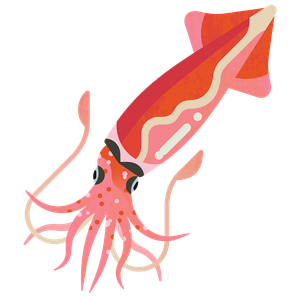
Common cuttlefish
Sepia officinalis
What to check for
Location
English Channel and Celtic Seas
Technical location
Atlantic, Northeast, Bristol Channel, Celtic Sea (North), Celtic Sea (South), English Channel (East), English Channel (West)
Caught by
Pot, trap or creel
Rating summary
There is limited data on common cuttlefish in the English Channel and wider Celtic Seas region, with concerns over declining biomass and high fishing pressure. There are few appropriate management measures in place for the inshore trap fishery. Some IFCA regions (Devon and Severn, Sussex, and Southern) have regional byelaws and voluntary codes of conduct encompassing cuttlefish, but their effectiveness is yet to be demonstrated. Trapping is a small proportion of the cuttlefish fishery. While lightweight, traps can damage sensitive seagrass beds and the improper removal or damage to eggs laid on traps poses a risk to future recruitment.Rating last updated March 2025.
Technical consultation summary
ICES assessed common cuttlefish fishing trends and modelled their biomass in 2024, using data up to 2022, but acknowledged significant limitations. Due to these uncertainties, a Route 2 (data limited) method was applied for this rating. Evidence suggests cuttlefish are fully or overexploited, as biomass has been declining longer than landings. With no national management measures in the UK, cuttlefish remain vulnerable to overfishing as a non-quota species, allowing unrestricted landings of any size. Some IFCAs (Devon and Severn, Sussex, and Southern) have introduced byelaws and codes of conduct relating to the inshore cuttlefish trap fishery, but there is little evidence that these measures support stock sustainability. Trapping is the third most common cuttlefish fishing method, accounting for 4.8% of landings in 2022. While lightweight traps generally have low seabed impacts, concerns exist over their use in sensitive spawning areas, particularly seagrass beds, where they can cause damage and uprooting. Additionally, cuttlefish frequently lay eggs on these traps. Without proper handling or adherence to voluntary codes of conduct (developed by Sussex, and Southern IFCA), egg removal and damage could further impact stock recruitment and decline.
How we worked out this Rating
There is concern for the biomass of common cuttlefish, and for the fishing pressure on the stock within the English Channel and Celtic Seas region.The common cuttlefish fishery in the English Channel and wider Celtic Seas is of significant commercial importance. However, stock status remains uncertain due to limited data. In 2023, ICES conducted an assessment using data up to 2022, but it had notable limitations. Due to these uncertainties, Route 2 (data limited) scoring has been applied to this rating. The common cuttlefish is considered highly resilient to fishing pressure.From 2020 to 2022, most catches in the English Channel (ICES areas 27.7.d,e) and Celtic Seas region (ICES Area 27.7.a,b,c,f,g,h,j,k) were taken by France, followed by the UK. Landings in the English Channel peaked between 2003 and 2007 (~18,000 tonnes), while in the Celtic Seas, they peaked between 2009 and 2011 (~2,000 tonnes). Since then, both areas have shown a declining trend in landings, with some fluctuations.In 2022, the English Channel accounted for 64.8% of total catches (12,055 tonnes), up from 52.5-63.6% in 2019 to 2021. Mean catches between 2020-2022 in the English Channel (9,524 tonnes) were below both the mean of 2017-2019 (10,808 tonnes) and the historical mean (10,415 tonnes). A similar trend was observed in the Celtic Seas, with mean catches between 2020-2022 (374 tonnes) below both the mean of 2017-2019 (605 tonnes) and the historical mean (629 tonnes).There are concerns for common cuttlefish biomass. Biomass indices indicate a long-term decline since peak abundance between 1998 and 2007, which aligns with reduced landings. However, since biomass has been declining for longer than landings, evidence suggests that cuttlefish stocks are either fully or over exploited. Combined with limited research on stock status and exploitation rates, this raises concerns for current fishing pressure on the stock.
There are few appropriate management measures in place for the inshore trap fishery of common cuttlefish in the English Channel and wider Celtic Seas region. In the UK, cuttlefish are a non-quota species with no national management measures, meaning they can be landed in unlimited numbers at any size. This lack of regulation leaves stocks vulnerable to overfishing.Some Inshore Fisheries Conservation Authorities (IFCAs) have introduced regional management measures that directly or indirectly affect cuttlefish. IFCAs regulate inshore fisheries within 6 nautical miles of the coast, but their approaches vary by region. The IFCAs with management measures relevant to the English Channel inshore cuttlefish trap fishery include Devon and Severn, Southern, and Sussex.Devon and Severn IFCA:The Potting Permit Byelaw requires a permit for trapping cuttlefish. The byelaw includes flexible conditions, allowing future adaptations specifically for cuttlefish (if developed).Southern IFCA:The Cuttlefish Traps Code of Practice is voluntary and aims to protect eggs laid on traps by minimising damage, avoiding pressure washing of traps, and ensuring traps are returned to sea at the end of the season for eggs to hatch.The Vessels Used in Fishing Byelaw prohibits commercial fishing by vessels larger than 12m, with some exceptions. Sussex IFCA:The Cuttlefish Good Practice Guidance is voluntary and aims to protect eggs laid on traps by minimising damage, avoiding pressure washing of traps, and ensuring traps are returned to sea at the end of the season for eggs to hatch.The Shellfish Permit Byelaw limits the number of commercial cuttlefish pots to 300, and recreational pots to 2 per permit holder.Although these local management measures offer some protection, the lack of unified national approach continues to threaten common cuttlefish stocks due to their short, two-year life cycle. Cuttlefish spawn once before dying, with mature adults migrating inshore between February and July to reproduce. The inshore trap fishery primarily targets mature cuttlefish on breeding grounds between April and June, allowing some opportunity for spawning. However, risks remain, including:Removal of individuals before spawning, which increases overfishing risks from reduced reproductive output. Damage to breeding and nursery grounds from trap deployment, soaking, and hauling.Egg loss, as cuttlefish frequently lay eggs on traps, which may be cleaned or discarded. Since IFCA management measures for cuttlefish are not universal and there is no evidence that current local approaches are improving stock status, adopting more effective measures across the English Channel region could help mitigate the ecological impacts of the trap fishery. However, with the inshore trap fishery accounting for just 4.8% of landings in 2022, effective offshore trawling management is equally critical. High market prices (£2.71-£3.50 per kg in 2021-2023) have incentivised extended fishing seasons in both sectors, but offshore fleets remain dominant with 87% of landings. Increased effort in the offshore trawling fishery could reduce the number of cuttlefish reaching inshore spawning grounds, threatening the viability of the inshore fishery. To safeguard both fisheries in the long term, aligned management strategies across offshore and inshore sectors are essential. Management compliance in the EU and UK has been inconsistent, with ongoing challenges in enforcing some regulations.The Marine Conservation Society views Remote Electronic Monitoring (REM) with cameras is one of the most cost-effective tools for providing reliable fisheries data and aiding informed management decisions. Fully monitored fisheries enhance collaboration, data accuracy, stock recovery, and reduce impacts on marine wildlife and habitats. However, the full potential of REM may only be achieved when it tracks fishing location and documents catch and bycatch, particularly where vulnerable species and habitats are at risk. As of January 2024, the EU is introducing a Remote Electronic Monitoring (REM) mandate for EU vessels, including CCTV cameras on vessels 18m or more that pose a potential risk of non-compliance, within the next 4 years. Across the UK, different approaches to REM are being taken and legislation is expected to be in place across all 4 countries within the next few years. The Fisheries Act (2020) requires the development of Fisheries Management Plans (FMPs) (replacing EU Multi-Annual Plans) in the UK. 43 FMPs have been proposed and are at various stages of development and implementation, these should all be published by the end of 2028. FMPs have the potential to be very important tools for managing UK fisheries, although data limitations may delay them for some stocks. It is also essential the UK governments define and adopt a standardised approach or model across the four nations to a universally defined FMP design, to ensure the consistence, quality and coherence of all the proposal FMPs. The Marine Conservation Society is keen to see publicly available Fishery Management Plans for all commercially exploited stocks, especially where stocks are depleted, that include: An overview of the fishery including current stock status, spatial coverage, current fishing methods and impacts Targets for fishing pressure and biomass, and additional management when those targets are not being met, based on the best scientific evidence Timeframes for stock recovery Improved data collection, transparency, and accountability, supported by technologies such as Remote Electronic Monitoring (REM) Consideration of wider environmental impacts of the fishery, including habitat impacts and minimising bycatch Stakeholder engagementThe common cuttlefish fishery is included in the Channel non-quota demersal FMP, coordinated by Defra. At the time of writing, it is too soon to know whether proposed management measures will be effective in managing the stock. For more information about this FMP and expected progress and timelines, see [https://www.gov.uk/government/collections/fisheries-management-plans#published-fmps].
Cuttlefish trapping accounts for a small portion (~5%) of landings. While these lightweight traps have low seabed impact, they can damage sensitive seagrass beds. Eggs are often laid on traps, and improper removal or damage can be detrimental to future recruitment.In 2022, pots, traps, and creels accounted for approximately 4.8% of common cuttlefish landings. Cuttlefish traps are larger than most other traps but are lightweight. Most designs feature two entrances with flexible plastic ‘fingers’ that allow cuttlefish to enter easily but make escape difficult. Live females are used as bait to attract males during the spawning season.Although the overall benthic impact of potting is considered low, damage can occur during deployment, soaking, and hauling due to direct contact with the pot, end weights, or from rope scouring. Research suggests that while some damage does occur, it is unlikely to be significant unless potting intensity is high (defined as approximately 30 pots per 500 square metres). Habitat damage is more likely when traps are set in rocky areas that support slow-growing sessile species like soft corals, sponges, and sea mats. However, cuttlefish prefer to spawn in seagrass meadows, which provide important ecological and economic benefits but are highly sensitive to disturbance. Since the inshore trap fishery targets cuttlefish during their spawning season, traps can be deployed on seagrass beds where they can shear, uproot, or smother seagrass.Bycatch in the cuttlefish trap fishery is likely minimal, as the trap design allows most fish and shellfish to escape. The risk of ghost fishing is also low, as traps are hauled every 1-2 days, and the seasonal fishery operates in good weather, reducing the likelihood of lost gear. However, a key issue is that cuttlefish frequently lay eggs on the traps themselves. Eggs attached to the outer surface may be removed when traps are hauled, with estimates suggesting between 1,000 and 3,000 eggs can be laid on a single trap – equivalent to the fecundity of one female. This could result in up to 3 million eggs lost per 3,750 pots, with the potential to affect future recruitment. Some local authorities (e.g. IFCAs) encourage fishers to minimise egg damage and return traps to the sea at the end of the season to allow eggs to hatch. However, these measures remain voluntary rather than mandatory.To improve monitoring and reporting of fishing activity, The Marine Conservation Society would like to see remote electronic monitoring (REM) with cameras implemented, used and enforced.
References
Alemany, J., Rivot, E., Foucher, E., Vigneau, J., Robin, J. 2015. A Bayesian two-stage biomass model applied to the English Channel stock of cuttlefish (Sepia officinalis). 2015 Annual Science Conference, Copenhagen, Denmark. CM 2015/A:06. Available at: https://ices-library.figshare.com/articles/conference_contribution/A_Bayesian_two-stage_biomass_model_applied_to_the_English_Channel_stock_of_cuttlefish_Sepia_officinalis_/25681989?file=45835638 [Accessed on 11.03.2025]Barrett, C.J., Bensbai, J., Broadhurst, M.K., Bustamante, P., Clark, R., Cooke, G.M., Di Cosmo, A., Drerup, C., Escolar, O., Fernández-Álvarez, F.A. and Ganias, K. 2022. Cuttlefish conservation: a global review of methods to ameliorate unwanted fishing mortality and other anthropogenic threats to sustainability. ICES Journal of Marine Science, 79(10), pp.2579-2596.Bloor, I. 2012. The ecology, distribution and spawning behaviour of the commercially important common cuttlefish (Sepia officinalis) in the inshore waters of the English Channel. The Marine Institute & The Marine Biological Association of the United Kingdom. Plymouth University. PhD thesis.Blue Marine Foundation, 2021. Cuttlefish Symposium: Proceedings 25 November 2021. Available at: https://www.bluemarinefoundation.com/wp-content/uploads/2022/05/Blue-Marine-Foundation-Cuttlefish-Symposium-Proceedings-Report_WEB-FINAL.pdf [Accessed on 12.03.2025]Davies, D. and Nelson, K. (2018). Supporting Sustainable Sepia Stocks. Report 2: The English Channel fishery for common cuttlefish (Sepia officinalis). Sussex IFCA. Available at: https://secure.toolkitfiles.co.uk/clients/34087/sitedata/files/Conservation-Research/English-Channel-FIshery.pdf [Accessed on 11.03.2025]Devon and Severn IFCA. Potting Permit Byelaw. Available at: https://www.devonandsevernifca.gov.uk/wp-content/uploads/2023/09/PottingPermitByelaw.pdf [Accessed on 13.03.2025]Eigaard, O. R., Bastardie, F., Breen, M., Dinesen, G. E., Hintzen, N. T., Laffargue, P., Mortensen, L. O., Nielsen, J. R., Nilsson, H. C., O- Neill, F. G., Polet, H., Reid, D. G., Sala, A., Skold, M., Smith, C., Sorensen, T. K., Tully, O., Zengin, M. and Rijnsdorp, A. D., 2016. Estimating seabed pressure from demersal trawls, seines, and dredges based on gear design and dimensions. ICES Journal of Marine Science, 73:1, pp. i27- i43. https://doi.org/10.1093/icesjms/fsv099EU, 2013. Regulation (EU) No 1380/2013 of the European Parliament and of the Council of 11 December 2013 on the Common Fisheries Policy. amending Council Regulations (EC) No 1954/2003 and (EC) No 1224/2009 and repealing Council Regulations (EC) No 2371/2002 and (EC) No 639/2004 and Council Decision 2004/585/EC.Gall, S.C., Rodwell, L.D., Clark, S., Robbins, T., Attrill, M.J., Holmes and L.A., Sheehan, E.V., 2020. The impact of potting for crustaceans on temperate rocky reef habitats: Implications for management, Marine Environmental Research, Volume 162, 105134, https://doi.org/10.1016/j.marenvres.2020.105134.Hiddink, J. et al., 2017. Global analysis of depletion and recovery of seabed biota after bottom trawling disturbance. Proc Natl Acad Sci. 114(31):8301–6.ICES. 2024. Working Group on Cephalopod Fisheries and Life History (WGCEPH - outputs from 2023 meeting). ICES Scientific Reports. Available at: https://ices-library.figshare.com/articles/report/Working_Group_on_Cephalopod_Fisheries_and_Life_History_WGCEPH_-_outputs_from_2023_meeting_/26048101?file=47091583 [Accessed on 10.03.2025]ICES, WGBYC, 2021. Working Group on Bycatch of Protected Species (WGBYC). ICES Scientific Reports. 3:107. 168 pp. https://doi.org/10.17895/ices.pub.9256ICES, WKCOFIBYC, 2021. Workshop on Fish of Conservation and Bycatch Relevance (WKCOFIBYC). ICES Scientific Reports. 3:57. 125 pp. https://doi.org/10.17895/ices.pub.8194Jenkin, A., Trundle, C., Street, K., Matthews, R. and Naylor, H. 2017. The impact of potting on seagrass. Cornwall Inshore Fisheries and Conservation Authority (CIFCA), Hayle. Available at: https://secure.toolkitfiles.co.uk/clients/17099/sitedata/Research_Reports/F-H-SAC-Potting-impact-on-seagrass-2016.pdf [Accessed on 19.03.2025]JNCC, 2020. Marine Protected Area Mapper. Available at: https://jncc.gov.uk/mpa-mapper/ [Accessed on 13.1.23]Kennelly, S. J. & Broadhurst, M. K., 2021. A review of bycatch reduction in demersal fish trawls. Rev Fish Biol Fisheries 31, 289–318. https://doi.org/10.1007/s11160-021-09644-0Kynoch, R., Fryer, R. & Neat, F., 2015. A simple technical measure to reduce bycatch and discard of skates and sharks in mixed-species bottom-trawl fisheries. ICES J Mar Sci,72(6):1861. https://doi.org/10.1093/icesjms/fsv037Melli, V., Riginella, E., Nalon, M. and Mazzoldi, C., 2014. From trap to nursery. Mitigating the impact of an artisanal fishery on cuttlefish offspring. PLoS One, 9(2).MMO, 2023. Official Statistics: UK sea fisheries annual statistics report 2023. Marine Management Organisation. Available at: https://www.gov.uk/government/statistics/uk-sea-fisheries-annual-statistics-report-2023 [Accessed on 12.03.2025]MRAG, 2018. Management recommendations for English non-quota fisheries: Common cuttlefish. Final Report (rev 1.1). Produced by MRAG for the Blue Marine Foundation. Available at: https://www.bluemarinefoundation.com/wp-content/uploads/2022/10/MRAG_Final_Cuttlefish_Report_rev1.1-19-Sept-2018.pdf [Accessed 12.03.2025]NEAFC, 2011. Map of NEAFC Regulatory Area Showing Existing Fishing Areas and All Closures, North-east Atlantic fisheries commission. Available at: https://www.neafc.org/page/closures [Accessed on 13.1.23]Palomares, M.L.D., Pauly, D., Editors. 2022. SeaLifeBase. World Wide Web electronic publication. Version (12/2024). Available at: https://sealifebase.org/summary/Sepia-officinalis.html [Accessed on 10.03.2025]Pérez Roda, M.A. (ed.), Gilman, E., Huntington, T., Kennelly, S.J., Suuronen, P., Chaloupka, M. and Medley, P. 2019. A third assessment of global marine fisheries discards. FAO Fisheries and Aquaculture Technical Paper No. 633. Rome, FAO. 78 pp. Licence: CC BY-NC-SA 3.0 IGO. Available at: https://www.fao.org/documents/card/en/c/CA2905EN/ [Accessed on 15.3.23]Rees, A., Sheehan, E.V. & Attrill, M.J. Optimal fishing effort benefits fisheries and conservation. Sci Rep 11, 3784 (2021). https://doi.org/10.1038/s41598-021-82847-4Rijnsdorp, A. D., Buys, A. M., Storbeck, F. & Visser, E. G., 1998. Micro-scale distribution of beam trawl effort in the southern North Sea between 1993 and 1996 in relation to the trawling frequency of the sea bed and the impact on benthic organisms, ICES Journal of Marine Science, 55;3,403–419.Rindorf, A. et al., 2020. Are fish sensitive to trawling recovering in the Northeast Atlantic? Journal of Applied Ecology, 57: 1936–1947Seafish, unknown. Pots and Traps – Cuttlefish. Available at: https://www.seafish.org/responsible-sourcing/fishing-gear-database/gear/pots-and-traps-cuttlefish/#gear-classification [Accessed 11.03.2025]Silva, F., Ellis, J. & Catchpole, T., 2012. Species composition of skates (Rajidae) in commercial fisheries around the British Isles and their discarding patterns. J Fish Biol., 80:1678–1703. https://doi.org/10.1111/j.1095-8649.2012.03247.xSouthern IFCA. Cuttlefish Traps Code of Practice. Available at: https://secure.toolkitfiles.co.uk/clients/25364/sitedata/Redesign/Codes_of_Practice/Cuttlefish-Code-of-Practice.pdf [Accessed on 13.03.2025]Southern IFCA. Vessels Used in Fishing Byelaw 2012. Available at: https://www.southern-ifca.gov.uk/byelaw-booklet [Accessed on 13.03.2025]Stott, S & Reeve, C. 2020. Report: Western Channel Cuttlefish: Sepia officinalis Biological Sampling at Plymouth and Brixham Fish Markets December 2018– June 2019. Available at: https://assets.publishing.service.gov.uk/media/5f75ec7b8fa8f54e9008d8f4/Western_Channel_Cuttlefish_Report_2018_19.pdf [Accessed on 12.03.2025]Sussex IFCA. Cuttlefish Good Practice Guidance. Available at: https://secure.toolkitfiles.co.uk/clients/34087/sitedata/files/Conservation-Research/Cuttlefish-Leaflet.pdf [Accessed on 13.03.2025]Sussex IFCA. Shellfish permit Byelaw 2025. Available at: https://secure.toolkitfiles.co.uk/clients/34087/sitedata/files/Byelaws/Shellfish-Permit-Guidance.pdf [Accessed on 13.03.2025]Unsworth, Butterworth, Freeman, Fox, Priscott. 2021. The ecosystem service role of UK Seagrass meadows: Project Seagrass. Available at: https://www.projectseagrass.org/wp-content/uploads/2022/06/ES-of-UK-seagrass-Unsworth-et-al.pdf [Accessed on 19.03.2025]van Denderen, P. Bolam, S., Hiddink, J.G., Jennings, S., Kenny, A., Rijnsdorp, A., and van Kooten, T., 2015. Similar effects of bottom trawling and natural disturbance on composition and function of benthic communities across habitats. Mar Ecol Prog Ser. 2015;541:31–43. https://doi.org/10.3354/meps11550.

Sustainable swaps
Learn more about how we calculate our sustainability ratings.
How our ratings work