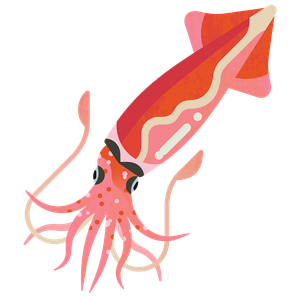
Common cuttlefish
Sepia officinalis
What to check for
Location
English Channel and Celtic Seas
Technical location
Atlantic, Northeast, Bristol Channel, Celtic Sea (North), Celtic Sea (South), English Channel (East), English Channel (West)
Caught by
Bottom trawl (otter)
Rating summary
There is not enough data about cuttlefish in the English channel, but there are indications that populations are too small and fishing pressure is too high. There are no appropriate management measures for this species, despite high landings and high market value. Some cuttlefish are caught by otter trawling. This has the potential to cause damage to the seabed. Trawls can also have high bycatch, potentially of vulnerable species.Rating last updated January 2023.
How we worked out this Rating
There is concern for the biomass of common cuttlefish, and for the fishing pressure on the stock within the English Channel and Celtic Seas region.The common cuttlefish fishery in the English Channel and wider Celtic Seas is of significant commercial importance. However, stock status remains uncertain due to limited data. In 2023, ICES conducted an assessment using data up to 2022, but it had notable limitations. Due to these uncertainties, Route 2 (data limited) scoring has been applied to this rating. The common cuttlefish is considered highly resilient to fishing pressure.From 2020 to 2022, most catches in the English Channel (ICES areas 27.7.d,e) and Celtic Seas region (ICES Area 27.7.a,b,c,f,g,h,j,k) were taken by France, followed by the UK. Landings in the English Channel peaked between 2003 and 2007 (~18,000 tonnes), while in the Celtic Seas, they peaked between 2009 and 2011 (~2,000 tonnes). Since then, both areas have shown a declining trend in landings, with some fluctuations.In 2022, the English Channel accounted for 64.8% of total catches (12,055 tonnes), up from 52.5-63.6% in 2019 to 2021. Mean catches between 2020-2022 in the English Channel (9,524 tonnes) were below both the mean of 2017-2019 (10,808 tonnes) and the historical mean (10,415 tonnes). A similar trend was observed in the Celtic Seas, with mean catches between 2020-2022 (374 tonnes) below both the mean of 2017-2019 (605 tonnes) and the historical mean (629 tonnes).There are concerns for common cuttlefish biomass. Biomass indices indicate a long-term decline since peak abundance between 1998 and 2007, which aligns with reduced landings. However, since biomass has been declining for longer than landings, evidence suggests that cuttlefish stocks are either fully or over exploited. Combined with limited research on stock status and exploitation rates, this raises concerns for current fishing pressure on the stock.
Appropriate management measures are not in place for cuttlefish in the English Channel.Limited regulations apply to cuttlefish despite its importance in terms of landings volume and value. There is no quota limit or minimum conservation reference size (MCRS) applied to cuttlefish, meaning that fishers can land any amount of cuttlefish at any size.Cuttlefish in this area benefit from some local management and more general laws that regulate trawling. However, there is still an overall lack of appropriate management. The lack of management is particularly problematic as cuttlefish are targeted both in their coastal spawning grounds (inshore) in their pre-adult stage and in deeper offshore waters, where they have had the chance to spawn. In the English Channel cuttlefish fishery, 87% of the catch is from offshore trawling. Around 75% of individuals landed by trawl gears are immature and haven't yet had the chance to spawn - making up ~26% of the tonnage landed.In France, there is a minimum landing weight of 100g which acts as a proxy MCRS (8-9cm), however, cuttlefish are typically mature when above 16cm mantle length. Consequently, this legal landing weight is not sufficient to protect the spawning stock. French vessels are banned from using mesh size <80mm in otter trawl nets and when operating in the 0-3 nautical mile inshore coastal zone, although there are some exemptions. In 1993, spatial limits to cuttlefish trawling were introduced to protect nursery areas of a multitude of species, particularly spider crabs. This means that in spring, trawlers are allowed to exploit spawners for 6 weeks, and in summer, trawlers are allowed to exploit hatchlings for 2 weeks. The exact dates are adjusted every year as a function of the probability of the arrival of cuttlefish, indicated by the volumes of landings in the previous autumn or the landings of the trap fishery (a small fishery that supplies the French market).Only a small proportion of catch is discarded. Evidence suggests that discard survival of small cuttlefish is low, with immediate survival rates of 31% and additional mortality later. Both the EU and UK have fishery management measures in place, which can include catch limits, targets for population sizes and fishing mortality, and controls on what fishing gear can be used and where. In the EU, compliance with regulations has been variable, and there are ongoing challenges with implementing some of them. There was a target for fishing to be at Maximum Sustainable Yield by 2020, but this was not achieved.In the UK, it is too early to tell how effective management is, as the Fisheries Act only came into force in January 2021. The Act requires the development of Fisheries Management Plans (FMPs) (replacing EU Multi-Annual Plans). FMPs are currently in development, but the scope of them remains unclear. They have the potential to be very important tools for managing UK fisheries, although data limitations may delay them for some stocks. MCS is keen to see publicly available FMPs for all commercially exploited stocks, especially where stocks are depleted, that include:Targets for fishing pressure and biomass, and additional management when those targets are not being met, based on the best available scientific evidenceTimeframes for stock recoveryImproved data collection, transparency and accountability, supported by technologies such as Remote Electronic Monitoring (REM)Consideration of wider environmental impacts of the fishery
Some cuttlefish is caught by otter trawls in the English Channel, which are likely to cause some damage to the seabed. Bycatch is moderate and may include vulnerable species.Cuttlefish landings from bottom trawls (beam and otter) represent 87% of total UK cuttlefish landings, with the remainder mainly resulting from trap fishing. Between 2017-2021 24% of the cuttlefish catch in UK waters was taken by otter trawlers. The species is found in relatively shallow waters around coasts and near the seabed in waters up to 200m offshore.Demersal trawls have contact with the seabed, resulting in penetration and abrasion of habitat features. The impact of trawling on the seabed depends on the where trawling happens, and on what scale. For example, habitats that are used to natural disturbance through tides and waves are less sensitive to impacts. Areas not used to mobile towed gears are typically more sensitive.Demersal otter trawls have the potential to take relatively high quantities of bycatch. In the Northeast Atlantic there are reported catches of demersal elasmobranchs and endangered, protected and threatened (ETP) species (e.g. sharks, rays and marine mammals). Bycatch data is limited in many UK and EU fisheries as they are generally not well monitored. Mesh size restrictions (<80mm in France) in place do not sufficiently protect non-target species.UK regulations to reduce the impacts of fishing on marine habitats and wider species are under development, in the meantime most EU regulations have been adopted. Under EU legislation, bycatch species should be managed within scientifically defined or, where data isn’t available, suitably precautionary sustainable exploitation limits. If stocks fall below trigger levels, measures can be brought in such as limits on characteristics or use of gear (e.g. mesh size, depth); time/area closures; and minimum conservation reference sizes. However, the is limited evidence to show how well ecosystem wide impacts, including bycatch, are currently being managed.There are Marine Protected Areas (MPAs) in this area, some of which are designated to protect seabed features from damaging activities. This fishery overlaps with parts of these MPAs, but the proportion of the catch coming from these areas is expected to be relatively low in relation to the unit of assessment (i.e. less than 20% of the catch or effort), and so these impacts have not been assessed within the scale of this rating. Given the important role that MPAs have in recovering the health and function of our seas, MCS encourages the supply chain to identify if their specific sources are being caught from within MPAs. If sources are suspected of coming from within designated and managed MPAs, MCS advises businesses to establish if the fishing activity is operating legally inside a designated and managed MPA, and request evidence from the fishery or managing authority to demonstrate that the activity is not damaging to protected features or a threat to the conservation objectives of the site(s).To improve monitoring and reporting of fishing activity, MCS would like to see remote electronic monitoring (REM) with cameras implemented, used and enforced.To reduce the impacts of fishing on the marine environment we would like to see a just transition to the complete removal of bottom towed gear from offshore Marine Protected Areas designated to protect the seabed. We also want to see reduction and mitigation of environmental impacts including emissions and blue carbon habitat damage.
References
Blue Marine, 2021. Cuttlefish symposium. Proceedings 25 November 2021. Available at: https://www.bluemarinefoundation.com/wp-content/uploads/2022/05/Blue-Marine-Foundation-Cuttlefish-Symposium-Proceedings-Report_WEB-FINAL.pdf [Accessed on 6.1.23]Collie, J.S., Pitcher, C.R., Amoroso, R.O., Parma, A.M., Suuronen, P. and Kaiser, M.J. 2017. Global analysis of depletion and recovery of seabed biota after bottom trawling disturbance. PNAS. 114:31, pp. 8301-8306. https://doi.org/10.1073/pnas.1618858114.Davies, D. and Nelson, K. (2018). Supporting Sustainable Sepia Stocks. Report 3: Assessing the efficacy of egg receptors within fishing traps used to target common cuttlefish (Sepia officinalis). Sussex IFCA. Available at: https://secure.toolkitfiles.co.uk/clients/34087/sitedata/files/Conservation-Research/Egg-Receptor-Study.pdf [Accessed on 5.1.23]Eigaard, O. R., Bastardie, F., Breen, M., Dinesen, G. E., Hintzen, N. T., Laffargue, P., Mortensen, L. O., Nielsen, J. R., Nilsson, H. C., O- Neill, F. G., Polet, H., Reid, D. G., Sala, A., Skold, M., Smith, C., Sorensen, T. K., Tully, O., Zengin, M. and Rijnsdorp, A. D., 2016. Estimating seabed pressure from demersal trawls, seines, and dredges based on gear design and dimensions. ICES Journal of Marine Science, 73:1, pp. i27- i43. https://doi.org/10.1093/icesjms/fsv099.EU, 2013. Regulation (EU) No 1380/2013 of the European Parliament and of the Council of 11 December 2013 on the Common Fisheries Policy, amending Council Regulations (EC) No 1954/2003 and (EC) No 1224/2009 and repealing Council Regulations (EC) No 2371/2002 and (EC) No 639/2004 and Council Decision 2004/585/EC. Available at: https://eur-lex.europa.eu/legal-content/EN/TXT/?uri=celex%3A32013R1380 [Accessed on 5.1.23]Gafeira, J., Green S., Dove, D., Morando, A., Cooper, R., Long, D. and Gatliff R. W. (2010). Developing the necessary data layers for Marine Conservation Zone selection - Distribution of rock/hard substrate on the UK Continental Shelf, MB0103 Final Report. British Geological Survey, UK. Available at: https://www.researchgate.net/publication/283637148_Distribution_of_rockhard_substrate_in_UK_offshore_waters_and_England_territorial_waters_-_MB0103/link/5641d4f008aebaaea1f8794e/download [Accessed on 6.1.23]Gall, S.C., Rodwell, L.D., Clark, S., Robbins, T., Attrill, M.J., Holmes and L.A., Sheehan, E.V., 2020. The impact of potting for crustaceans on temperate rocky reef habitats: Implications for management, Marine Environmental Research, Volume 162, 105134, https://doi.org/10.1016/j.marenvres.2020.105134.Gras, M., Roel, B.A., Coppin, F., Foucher, E. and Robin, J-P. (2014). A two-stage biomass model to assess the English Channel cuttlefish (Sepia officinalis L.) stock. ICES Journal of Marine Science, 71(9), pp.2457-2468. Available at https://academic.oup.com/icesjms/article/71/9/2457/594946 [Accessed 6.1.23]Hiddink, J., Jennings, S., Sciberras, M., Szostek, C.L., Hughes, K.M., Ellis, N., Rijnsdorp, A.D., McConnaughey, R.A., Mazor, T., Hilborn, R., Coleman, R.A., Hoskin, M.G., von Carlshausen, E. and Davis, C.M., 2013. Using a No-take Zone to Assess the Impacts of Fishing: Sessile Epifauna Appear Insensitive to Environmental Disturbances From Commercial Potting. Journal of experimental marine biology and ecology, v. 440 ,. pp. 100-107. doi: 10.1016/j.jembe.2012.12.005ICES (2016). Report of the Working Group on Cephalopod Fisheries and Life History (WGCEPH),14-17 June 2016, ICES Headquarters, Copenhagen, Denmark. ICES CM 2016/SSGEPD:03. Available at https://archimer.ifremer.fr/doc/00377/48775/49173.pdf [Accessed 5.1.23]ICES (2020). Working Group on Cephalopod Fisheries and Life History (WGCEPH; outputs from 2019 meeting). ICES Scientific Reports. 2:46. 121pp. http://doi.org/10.17895/ices.pub.6032 [Accessed 6.1.23]ICES, 2022. Working Group on Cephalopod Fisheries and Life History. Available at: https://www.ices.dk/community/groups/Pages/WGCEPH.aspx [Accessed on 5.1.23]Jereb, P., Allcock, A., Lefkaditou, E., Piatkowski, U., Hastie, L. and Pierce, G. (2015). Cephalopod biology and fisheries in Europe: II. Species Accounts. ICES: Denmark. Available at http://www.ices.dk/sites/pub/Publication%20Reports/Cooperative%20Research%20Report%20(CRR)/CRR325.pdf [Accessed 25.11.2020]JNCC, 2020. Joint Nature Conservation Committee, Marine Protected Area Mapper. Available at: https://jncc.gov.uk/our-work/marine-protected-area-mapper/ [Accessed on 5.2.23]Kennelly, S. J. & Broadhurst, M. K., 2021. A review of bycatch reduction in demersal fish trawls. Rev Fish Biol Fisheries 31, 289–318. https://doi.org/10.1007/s11160-021-09644-0.Kynoch, R., Fryer, R. & Neat, F., 2015. A simple technical measure to reduce bycatch and discard of skates and sharks in mixed-species bottom-trawl fisheries. ICES J Mar Sci,72(6):1861.MMO, 2020 & 2021. Collection. UK sea fisheries annual statistics, UK sea fisheries annual statistics reports (combined 2020 & 2021 releases). Available at: https://www.gov.uk/government/collections/uk-sea-fisheries-annual-statistics [Accessed on 5.1.23]Öndes, F., Kaiser, M., & Murray, L. (2018). Fish and invertebrate by-catch in the crab pot fishery in the Isle of Man, Irish Sea. Journal of the Marine Biological Association of the United Kingdom, 98(8), 2099-2111. doi:10.1017/S0025315417001643Palomares, M.L.D. and D. Pauly. Editors. 2022. SeaLifeBase. World Wide Web electronic publication. www.sealifebase.org, version (12/2022).Pantin J.R., Murray L.G., Hinz H., Le Vay L. and Kaiser M.J. 2015. The inshore fisheries of Wales: a study based on fishers ecological knowledge. Fisheries and Conservation report, Bangor University, no. 42, p. 60. Fish and invertebrate by-catch in the crab pot fishery in the Isle of Man, Irish Sea. http://fisheries-conservation.bangor.ac.uk/wales/documents/42.pdfPetetta, A., Virgili, M., Guicciardi, S. & Lucchetti, A. 2021. Pots as alternative and sustainable fishing gears in the Mediterranean Sea: an overview. Rev Fish Biol Fisheries 31, 773–795. https://doi.org/10.1007/s11160-021-09676-6Rees, A., Sheehan, E.V. & Attrill, M.J. Optimal fishing effort benefits fisheries and conservation. Sci Rep 11, 3784 (2021). https://doi.org/10.1038/s41598-021-82847-4Seafish, 2023. Gear, Pots and Traps – Cuttlefish. Available at: https://www.seafish.org/responsible-sourcing/fishing-gear-database/gear/pots-and-traps-cuttlefish/#:~:text=It%20is%20a%20seasonal%20fishery,other%20countries%20to%20target%20fish [Accessed on 6.1.23]SIFCA, 2015. Sussex Inshore Fisheries and Conservation Authority. MARINE AND COASTAL ACCESS ACT 2009 (c.23) Shellfish Permit Byelaw 2015. Available at: https://secure.toolkitfiles.co.uk/clients/34087/sitedata/files/Byelaws/Shellfish-Permit-Guidance.pdf [Accessed on 6.1.23].SIFCA, 2023. Pot & Trap fishing. Southern IFCA Codes of Practice. Cuttlefish Traps Code of Practice. Available at: https://secure.toolkitfiles.co.uk/clients/25364/sitedata/Redesign/Codes_of_Practice/Cuttlefish-Code-of-Practice.pdf [Accessed on 6.1.23]Silva, F., Ellis, J. & Catchpole, T., 2012. Species composition of skates (Rajidae) in commercial fisheries around the British Isles and their discarding patterns. J Fish Biol., 80:1678–1703.Stott, S & Reeve, C., 2020. Report: Western Channel Cuttlefish: Sepia officinalis Biological Sampling at Plymouth and Brixham Fish Markets December 2018– June 2019. Issue Date: 30 April 2020. Available at: https://assets.publishing.service.gov.uk/government/uploads/system/uploads/attachment_data/file/923552/Western_Channel_Cuttlefish_Report_2018_19.pdf [Accessed on 5.1.23]van Denderen, P. Bolam, S., Hiddink, J.G., Jennings, S., Kenny, A., Rijnsdorp, A., and van Kooten, T., 2015. Similar effects of bottom trawling and natural disturbance on composition and function of benthic communities across habitats. Mar Ecol Prog Ser. 2015; 541:31–43. https://doi.org/10.3354/meps11550.

Sustainable swaps
Learn more about how we calculate our sustainability ratings.
How our ratings work