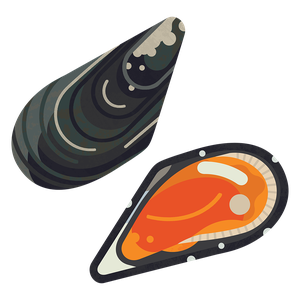
Common periwinkle
Littorina littorea
What to check for
Location
UK (excluding Northumberland)
Technical location
Atlantic, Northeast, Irish Sea, Porcupine Bank, English Channel, Bristol Channel, Celtic Seas, West and Southwest of Ireland, North Sea, Rockall, West of Scotland
Caught by
Hand-gathering (shore)
Rating summary
With limited data for periwinkles and an absence of stock assessments across the United Kingdom there is concern biomass and fishing pressure. There are no overarching management measures in place. Periwinkles are gathered by hand on coastal shores, which has a low impact.Rating last updated December 2023.
Technical consultation summary
With limited data for periwinkles and an absence of stock assessments across the United Kingdom there is concern for populations biomass. Periwinkle landings are thought to be underreported with few regulations in place, and with no sustainable limit defined there is concern for fishing pressure. Route 2 scoring has been applied to this rating owing to the lack of reference points for fishing pressure and biomass. There are no assessments of the resilience or vulnerability of this species. MCS considers periwinkles to have medium resilience to fishing pressure, based on several life history parameters. There are no overarching management measures in place for periwinkles in the United Kingdom. Measures such as a minimum legal harvest size should be adopted to offer protection to juveniles, and closed seasons during spawning would be beneficial. Periwinkles are gathered by hand on coastal shores, the lowest impact way of catching shellfish as there is rarely any seabed impacts and no bycatch of unwanted species.
How we worked out this Rating
With limited data for periwinkles and an absence of stock assessments across the United Kingdom there is concern for populations’ biomass. Periwinkle landings are not well reported, and with no sustainable limit defined there is concern for fishing pressure.Route 2 scoring has been applied to this rating owing to the lack of reference points for fishing pressure and biomass. There are no assessments of the resilience or vulnerability of this species. MCS considers common periwinkle to have medium resilience to fishing pressure, based on several life history parameters. Periwinkles are reported to have low sensitivity to and high recoverability from biological removals.There is currently no formal assessment of periwinkle populations (or stocks) throughout the United Kingdom. In the absence of information, there is concern for biomass.The only available data relating to fishing pressure is landings data. Landings data is not a good indicator of fishing mortality or biomass because it does not account for changes in fishing effort or catchability. Periwinkle landings data is provided by the MMO. Officially, relatively small numbers of periwinkle landings are recorded in the UK compared to other commercial fisheries e.g., whelks (source MMO data). Over the last five years, recorded landings of periwinkle (Littorina spp.) have more than halved from 21 tonnes in 2018 to 9 tonnes in 2022, whilst their commercial value per kg has increased in the same time frame, from £1.31/kg to £2.04/kg. However, government reports and others have noted that periwinkle landings are likely to be substantially underreported, therefore there is concern for fishing pressure.
Overarching management measures are absent for periwinkle populations within the United Kingdom.Periwinkle fisheries are data poor. The absence of stock assessments prevents the definition of catch limits and presents several challenges for management.There are currently no regulations in place to control the quantities of periwinkles harvested commercially. It is difficult to accurately assess the size of periwinkle fisheries as they are unregulated, under reported, and often black market in nature, as reported by NIFCA, government reports and others. The scale of IUU (illegal, unregulated and unreported) fishing for periwinkles is unknown.There is no minimum conservation reference size (MCRS) in place for periwinkle(s) caught in UK waters. Periwinkles taken below the size of maturity (SOM - the size at which 50% of the population is sexually mature) would likely not have had the chance to reproduce. In the UK, SOM ranges between 11 and 17mm, varying geographically. If a minimum legal size is implemented it should be greater than the minimum size at which spawning occurs and to allow a minimum of one winter spawning (e.g., 16mm Northern Ireland).Certain regions within the United Kingdom have regulations in place (e.g. harvest control rules such as a minimum legal size and closed seasons) for the collection of periwinkles. See additional periwinkle ratings here.MCS is keen to see publicly available Fishery Management Plans for all commercially exploited stocks, especially where stocks are depleted, that include:Targets for fishing pressure and biomass, and additional management when those targets are not being met, based on the best available scientific evidenceTimeframes for stock recoveryImproved data collection, transparency and accountability, supported by technologies such as Remote Electronic Monitoring (REM)Consideration of wider environmental impacts of the fishery
Periwinkles are gathered by hand on coastal shores. This is a low impact way of catching shellfish. There are rarely any seabed impacts and no bycatch of unwanted species, although disturbances can occur on certain substrates.Periwinkles are found on a variety of intertidal habitats including rocks, stones, and gravels. They can also be found on softer sediment such as mud and sand, they are one of the only Littorinid species to be found on both hard and soft substrates. They are particularly abundant on broken shores or where there are many crevices, congregating near boulders and larger cobbles when on mixed substrates (i.e. exposed bedrock, boulders, cobbles, pebbles, gravel and sand).Hand gathering is the lowest impact way of catching shellfish as there are rarely any seabed impacts and no bycatch of unwanted species. However, it is still important to control these activities. In some UK areas, hand gathering is so extensive that beaches have had to be closed to prevent too many shellfish from being taken.The most significant potential impacts to non-target rocky shore dwelling plants and animals from hand gathering activities:Given the nature of periwinkle collection, it has the potential to cause disturbance to nesting or feeding birds.Physical damage from boulder turning and trampling disturbance can cause a reduction in habitat stability and biodiversity.It can adversely impact organisms that depend on upper rock surfaces, such as seaweeds.UK regulations to reduce the impacts of fishing on marine habitats and wider species are under development, in the meantime most EU regulations have been adopted. Under EU legislation, bycatch species should be managed within scientifically defined or, where data isn’t available, suitability precautionary sustainable exploration limits. If stocks fall below a certain threshold, measures can be brought in such as gear limitations (e.g., mesh size or depth of use), time and/or areas closures, and Minimum Conservation Reference Sizes (MCRS).
References
AFBI (2011). Intertidal Harvesting in Northern Ireland. Available at https://www.afbini.gov.uk/sites/afbini.gov.uk/files/publications/%5Bcurrent-domain%3Amachine-name%5D/intertidal%20harvesting%20in%20northern%20ireland.pdf [Accessed 06.12.2023]AFBI (2013). Northern Ireland Inshore Fisheries. Version 1.4. Available at https://www.afbini.gov.uk/sites/afbini.gov.uk/files/publications/%5Bcurrent-domain%3Amachine-name%5D/northern%20ireland%20inshore%20fisheries%20review.pdf [Accessed 06.12.2023]AFBI (2022). Strangford Lough Periwinkle Study, 22 March 2022. Version 1.4. Available at https://www.daera-ni.gov.uk/sites/default/files/consultations/daera/Strangford%20Lough%20periwinkle%20study.PDF [Accessed 06.12.2023]Aitken, B. and Harvey, B. (2021). Description of the Northumberland IFCA Periwinkle Fishery. Available at https://nifca.gov.uk/wp-content/uploads/2022/04/Northumberland-IFCA-Perwinkle-Fishery-V1.0.pdf [Accessed 27.11.2023]Chapman C. (2004). SEA 5 Report: Northern North Sea Shellfish and Fisheries. Technical Report for Department of Trade & Industry. Available from https://assets.publishing.service.gov.uk/media/5a7ab2a3e5274a319e77a18f/SEA5_TR_Fish_Chapman.pdf [Accessed 06.12.2023]Chapman, C. (2006). SEA 7 Report: Coastal Shellfish Resources and Fisheries in SEA7. Technical Report for Department of Trade & Industry. Available from https://assets.publishing.service.gov.uk/media/5a7b0adbe5274a319e77c97e/SEA7_Shellfish_Chapman.pdf [Accessed 06.12.2023]Cummins, V., Coughlan, S., McClean, O. et al., (2002). An Assessment of the Potential for the Sustainable Development of the Edible Periwinkle, Littorina littorea, Industry in Ireland. Available at https://oar.marine.ie/bitstream/handle/10793/218/No%2022%20Marine%20Resources%20Series.pdf?sequence=1&isAllowed=y [Accessed 11.12.2023]Jackson, A. (2008). Littorina littorea Common periwinkle. In Tyler-Walters H. and Hiscock K. Marine Life Information Network: Biology and Sensitivity Key Information Reviews, [on-line]. Plymouth: Marine Biological Association of the United Kingdom. Available from https://www.marlin.ac.uk/species/detail/1328Harvey, B. (2021). Periwinkle Ecology and Size of Maturity Study. Northumberland IFCA. Available at https://nifca.gov.uk/wp-content/uploads/2023/05/Periwinkle-Ecology-and-SOM-V1.0.pdf [Accessed 28.11.2023]Harvey, B. (2021). Periwinkle survey 2020-21: Northumberland IFCA. Available at https://nifca.gov.uk/wp-content/uploads/2022/02/Periwinkle-Surveys-Report-2021-V1.0.pdf [Accessed 27.11.2023]Harvey, B. (2022). Periwinkle annual monitoring report 2022. Northumberland IFCA. Available from https://nifca.gov.uk/wp-content/uploads/2023/03/Periwinkle-Annual-Monitoring-Report-2022.pdf [Accessed 28.11.2023]Little, A., Bailey, N., Cook, R. et al., (2015). A review of Scotland's marine fisheries: Stock Status, knowledge gaps, research requirements and Stakeholder engagement. A study commissioned by fisheries innovation Scotland (fiS). Available at https://fisorg.uk/wp-content/uploads/2019/06/FIS001.pdf [Accessed 11.12.2023]MCS (2023a). Hand-gathering. Available at https://www.mcsuk.org/ocean-emergency/sustainable-seafood/from-sea-to-plate/fishing-methods-explained/#hand-gathering [Accessed 22.11.2023]MCS (2023b). MPA Reality Check. Available at https://mpa-reality-check.org/ [Accessed 07.11.2023]MMO (2018). Statutory guidance: Minimum Conservation Reference Size (MCRS) in UK waters. Available at https://www.gov.uk/government/publications/minimum-conservation-reference-sizes-mcrs/minimum-conservation-reference-sizes-mcrs-in-uk-waters [Accessed 15.11.2023]MMO (2023). UK sea fisheries annual statistics report 2022. Available at https://www.gov.uk/government/statistics/uk-sea-fisheries-annual-statistics-report-2022 [Accessed 22.11.2023]Morris-Webb, E. (2021). An Interdisciplinary understanding of coastal resource collection in Wales, Bangor University. Available at https://www.daera-ni.gov.uk/sites/default/files/consultations/daera/Strangford%20Lough%20periwinkle%20study.PDF [Accessed 06.12.2023]Palomares, M.L.D. and D. Pauly. Editors (2023). Littorina littorea Common periwinkle. SeaLifeBase. Available at https://www.sealifebase.se/summary/Littorina-littorea.html [Accessed 27.11.2023]Sussex IFCA (2021). Sussex IFCA Hand Gathering Permit Bylaw 2021, Impact Assessment 2021, pp.1-19. Available at download at https://www.sussex-ifca.gov.uk/ [downloaded 06.12.2023]Welsh Government (2023). Intertidal Fisheries. Available at https://www.gov.wales/intertidal-fisheries [Accessed 06.12.2023]

Sustainable swaps
Learn more about how we calculate our sustainability ratings.
How our ratings work