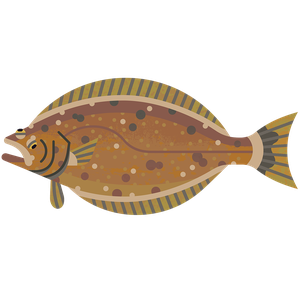
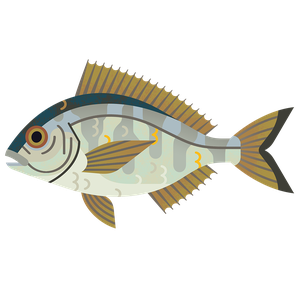
Dab
Limanda limanda
What to check for
Location
North Sea, Skagerrak and Kattegat
Technical location
Atlantic, Northeast, North Sea, Skagerrak and Kattegat
Caught by
Net (demersal seine)
Rating summary
Dab in the North Sea is not overfished or subject to overfishing. Discarding is very high (around 93%). There is no specific management plan in place for Dab. Management of this stock requires some improvement, in particular, reducing the amount of discarding that takes place. Benthic seines interact with the seabed and have the potential to cause some damage to sea floor habitats, but the majority of the interaction comes from ropes which have a lighter impact than otter and beam trawl fisheries.Rating last updated October 2025.
Technical consultation summary
Dab in the North Sea is not overfished, as the biomass indicator of 143.85 in 2024, exceeds the MSY Btrigger proxy (Itrigger) of 99.54. The stock is also not subject to overfishing, as fishing pressure has remained below the FMSY proxy since 2014, and the catch limit of 28,238 tonnes was not exceeded in 2023 or 2024. Discarding is very high (around 93%). There is no specific management plan in place for Dab. Management of this stock requires some improvement, in particular, reducing the amount of discarding that takes place. Benthic seines interact with the seabed and have the potential to cause some damage to sea floor habitats, but the majority of the interaction comes from ropes which have a lighter impact than otter and beam trawl fisheries.
How we worked out this Rating
Dab in the North Sea is not overfished or subject to overfishing. Discarding is very high (around 93%).Dab is mainly a bycatch species in the demersal fisheries for North Sea plaice and sole. The discard rate is very high, at around 93% of the total catch (average 2022-2024) and survival rates of discards are unknown. Dab is considered an under-utilised species. Under-utilised species are ones that fishers don't catch their full quota of, or they catch them but then discard the fish because there is little market demand.Relative biomass has remained above the MSY Btrigger proxy (Itrigger) of 99.54 since 2010. After reaching a peak of 256.96 in 2016, it has gradually declined, standing at 143.85 in 2024. Despite the downward trend, the biomass remains above Itrigger, and the stock is therefore not considered overfished.Fishing pressure has stayed below the FMSY proxy since 2014. Although dab is primarily a bycatch species and not managed under a Total Allowable Catch (TAC) system, ICES has issued catch advice in most years. The recommended catch limit of 28,238 tonnes for 2023–2025 was not exceeded in either 2023 or 2024. As such, the stock is not currently considered to be subject to overfishing.ICES advises that when the MSY approach is applied, annual catches for 2026, 2027, and 2028 should not exceed 19,767 tonnes - a 30% reduction from previous advice, reflecting the declining biomass index. If discard rates do not change from the average of the last three years (2022-2024), this means landings of no more than 1313 tonnes.
There is no specific management plan in place for Dab. Management of this stock requires some improvement, in particular, reducing the amount of discarding that takes place.Dab is a bycatch species and is generally considered to be underutilised. It is commonly discarded due to low market value and demand.Dab was previously managed under a combined total allowable catch (TAC) together with flounder, but this was removed in 2017 following advice from ICES indicating that the risk of having no catch limits for the dab and flounder stocks was considered to be low and not inconsistent with the objectives of the Common Fisheries Policy (CFP). ICES state that this advice was valid as long as dab remained largely bycatch, with the main fleets catching dab continuing to fish the target species (plaice and sole) sustainably within the FMSY ranges provided by ICES. If this situation changes, or dab is no longer within safe biological limits, this advice would need to be reconsidered.Dab is not currently subject to catch limits and therefore falls outside the scope of the landing obligation. As a result, approximately 93% of dab caught in recent years has been discarded, and there is no official minimum conservation reference size (MCRS) in place. This lack of regulation increases the risk of juvenile dab being caught before they have had a chance to reproduce, which can negatively impact overall stock biomass. Although smaller dab may be discarded, survival rates remain unknown. In UK waters of the North Sea, however, required gear mesh sizes can allow juvenile dab to escape capture:Otter Trawls & Demersal Seines:ICES Area 4b: 100mm mesh cod-end.ICES Area 4c: 80mm mesh cod-end.Beam trawls: South of 55˚N: 80mm mesh cod-end.55˚N to 56˚N: 100mm mesh cod-end.North of 56˚N: 120mm mesh cod-end.The Marine Conservation Society views Remote Electronic Monitoring (REM) with cameras is one of the most cost-effective tools for providing reliable fisheries data and aiding informed management decisions. Fully monitored fisheries enhance collaboration, data accuracy, stock recovery, and reduce impacts on marine wildlife and habitats. However, the full potential of REM may only be achieved when it tracks fishing location and documents catch and bycatch, particularly where vulnerable species and habitats are at risk. As of January 2024, the EU is introducing a Remote Electronic Monitoring (REM) mandate for EU vessels, including CCTV cameras on vessels 18m or more that pose a potential risk of non-compliance, within the next 4 years. Across the UK, different approaches to REM are being taken and legislation is expected to be in place across all 4 countries within the next few years.The Fisheries Act (2020) requires the development of Fisheries Management Plans (FMPs) (replacing EU Multi-Annual Plans) in the UK. 43 FMPs have been proposed and are at various stages of development and implementation, these should all be published by the end of 2028. FMPs have the potential to be very important tools for managing UK fisheries, although data limitations may delay them for some stocks. It is also essential the UK governments define and adopt a standardised approach or model across the four nations to a universally defined FMP design, to ensure the consistence, quality and coherence of all the proposal FMPs.The Marine Conservation Society is keen to see publicly available Fishery Management Plans for all commercially exploited stocks, especially where stocks are depleted, that include:An overview of the fishery including current stock status, spatial coverage, current fishing methods and impactsTargets for fishing pressure and biomass, and additional management when those targets are not being met, based on the best scientific evidenceTimeframes for stock recoveryImproved data collection, transparency, and accountability, supported by technologies such as Remote Electronic Monitoring (REM)Consideration of wider environmental impacts of the fishery, including habitat impacts and minimising bycatchStakeholder engagementA Southern North Sea and Eastern Channel mixed flatfish FMP has been proposed, coordinated by Defra, which incorporates part of this stock. At the time of writing, it is too soon to know whether proposed management measures will be effective in managing the stock. For more information about this FMP and expected progress and timelines, see https://www.gov.uk/government/publications/southern-north-sea-and-eastern-channel-mixed-flatfish-fisheries-management-plan-fmp
Benthic seines interact with the seabed and have the potential to cause some damage to sea floor habitats, but the majority of the interaction comes from ropes which have a lighter impact than otter and beam trawl fisheries.Landings of dab in the North Sea are caught by beam trawl (38%), otter trawl (34%), seines (9%) and other gear types (19%). Dab is a bycatch species in flatfish fisheries and only an average of 7% of catch is landed.Demersal seines consist of a net that is anchored to the bottom, with two ropes or sweeps that are winched in, thereby closing the net. Scottish seines, or fly-shoots, work on the same principle, but are towed along the seabed while winching in the ropes.Although demersal seines fall under the broader category of bottom trawls, they differ in configuration. Unlike other demersal trawls that use heavy equipment such as otter boards, demersal seines typically make contact with the seabed at the surface level, resulting in comparatively lower physical impact. However, Scottish seines may exert greater pressure due to their towing action and potential use of heavier gear.Bycatch data is limited in many UK and EU fisheries as they are generally not well monitored. A risk assessment of bycatch in fishing activities indicates a low risk of seabird bycatch in demersal seines and a medium risk of cetacean bycatch. However, most recorded cetacean bycatch is by gillnetting, which is more likely to be a driver of trends in cetacean populations. Demersal seine fisheries may also encounter bycatch of other fish species, including juveniles of commercial species. Restrictions on mesh size for demersal seines is one measure to mitigate bycatch of juvenile and non-target fish species.There are Marine Protected Areas (MPAs) in this area, some of which are designated to protect seabed features from damaging activities. While this fishery overlaps with some MPAs, the catch from these zones is estimated to be less than 20% of the total effort, and therefore is not assessed within this current rating. Given the critical role MPAs play in recovering marine health and supporting ecosystem function, the Marine Conservation Society urges supply chain actors to verify whether their sources originate from within MPAs. If so, businesses should confirm that fishing operations are legally conducted and request evidence from the fishery or managing authority to ensure activities do not harm protected features or compromise conservation objectives.To improve monitoring and reporting of fishing activity, The Marine Conservation Society would like to see remote electronic monitoring (REM) with cameras implemented, used and enforced.
References
Cook, R., Gaudian, G., des Clers, S. and Seip- Markensteijn, C.M., 2022. Marine Stewardship Council (MSC) Public Certification Report: Scottish Fisheries Sustainable Accreditation Group (SFSAG) Northern Demersal Stocks. Prepared by Control Union (UK) Limited on behalf of Scottish Fisheries Sustainable Accreditation Group (SFSAG). May 2022. Available at https://cert.msc.org/FileLoader/FileLinkDownload.asmx/GetFile?encryptedKey=BdxOJoY7Sf4DmNJEB/m47M6xx0rRfgP/niGx3vj5Ud8hadYI3XCNrnlSFL/jlTgK [Accessed on 23.10.2025].Eigaard, O.R., Bastardie, F., Breen, M., Dinesen, G.E., Hintzen, N.T., Laffargue, P., Mortensen, L.O., Nielsen, J.R., Nilsson, H.C., O'Neill, F.G., Polet, H., Reid, D.G., Sala, A., SkOld, M., Smith, C., Sorensen, T.K., Tully, O., Zengin, M., Rijnsdorp, A.D., 2016. Estimating seabed pressure from demersal trawls, seines, and dredges based on gear design and dimensions. ICES Journal of Marine Science, Volume 73, Issue suppl 1. Pages i27-i43. Available at https://academic.oup.com/icesjms/article/73/suppl_1/i27/2573989 [Accessed on 23.10.2025].GOV.UK (2025) Technical Conservation and Landing Obligation rules and regulations 2025. Available at: Technical Conservation and Landing Obligation rules and regulations 2025 - GOV.UK [Accessed on 23.10.2025]Hiddink, J., Jennings, S., Sciberras, M., Szostek, C.L., Hughes, K.M., Ellis, N., Rijnsdorp, A.D., McConnaughey, R.A., Mazor, T., Hilborn, R., Collie, J.S., Pitcher, C.R., Amoroso, R.O., Parma, A.M., Suuronen, P. and Kaiser, M.J. 2017. Global analysis of depletion and recovery of seabed biota after bottom trawling disturbance. PNAS. 114:31, pp. 8301-8306. https://doi.org/10.1073/pnas.1618858114.ICES. 2025. Dab (Limanda limanda) in Subarea 4 and Division 3.a (North Sea, Skagerrak and Kattegat). In Report of the ICES Advisory Committee, 2025. ICES Advice 2025, dab.27.3a4. https://doi.org/10.17895/ices.advice.27202581ICES. 2025. Working Group on the Assessment of Demersal Stocks in the North Sea and Skagerrak (WGNSSK). ICES Scientific Reports. 07:57. 1122 pp. https://doi.org/10.17895/ices.pub.29085995ICES. 2025. Cod in Subarea 4, divisions 6.a and 7.d, and Subdivision 20 (North Sea, West of Scotland, eastern English Channel and Skagerrak). In Report of the ICES Advisory Committee, 2025. ICES Advice 2025, cod.27.46a7d20. https://doi.org/10.17895/ices.advice.27202566 ICES. 2024. Working Group on Bycatch of Protected Species (WGBYC). ICES Scientific Reports. 6:103. 235 pp. https://doi.org/10.17895/ices.pub.2776272ICES. 2024. Spurdog (Squalus acanthias) in Subareas 1-10, 12 and 14 (the Northeast Atlantic and adjacent waters). In Report of the ICES Advisory Committee, 2024. ICES Advice 2024, dgs.27.nea. https://doi.org/10.17895/ices.advice.25019237ICES. 2024. Greater North Sea ecoregion – Ecosystem overview. In Report of the ICES Advisory Committee, 2024. ICES Advice 2024, Section 7.1, https://doi.org/10.17895/ices.advice.25714239ICES. 2024. Greater North Sea ecoregion – fisheries overview In Report of the ICES Advisory Committee, 2024. ICES Advice 2024, section 9.2. https://doi.org/10.17895/ices.advice.27879879Kennelly, S. J. & Broadhurst, M. K., 2021. A review of bycatch reduction in demersal fish trawls. Rev Fish Biol Fisheries 31, 289–318. https://doi.org/10.1007/s11160-021-09644-0.Kynoch, R., Fryer, R. & Neat, F., 2015. A simple technical measure to reduce bycatch and discard of skates and sharks in mixed-species bottom-trawl fisheries. ICES J Mar Sci,72(6):1861.MMO (2025) UK National North Sea Cod Avoidance Plan. Available at: https://assets.publishing.service.gov.uk/media/678f8ffc1784b7a1338e9db0/UK_National_Cod_Avoidance_Plan.pdf [Accessed on 23.10.2025]Silva, F., Ellis, J. & Catchpole, T., 2012. Species composition of skates (Rajidae) in commercial fisheries around the British Isles and their discarding patterns. J Fish Biol., 80:1678–1703.van Denderen, P. Bolam, S., Hiddink, J.G., Jennings, S., Kenny, A., Rijnsdorp, A., and van Kooten, T., 2015. Similar effects of bottom trawling and natural disturbance on composition and function of benthic communities across habitats. Mar Ecol Prog Ser. 2015;541:31–43.Wilson, D., Borges, L., Cieri, M. 2025. Marine Stewardship Council (MSC) 2nd Surveillance Audit Report: Scottish Fisheries Sustainable Accreditation Group (SFSAG) Northern Demersal Stocks. Prepared by Control Union (UK) Limited on behalf of Scottish Fisheries Sustainable Accreditation Group (SFSAG). May 2025. Available at https://cert.msc.org/FileLoader/FileLinkDownload.asmx/GetFile?encryptedKey=nKIgxTsEDfQkKL2ZxYidGZYKol7NOhmeOEXKNZ7tA0FsB3xg11HlsVPZ3fcpXllB [Accessed on 23.10.2025].

Sustainable swaps
Learn more about how we calculate our sustainability ratings.
How our ratings work