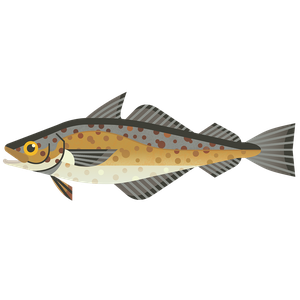
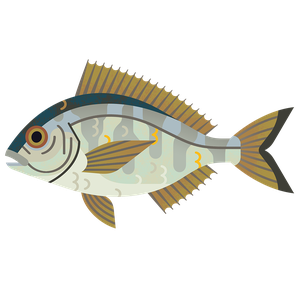
Haddock
What to check for
Location
Celtic Seas (southern), English Channel (west)
Technical location
Atlantic, Northeast, Bristol Channel, Celtic Sea (North), Celtic Sea (South), English Channel (West), Porcupine Bank, Southwest of Ireland (East), Southwest of Ireland (West), West of Ireland
Caught by
Bottom trawl (otter)
Rating summary
Haddock in the Southern Celtic Seas and English Channel is subject to overfishing and is being overfished. Management requires some improvement as catch limits have exceeding advice most recently. Most haddock in this area are caught by otter trawl which can damage the seabed. Bycatch is a concern here, especially of cod and whiting.Rating last updated September 2025.
Technical consultation summary
Haddock in the Southern Celtic Seas and English Channel is subject to overfishing and is being overfished. SSB has been above the target level (MSY Btrigger, 12,822 tonnes) since 2001. In 2025, it was estimated to be below this level, at 11,964t, but still above the GFG Bpa proxy (11,025t) and Blim (9,227t). The stock is therefore below target levels. Fishing mortality (F) in 2024 was 0.57. This is above FMSY (0.353) but below the precautionary limit (Fpa, 0.708). The stock is therefore subject to overfishing. Some appropriate management measures are in place. TACs have been set within recommended limits in recent years, being in line with TAC in 2023 and 2024, with catches coming in below TACs. However, the 2025 TAC has been set above advice. This could allow the stock to be overfished. The stock assessment and management areas do not quite match. The stock assessment covers the Celtic Seas (ICES divisions 7b-c, e-k), while catch limits apply to a much larger area, extending south to the Bay of Biscay, Portuguese Waters, and Azores (7b-k, 8 and 10). Catches from the most south-westerly part of the Irish Sea (7a) is thought to be from Celtic stock but have separate catch limits and therefore aren't considered when setting catch limits for the Celtic Sea stocks. These areas account for around 10% of catches. These mismatches could mean that management is not able to follow scientific recommendations. Discarding is very high: estimates show that approximately 2/3 of the catch in numbers and almost half the catch in weight has been discarded on average over the past decade. Most Celtic haddock are caught by otter trawls, which are likely to cause some damage to the seabed. Bycatch of cod and whiting in this area has resulted in them being heavily overfished. ICES projects that if haddock is fished at maximum sustainable (MSY) levels, there will be 799 tonnes of cod and 8,033 tonnes of whiting catch in 2024. This is well above the scientifically recommended zero catch limits for the two stocks and indicates that the haddock fishery is a key driver of the overexploitation of these species.