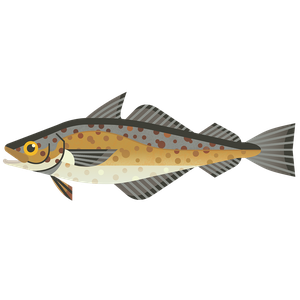
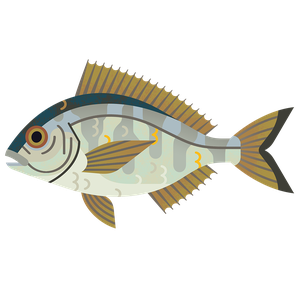
Haddock
Melanogrammus aeglefinus
What to check for
Location
Celtic Seas (southern), English Channel (west)
Technical location
Atlantic, Northeast, Bristol Channel, Celtic Sea (North), Celtic Sea (South), English Channel (West), Porcupine Bank, Southwest of Ireland (East), Southwest of Ireland (West), West of Ireland
Caught by
Bottom trawl (beam)
Rating summary
Haddock in the Southern Celtic Seas and English Channel is subject to overfishing and is being overfished. Management requires some improvement as catch limits have exceeding advice most recently. Some Celtic haddock is caught by beam trawls. Beam trawls have significant impacts on the seabed, including damage to vulnerable marine habitats.Rating last updated September 2025.
Technical consultation summary
Haddock in the Southern Celtic Seas and English Channel is subject to overfishing and is being overfished. SSB has been above the target level (MSY Btrigger, 12,822 tonnes) since 2001. In 2025, it was estimated to be below this level, at 11,964t, but still above the GFG Bpa proxy (11,025t) and Blim (9,227t). The stock is therefore below target levels. Fishing mortality (F) in 2024 was 0.57. This is above FMSY (0.353) but below the precautionary limit (Fpa, 0.708). The stock is therefore subject to overfishing. Some appropriate management measures are in place. TACs have been set within recommended limits in recent years, being in line with TAC in 2023 and 2024, with catches coming in below TACs. However, the 2025 TAC has been set above advice. This could allow the stock to be overfished. The stock assessment and management areas do not quite match. The stock assessment covers the Celtic Seas (ICES divisions 7b-c, e-k), while catch limits apply to a much larger area, extending south to the Bay of Biscay, Portuguese Waters, and Azores (7b-k, 8 and 10). Catches from the most south-westerly part of the Irish Sea (7a) is thought to be from Celtic stock but have separate catch limits and therefore aren't considered when setting catch limits for the Celtic Sea stocks. These areas account for around 10% of catches. These mismatches could mean that management is not able to follow scientific recommendations. Discarding is very high: estimates show that approximately 2/3 of the catch in numbers and almost half the catch in weight has been discarded on average over the past decade. Most Celtic haddock are caught by otter trawls, but some are caught by beam trawls. Beam trawls have significant impacts on the seabed, including damage to vulnerable marine habitats. Bycatch of cod and whiting in this area has resulted in them being heavily overfished. Otter trawling is responsible for most bycatch, but beam trawl may also contribute to stock concerns.
How we worked out this Rating
Haddock in the Southern Celtic Seas and English Channel is subject to overfishing and is being overfished.Stock assessments are carried out by the International Council for the Exploration of the Sea (ICES). The most recent assessment was published in 2025 using data up to 2025. The next assessment is expected in 2026.The stock assessment defines reference points for fishing pressure (F) and biomass (B). For fishing pressure, there is a target to keep F at or below Maximum Sustainable Yield (MSY). For biomass, there is no target. However, there is a trigger point (MSY BTrigger). Below this level, F should be reduced to allow the stock to increase. Because BMSY is not defined, the Good Fish Guide applies its own definition of 1.4 x MSY BTrigger.Catches peaked in 2011 at around 30,000 tonnes but have since declined to around 6,350 tonnes.The reproductive capacity of the stock, or spawning stock biomass (SSB), has been above MSY Btrigger, (12,822 tonnes) since 2001. In 2025, it was estimated to be below this level, at 11,964t, but still above the GFG Bpa proxy (11,025t) and Blim (9,227t). The stock is therefore below target levels.Fishing mortality (F) declined from a peak of 0.74 in 2003 to a low of 0.46 in 2020. It has since increased to 0.57 in 2024, above FMSY (0.353) but below the precautionary limit, Fpa (0.708). The stock is therefore subject to overfishing.ICES advises that when the MSY approach and precautionary considerations are applied, there should be zero catch in 2026. This is a 100% decrease on the previous year's advice, which itself was a 31% decrease on the year before that. The decrease in advice is due to decreases in biomass and low recent recruitment.Recruitment of young fish into the stock has been low since 2019, with a historic low in 2022, which is expected to cause the stock size to decrease in the coming years. Recruitment for stocks are becoming highly dependent on individual year classes, therefore is 2025 recruitment is similar to 2022- 2024, it is very possible that stock will remain below Blim, even with zero catch.
Some but not all appropriate relevant management measures are in place. There is currently no management plan that covers the whole fishery. Recent average catches have exceeded scientifically recommended limits and catches of young haddock are too high.Most haddock in the area are caught by France and Ireland. Fishing by these countries is managed through the EU Western Waters Multi-Annual Management Plan (MAP). The plan outlines a process for setting catch limits. The UK also catches some haddock in this area (12%). However, the UK is not signed up to the MAP. There is currently no shared management plan between the EU and UK for this stock.The main management measure is a catch limit (Total Allowable Catch, TAC). TACs have been set within recommended limits in recent years. On average, from 2020-2024, TACs have been 88% of the advice. However, the 2025 TAC was set 37% above advice. Catches have been below advice and TACs since 2021, averaging 82% of the TAC from 2021-2024. Fishing mortality (F) was 62% above the level associated with Maximum Sustainable Yield in 2024, so it is concerning that the TAC is above advice in 2025. This could allow the stock to be overfished.Currently the stock assessment and management areas do not quite match. The stock assessment covers the Celtic Seas (ICES divisions 7b-c, e-k), while catch limits apply to a much larger area, extending south to the Bay of Biscay, Portuguese Waters, and Azores (7b-k, 8 and 10). Additionally, catches from the most south-westerly part of the Irish Sea (7a) are thought to be from Celtic stock, but have separate catch limits and therefore aren't considered when setting catch limits for the Celtic Sea stocks. These areas account for around 10% of catches. These mismatches could mean that management is not able to follow scientific advice.Technical measures for this stock include a minimum mesh size (MMS) for beam and otter trawlers in Subarea 7 and a Minimum Conservation Reference Size (MCRS) (the minimum landing size) of 30 cm. This is the mean length of 2-year-old haddock in the Celtic Sea, of which less than 1 % are predicted to be mature. Haddock mature at around 35cm, so the MCRS does not fully protect juveniles. Below the MCRS, haddock must be landed but can't be sold for human consumption, meaning they are less valuable.There are restrictions to improve selectivity and allow small fish to escape nets. This includes square mesh panels with a large mesh size (110mm in Nephrops fisheries and 100mm in gadoid fisheries). ICES reports that it is not clear whether this is enough to reduce discards, and better monitoring is needed.Haddock is in a mixed fishery with cod and whiting, meaning these species swim together and are often caught as bycatch in each corresponding fishery. Currently the haddock stock has the greatest catch out of these three Celtic Sea species stocks. While the catch advice for whiting and cod is zero. ICES projects that if haddock is fished at Maximum Sustainable Yield, cod and whiting catch in 2026 will be 629 tonnes and 4878 tonnes, respectively. This is higher than the zero-catch recommendations.There are some measures to protect spawning cod, which is bycatch in the haddock fishery. This includes the Trevose Box between Cornwall and Ireland (ICES rectangles 30E4, 31E4, and 32E4 outside of the UK 6-mile limit), which is closed for fishing during spawning season - between February and March each year. Evidence suggests that the Trevose closure has been effective at minimising fishing, although there appears to be some Irish fishing activity in the area. However, this area does not appear to protect persistent areas for cod or the highest density of cod throughout the year. Additionally, the stock status of cod in the Celtic Sea has not improved despite the above management measures, indicating that current management approaches are not effective. Despite this, the closed area does seem to be protecting a persistent hotspot area for whiting and eventually haddock that has occurred between 2009 and 2020.The EU and UK both have fishery management measures, which can include catch limits, population targets, and gear restrictions. However, compliance in the EU and UK has been inconsistent, with ongoing challenges in implementing some regulations. The goal of reaching Maximum Sustainable Yield (MSY) by 2020 was missed, with less than half of UK TACs in 2024 following ICES advice. In 2024, the EU and UK reaffirmed their commitment to sustainable fisheries by aligning management with scientific advice to gradually approach MSY. However, no new target date has been set for achieving MSY across all fisheries. The Landing Obligation (LO), an EU law retained by the UK post-Brexit, requires all quota fish to be landed, even if unwanted (over-quota or below minimum size). It aims to encourage more selective fishing methods, reduce bycatch, and improve catch reporting. However, compliance is poor, and accurate discard levels are hard to quantify with current monitoring programmes. The UK is in the process of replacing the LO with country-specific Catching Policies.The Marine Conservation Society views Remote Electronic Monitoring (REM) with cameras is one of the most cost-effective tools for providing reliable fisheries data and aiding informed management decisions. Fully monitored fisheries enhance collaboration, data accuracy, stock recovery, and reduce impacts on marine wildlife and habitats. However, the full potential of REM may only be achieved when it tracks fishing location and documents catch and bycatch, particularly where vulnerable species and habitats are at risk. As of January 2024, the EU is introducing a Remote Electronic Monitoring (REM) mandate for EU vessels, including CCTV cameras on vessels 18m or more that pose a potential risk of non-compliance, within the next 4 years. Across the UK, different approaches to REM are being taken and legislation is expected to be in place across all 4 countries within the next few years.The Fisheries Act (2020) requires the development of Fisheries Management Plans (FMPs) (replacing EU Multi-Annual Plans) in the UK. 43 FMPs have been proposed and are at various stages of development and implementation, these should all be published by the end of 2028. FMPs have the potential to be very important tools for managing UK fisheries, although data limitations may delay them for some stocks. It is also essential the UK governments define and adopt a standardised approach or model across the four nations to a universally defined FMP design, to ensure the consistence, quality and coherence of all the proposal FMPs.The Marine Conservation Society is keen to see publicly available Fishery Management Plans for all commercially exploited stocks, especially where stocks are depleted, that include:An overview of the fishery including current stock status, spatial coverage, current fishing methods and impactsTargets for fishing pressure and biomass, and additional management when those targets are not being met, based on the best scientific evidenceTimeframes for stock recoveryImproved data collection, transparency, and accountability, supported by technologies such as Remote Electronic Monitoring (REM)Consideration of wider environmental impacts of the fishery, including habitat impacts and minimising bycatchStakeholder engagementA Atlantic haddock FMP has been proposed, coordinated by the Scottish Government that incorporates this stock. At the time of writing, it is too soon to know whether proposed management measures will be effective in managing the stock. For more information about this FMP and expected progress and timelines, see [https://www.gov.uk/government/collections/fisheries-management-plans#published-fmps].
Some Celtic haddock is caught by beam trawls. Beam trawls have significant impacts on the seabed, including damage to vulnerable marine habitats. They also have the potential to over-exploit vulnerable species, such as cod and whiting.Beam trawls interact with and potentially disturb the seabed. Trawls can also have high bycatch, potentially of vulnerable species. In 2024, beam trawls accounted for around 5% of landings and 38% of discards for Celtic haddock, this is a disproportionately high level of discards for the proportion of landings.Demersal trawls, such as otter and beam trawls, have contact with the seabed, resulting in penetration and abrasion of habitat features. The impact of trawling on the seabed depends on the where trawling happens, and on what scale. For example, habitats that are used to natural disturbance through tides and waves are less sensitive to impacts. Areas not used to mobile towed gears are typically more sensitive. Beam trawls are considered to have a higher seabed impact than otter trawls because components such as shoes and tickler chains mean they penetrate the seabed further.Some cod and whiting are bycatch for beam trawls targeting haddock in this area both of which are at dangerously low levels and have zero catch advice.ICES recommends zero catch of Celtic Sea cod. The stock is severely depleted. ICES projects that if haddock is fished at maximum sustainable (MSY) levels, cod catch in 2026 will be 629 tonnes. This is higher than the zero-catch recommendation. This would result in an increase in cod SSB compared to the 2025 SSB, however all scenarios would result in the stock being well below the point of reproductive impairment (Blim), which is 4,200t. Reductions in haddock catch could allow slightly higher increases in cod biomass. Therefore, the haddock fishery is preventing the cod stock from increasing.ICES recommends zero catch of Celtic Sea whiting. ICES projects that if haddock is fished at MSY, whiting catch in 2026 will be 4,878 tonnes. This is higher than the zero-catch recommendation. This would result in an increase in whiting SSB compared to 2025, however all scenarios would result in the stock being well below the point of reproductive impairment (Blim). Therefore, the haddock fishery is a key driver of the overexploitation of the whiting stock.Trawl gears in the Celtic Seas have been observed to have a high bycatch of elasmobranchs, including vulnerable species. Species or stocks of specific bycatch concern, due to being a sensitive species or having low population abundances, including the common blue skate, angle shark, and basking shark. There are records indicating these have by caught as bycatch in the Celtic Sea bottom trawl fisheries. However, better observer coverage is needed to better understand the specific impacts. Additionally, though these have been indicated as bycatch in Celtic Sea bottom trawl fisheries, we do not have data to directly connect the haddock fishery to this bycatch. Overall, it is difficult to fully understand the impact of the fishery on ETP species.Demersal trawls, such as beam and otter trawl, have contact with the seabed, resulting in penetration and abrasion of habitat features. The impact of trawling on the seabed depends on the where trawling happens, and on what scale. For example, habitats that are used to natural disturbance through tides and waves are less sensitive to impacts. Areas not used to mobile towed gears are typically more sensitive.UK regulations to reduce the impacts of fishing on marine habitats and wider species are under development, in the meantime most EU regulations have been adopted. Under EU legislation, bycatch species should be managed within scientifically defined or, where data isn’t available, suitably precautionary sustainable exploitation limits. If stocks fall below trigger levels, measures can be brought in such as limits on characteristics or use of gear (e.g. mesh size, depth); time/area closures; and minimum conservation reference sizes. However, there is limited evidence to show how well ecosystem wide impacts, including bycatch, are currently being managed.In the Celtic Sea area, which covers the whole area to the west of the UK and Ireland, fishing-induced physical disturbance is estimated to have resulted in an overall decrease of invertebrate benthic biomass of between 59% in offshore mud and 5% in sandy habitats compared to an unfished state. This may be over 80% in the most heavily fished areas. Fishing effort, and the footprint of trawling, decreased by 35% from 2003-2014, which may have reduced pressure to an extent. However, from 2018-2021 roughly 52% of the region was subject to bottom trawling.Some vulnerable marine ecosystems (VMEs) and species may have been affected. This could include biogenic reefs in the Celtic Sea and west of Scotland, maerl beds along the coasts of Ireland and Britain, and cold-water corals in the deep waters on the western shelf of the region. These species would be heavily affected by trawling and have slow growth and recovery rates. The fishing footprint in the Celtic Seas covers 88% of the 400-800m zone, and 95% of areas with known VMEs were fished in 2009-2011.Various closures are in place the Celtic Sea, including UK and European Marine Protected Areas (MPAs). Some MPAs are designated to protect benthic features. If those MPAs were found to be subjected to bottom trawling, the Marine Conservation Society would consider it a default red rating unless there is evidence (e.g. environmental impact assessment) indicating the activity does not damage the integrity of the site.There are Marine Protected Areas (MPAs) in this area, some of which are designated to protect seabed features from damaging activities. There is some uncertainty about the location of some sensitive seabed habitats, so MPAs may not provide enough protection.This fishery overlaps with parts of these MPAs, but the proportion of the catch coming from these areas is expected to be relatively low in relation to the unit of assessment (i.e. less than 20% of the catch or effort), and so these impacts have not been assessed within the scale of this rating. Given the important role that MPAs have in recovering the health and function of our seas, the Marine Conservation Society encourages the supply chain to identify if their specific sources are being caught from within MPAs. If sources are suspected of coming from within designated and managed MPAs, the Marine Conservation Society advises businesses to establish if the fishing activity is operating legally inside a designated and managed MPA, and request evidence from the fishery or managing authority to demonstrate that the activity is not damaging to protected features or a threat to the conservation objectives of the site(s).To improve monitoring and reporting of fishing activity, the Marine Conservation Society would like to see remote electronic monitoring (REM) with cameras implemented, used and enforced.To reduce the impacts of fishing on the marine environment we would like to see a just transition to the complete removal of bottom towed gear from offshore Marine Protected Areas designated to protect the seabed. We also want to see reduction and mitigation of environmental impacts including emissions and blue carbon habitat damage.
References
Eigaard, O. R., Bastardie, F., Breen, M., Dinesen, G. E., Hintzen, N. T., Laffargue, P., Mortensen, L. O., Nielsen, J. R., Nilsson, H. C., O- Neill, F. G., Polet, H., Reid, D. G., Sala, A., Skold, M., Smith, C., Sorensen, T. K., Tully, O., Zengin, M. and Rijnsdorp, A. D., 2016. Estimating seabed pressure from demersal trawls, seines, and dredges based on gear design and dimensions. ICES Journal of Marine Science, 73:1, pp. i27- i43. https://doi.org/10.1093/icesjms/fsv099.EU, 2013. Regulation (EU) No 1380/2013 of the European Parliament and of the Council of 11 December 2013 on the Common Fisheries Policy. amending Council Regulations (EC) No 1954/2003 and (EC) No 1224/2009 and repealing Council Regulations (EC) No 2371/2002 and (EC) No 639/2004 and Council Decision 2004/585/EC. Available at https://faolex.fao.org/docs/pdf/eur130290.pdf [Accessed on 21.11.2023].EU, 2019. Regulation (EU) 2019/1241 of the European Parliament and of the Council of 20 June 2019 on the conservation of fisheries resources and the protection of marine ecosystems through technical measures. https://eur-lex.europa.eu/legal-content/EN/TXT/?uri=CELEX%3A02019R1241-20220806 [Accessed on 27.11.2023].EU, 2020. Regulation (EU) 2020/123 of 27 January 2020 fixing for 2020 the fishing opportunities for certain fish stocks and groups of fish stocks, applicable in Union waters and, for Union fishing vessels, in certain non-Union waters. Available from: https://eur-lex.europa.eu/legal-content/EN/TXT/PDF/?uri=CELEX:32020R0123&from=EN [Accessed on 27.11.2023].Hiddink JG, Jennings S, Sciberras M, Szostek CL, Hughes KM, Ellis N, et al., 2017. Global analysis of depletion and recovery of seabed biota after bottom trawling disturbance. Proceedings of the National Academy of Sciences Aug 2017, 114 (31) 8301-8306; DOI: 10.1073/pnas.1618858114.ICES, 2025. Working Group on Mixed Fisheries Advice (WGMIXFISH-ADVICE; outputs from 2024 meeting). ICES Scientific Reports. 7:1. 255 pp. https://doi.org/10.17895/ices.pub.28182638 [Accessed on 10.08.2025].ICES, 2025. Working Group for the Celtic Seas Ecoregion (WGCSE). ICES Scientific Reports. 7:52. 957pp.https://doi.org/10.17895/ices.pub.29401877 [Accessed on 10.08.2025].ICES, 2025. Haddock (Melanogrammus aeglefinus) in Divisions 7.b-k (southern Celtic Seas and English Channel). In Report of the ICES Advisory Committee, 2025. ICES Advice 2025, had.27.7b-k.https://doi.org/10.17895/ices.advice.27202608 [Accessed on 10.08.2025].ICES, 2024. Celtic Seas Ecoregion – Ecosystem overview. In Report of the ICES Advisory Committee, 2024. ICES Advice 2024, Section 7.1, https://doi.org/10.17895/ices.advice.25713033 [Accessed on 10.08.2025].ICES, 2024. EU standing request on catch scenarios for zero TAC stocks 2024: whiting (Merlangius merlangus) in divisions 7.b–c and 7.e–k (southern Celtic Seas and eastern English Channel). In Report of the ICES Advisory Committee, 2024. ICES Advice 2024, sr.2024.18c, https://doi.org/10.17895/ices.advice.26763928 [Accessed on 10.08.2025].ICES, 2024. EU standing request on catch scenarios for zero TAC stocks 2024: cod (Gadus morhua) in divisions 7.e–k (eastern English Channel and southern Celtic Seas). In Report of the ICES Advisory Committee, 2024. ICES Advice 2024, sr.2024.18b, https://doi.org/10.17895/ices.advice.26763922 [Accessed on 10.08.2025].ICES, 2007. EU request on Trevose closure - ICES special request. Available at: https://www.ices.dk/sites/pub/Publication Reports/Advice/2007/Special Requests/EC Trevose closure.pdf [Accessed on 4.11.2021].JNCC, 2020. Marine Protected Area Mapper. Available at: https://jncc.gov.uk/mpa-mapper/ [Accessed on 10.08.2025].NEAFC, 2011. Map of NEAFC Regulatory Area Showing Existing Fishing Areas and All Closures, North-east Atlantic fisheries commission. Available at: https://www.neafc.org/page/closures [Accessed on 10.08.2025].Scientific, Technical and Economic Committee for Fisheries (STECF), 2021. Technical Measures in the Celtic Sea (STECF-21-18). Publications Office of the European Union, Luxembourg, EUR. doi:10.2760/194488, JRC127710. Available at: https://digital.csic.es/bitstream/10261/322051/4/STECF%2021-18%20-%20TM%20Celtic%20Sea.pdf [Accessed on 27.11.2023].Silva, F.J., Ellis, J.R., Catchpole, T.L., 2012. Species composition of skates (Rajidae) in commercial fisheries around the British Isles and their discarding patterns. J Fish Biol. 80:1678–1703. https://doi.org/10.1111/j.1095-8649.2012.03247.x.Szostek, C. L., Hiddink, J. G., Sciberras, M., Shepperson, J. L., Thompson, S., Hormbrey, S., Caveen, A., Lart, W., Rodmell, D., & Kaiser, M. J., 2022. A tool to estimate the contribution of fishing gear modifications to reduce benthic impact. Journal of Industrial Ecology, 26, 1858– 1870. https://doi.org/10.1111/jiec.13366.UK Government, 2022. Joint Fisheries Statement. November 2022. Available at https://assets.publishing.service.gov.uk/government/uploads/system/uploads/attachment_data/file/1119399/Joint_Fisheries_Statement_JFS_2022_Final.pdf [Accessed on 27.11.2023].UK Government, 2025. Statutory guidance: Minimum Conservation Reference Sizes (MCRS) in UK waters. Updated 14 February 2025. Available at: https://www.gov.uk/government/publications/minimum-conservation-reference-sizes-mcrs/minimum-conservation-reference-sizes-mcrs-in-uk-waters. [Accessed on 10.08.2025].van Denderen, P.D., Bolam, S.G., Hiddink, J.G., Jennings, S., Kenny, A., Rijnsdorp, A.D., van Kooten, T., 2015. Similar effects of bottom trawling and natural disturbance on composition and function of benthic communities across habitats. Mar Ecol Prog Ser 541:31-43. https://doi.org/10.3354/meps11550.

Sustainable swaps
Learn more about how we calculate our sustainability ratings.
How our ratings work