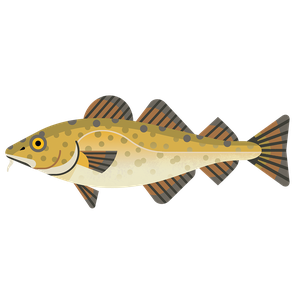
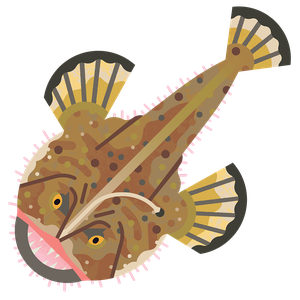
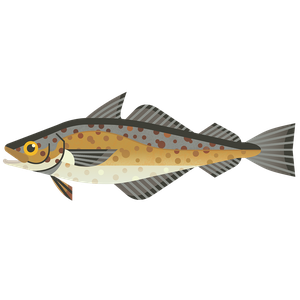
Haddock
Melanogrammus aeglefinus
What to check for
Location
Northeast Arctic (Barents and Norwegian Sea)
Technical location
Atlantic, Northeast, Barents Sea, Norwegian Sea, Spitzbergen, and Bear Island
Caught by
Bottom trawl (otter)
Certification
Marine Stewardship Council (MSC)
Rating summary
Northeast Arctic haddock is abundant, but fishing pressure is too high. Some appropriate management measures are in place, however catch limits have been set too high in recent years. Most Arctic haddock catches are by otter trawls, which are likely to cause some damage to the seabed. There are measures to protect habitats and reduce bycatch in this fishery. However, there is unsustainable bycatch of golden redfish, which is of significant concern. Much of this fishery is MSC-certified.Rating last updated September 2025.
Technical consultation summary
Northeast Arctic haddock is abundant but fishing pressure is too high. The most recent stock assessment was carried out by the Joint Russian-Norwegian Arctic Fisheries Working Group (JRN-AFWG) in 2025. Spawning-stock biomass (SSB) in 2025 is 149,209 t - well above the management target (SSBMGT) of 80,000t. However, the assessment notes that while the spawning stock biomass has been stable in recent years, the total stock biomass is declining. This could be of concern for future stock levels. Fishing mortality (F) in 2024 was 0.47, in line with the Fpa (0.47) and above to the management target (FMGT) and FMSY, which is 0.35. The stock therefore is being overfished. Some appropriate management measures are in place. There is a management plan, which is responsive to stock status to an extent. It is supported by a series of technical measures and appears to be well monitored. However, fishing pressure is above sustainable limits, so it has not protected the stock from overexploitation. Most Arctic haddock catches are by otter trawls, which are likely to cause some damage to the seabed. There are measures to protect habitats and reduce bycatch in this fishery. However, there is unsustainable bycatch of golden redfish, which is of significant concern. ICES indicates that there is no sustainable catch level of this species. In 2021, over 10,000 tonnes were caught. Although other fisheries may take a higher bycatch (e.g. beaked redfish), trawlers targeting Northeast Arctic (NEA) cod and haddock are likely to have a significant impact on this species. Based on Marine Stewardship Council assessments for some certified cod, haddock and saithe fisheries, catches by certified fisheries appear to add up to over 2,000 tonnes. Therefore, bycatch by this fishery is very likely causing the population to decline and/or is preventing its recovery. The sea basin in this area can be up to 5,000m deep and contains a number of vulnerable marine ecosystems. Protections are in place, but more data is needed to confirm that trawling is not having long term impacts on VMEs. Much of this fishery is MSC-certified. Certifications are currently conditional on fisheries proving that trawling is not having a long term impact on VMEs.
How we worked out this Rating
Northeast Arctic haddock is abundant but fishing pressure is too high.NE Arctic haddock catches have fluctuated since the 1950s, exceeding 300,000 tonnes in the mid-1970s and 2010s and reaching lows of around 20,000t in the 1980s and 1990s. Recent catches have been around 140,000 tonnes.The most recent stock assessment was carried out by the Joint Russian-Norwegian Arctic Fisheries Working Group (JRN-AFWG) in 2025 using data up to 2025. JRN-AFWG consists of scientists from VNIRO (Russia) and IMR (Norway).It shows that spawning-stock biomass (SSB) peaked at over 520,000 tonnes in 2013 and declined to 150,000t in 2025. This is well above the management target (MSY Btrigger) of 80,000t and therefore the stock is not in an overfished state. However, the assessment notes that while the spawning stock biomass has been stable in recent years, the total stock biomass is declining. This could be of concern for future stock levels.Fishing mortality (F) has fluctuated over the years. It has varied substantially from above Flim - the level which would reduce the stock to the dangerously low levels - to below FMSY - the level associated with Maximum Sustainable Yield. In 2024, it was 0.47, in line with the Fpa (0.47) and above to the management target (FMGT) and FMSY, which is 0.35. The stock therefore is being overfished.JRN-AFWG advises that when the Joint Norwegian–Russian Fisheries Commission management plan is applied, catches in 2026 should be no more than 153,293 tonnes. This is a 43% increase from the previous year's advice owing to the increase stock trend. It is expected to result in a 24% increase in SSB.Changes in catch limits (TAC) are constrained to 25%, the catch limit advice between 2026 and 2027 is set to increase by 18%.It is noted that this assessment would normally have been carried out by the International Council for the Exploration of the Sea (ICES), but Russian scientists have been temporarily suspended from that body. In 2022 - 2024 the advice was conducted outside ICES, by JRN-AFWG, and should not be considered as ICES advice. However, the assessment and advice was produced following the methodology agreed at the ICES benchmark in 2020.
Some appropriate management measures are in place, enforced and largely effective. Catch limits are broadly responsive to the status of the stock, but there has been overfishing in recent years.There are numerous Marine Stewardship Council certified fisheries for northeast Arctic and Barents Sea haddock. The largest are the Norway North East Arctic haddock offshore (>12nm), which covers the entire Norwegian fleet; FIUN Barents & Norwegian Seas cod and haddock; and Barents Sea cod, haddock and saithe. In 2023, they appear to have caught over 150,000t of NE Arctic haddock combined, accounting for 85% of total catches. Certified fisheries are subject to regular audits and must meet certain requirements for traceability. Further information about management measures is below. There appears to be little difference between the certified and uncertified components of this fishery, as most measures are from national and international legislation rather than voluntary measures by certified fleets.Russia and Norway are the main countries catching haddock in the northeast Arctic, accounting for over 95% of the total catch. The Faroe Islands, Greenland, some EU countries and the United Kingdom also catch smaller amounts of haddock in this region. Haddock is mainly caught as bycatch in the trawl fishery for cod, but is also targeted.This stock is managed through the Joint Russian-Norwegian Fisheries Commission (JRNFC) management plan. ICES considers it to be precautionary. The goal is to maintain the haddock stock at a level that allows for sustainable fishing, known as Maximum Sustainable Yield (MSY). To determine the amount that can be caught, the plan has used a Harvest Control Rule since 2007, which was updated in 2011 and reviewed again in 2016 with no changes. It calculates catch limits, called Total Allowable Catches (TACs), based on the size (spawning biomass) of the stock. These catch limits are then divided among the countries involved in fishing. The TACs can change by a maximum of 25% from one year to the next, unless the stock falls below a certain threshold. This stability helps to ensure the sustainability of the fishery even if the haddock stock size fluctuates. 10% of the TAC can also be transferred between years. In Norway, quotas are set separately for trawl and other gears.Currently, stock assessments are carried out by the Joint Russian-Norwegian Arctic Fisheries Working Group (JRN-AFWG) because Russia is temporarily suspended from the usual assessment body, the International Council for the Exploration of the Sea (ICES). Despite this change, the assessments still follow the agreed format and methodology of ICES, so this situation does not appear to be of concern for stock management.Between 2002 and 2008 there were high levels of unreported (IUU) catches, but since 2009 IUU is assumed by JRN-AFWG to be zero. TACs have been set in line with the scientific advice since 2016, except in 2019 when the TAC was 13% above the advice. TACs and catches have been above advice in recent years. In 2023, catches were above TAC and advice, additionally in 2024 due to the TAC change restriction of 25% TAC was about 10% above advice with catches only slightly below the TAC. In 2025, TAC has remained above advice and there is plan to increase in 2026. Therefore management is no longer following advice. Additionally, the management has not prevented exploitation as fishing pressure has been above FMSY since 2017.In addition to the Harvest Control Rule described above, there are various other regulations. There is a minimum landing size to protect juveniles (44cm for cod and 40cm for haddock) and limits on how many undersize fish can be caught (15% for cod, haddock and saithe combined of the total catch). Bottom trawlers targeting cod and haddock in the northeast Arctic must use at least 130mm mesh size and have a sorting grid in the net, which help small fish and other species to escape. Some areas are closed to fishing to protect juveniles, and vessels that catch too many juveniles must move 5nm away from the location. Discarding of unwanted or below-minimum-size fish is considered to be negligible in recent years.Vessel monitoring systems are required on all Norwegian vessels, regardless of size, allowing real-time tracking of fishing locations and compliance with closed areas. Catches are reported electronically, which helps to monitor compliance with catch limits. The Russian fleet has 100% scientific observer coverage, which ensures catch data is accurate.Increased surveillance and monitoring at sea and in the air by Russian and Norwegian authorities, including greater participation by regulation-compliant fishing vessels, and greater cooperation from receiving port authorities, is reported to have practically eradicated Illegal, Unreported and Unregulated fishing in the Barents Sea.A small part of the centre of the Barents Sea is beyond national jurisdiction and is therefore an area of high seas. It is known as “the Loophole”. Fishing here is managed through the Northeast Atlantic Fisheries Commission (NEAFC) and by coastal states.
Most Arctic haddock catches are by otter trawls, which are likely to cause some damage to the seabed. There are measures to protect habitats and reduce bycatch in this fishery. However, there is unsustainable bycatch of golden redfish, which is of significant concern.Most Arctic haddock (around 70%) is caught by trawling. Haddock is mainly caught as bycatch in the fishery for cod, although it is also targeted. Most catches are by Russia and Norway. The fishery covers the Barents and Norwegian Seas.Bycatch of golden redfish is a significant concern in this area, mainly by trawlers. This is a long-lived species, vulnerable to the impacts of overfishing. It is on the Norwegian Redlist as a threatened (EN) species, indicating that it's at risk of extinction. Quite high levels of bycatch are allowed because this species cannot easily be distinguished from the more common beaked redfish. Up to 10% by weight is permitted for vessels over 21m, and 30% for smaller vessels. ICES indicates that there is no sustainable catch level of this species, and notes that measures to reduce bycatch of this species are essential. Area closures have not been successful in reducing bycatch.However, catches have been increasing in recent years. In 2021, over 10,000 tonnes were caught. Although other fisheries may take a higher bycatch (e.g. beaked redfish), trawlers targeting Northeast Arctic (NEA) cod and haddock are likely to have a significant impact on this species. Based on Marine Stewardship Council assessments for some certified cod, haddock and saithe fisheries, catches by certified fisheries appear to add up to over 2,000 tonnes. We assume that bycatch trends in uncertified fisheries are likely to be similar, albeit in a smaller quantities as certified fleets account for around 85% of NEA haddock catches. Therefore, bycatch by both certified and uncertified fisheries is very likely causing the population to decline and/or is preventing its recovery.There may also be interactions with other endangered, threatened or protected species. Recorded bycatch includes ivory gulls, northern fulmars, Greenland sharks and porbeagles. It is not clear how this is affecting populations.The Arctic cod, haddock and saithe fisheries are the largest demersal fisheries in this area. Demersal trawls have contact with the seabed resulting in penetration and abrasion of habitat features. The impact of trawling on the seabed depends on the location and scale in which trawling occurs. For example, areas that are used to natural disturbance through tides and waves, are less sensitive to habitat impacts. Areas not used to mobile towed gears are typically more sensitive to trawling. This can include deeper waters and Vulnerable Marine Ecosystems (VMEs) like corals, sponges and sea pens.The sea basin in this area can be up to 5,000m deep and contains a number of VMEs. An estimated 3% of the Norwegian Sea ecoregion was subject to bottom trawling from 2018-2021, and 4.3% of the Barents Sea in 2018. This is a far lower pressure than areas such as the Celtic Sea, 52% of which was trawled from 2018-2021. However, 50% of the area of VMEs in the Norwegian Sea and adjacent waters overlaps with bottom-towed fishing, of which about 10% is estimated to be subject to relatively high fishing pressure.There are designated MPAs in Norwegian and Russian waters, within which all fishing is prohibited. Fishing below 1,000m in Norwegian waters is also prohibited. It is an offence for any fishing vessel to fish on or in close proximity to known areas of coral reef or coral garden. Norwegian vessels must report the presence of cold-water corals or sponges in a catch and then move 2-5 miles away to continue fishing - this is monitored through Vessel Monitoring Systems. This provides some level of protection, but research into locations of vulnerable habitats continues. MSC certifications are currently conditional on fisheries proving that trawling is not having a long term impact on VMEs.In recent years, changes in the ice cover due to ocean warming means that potentially more areas of seabed would be available for trawling which had not been trawled in previous years.
References
Aravind, V., Stashkevich, N. and Shulezhko T., 2025. Marine Stewardship Council Reassessment. Public Certification Report: FIUN Barents & Norwegian Seas cod and haddock. Carried out by UCSL United Certification Systems Limited Assessment on behalf of The Fishing Industry Union of the North (FIUN). 8 April 2025. Available at https://fisheries.msc.org/en/fisheries/fiun-barents-norwegian-seas-cod-and-haddock/@@assessments [Accessed on 28.07.2025].Eigaard, O. R., Bastardie, F., Breen, M., Dinesen, G. E., Hintzen, N. T., Laffargue, P., Mortensen, L. O., Nielsen, J. R., Nilsson, H. C., O- Neill, F. G., Polet, H., Reid, D. G., Sala, A., Skold, M., Smith, C., Sorensen, T. K., Tully, O., Zengin, M. and Rijnsdorp, A. D., 2016. Estimating seabed pressure from demersal trawls, seines, and dredges based on gear design and dimensions. ICES Journal of Marine Science, 73:1, pp. i27- i43. https://doi.org/10.1093/icesjms/fsv099.Hiddink, J., Jennings, S., Sciberras, M., Szostek, C.L., Hughes, K.M., Ellis, N., Rijnsdorp, A.D., McConnaughey, R.A., Mazor, T., Hilborn, R., Collie, J.S., Pitcher, C.R., Amoroso, R.O., Parma, A.M., Suuronen, P. and Kaiser, M.J. 2017. Global analysis of depletion and recovery of seabed biota after bottom trawling disturbance. PNAS. 114:31, pp. 8301-8306. https://doi.org/10.1073/pnas.1618858114.JRN-AFWG, 2025. Advice on fishing opportunities for Northeast arctic haddock in 2026 in ICES subareas 1 and 2. Report series: IMR-PINRO 2025-5, Published 01.07.2025. Available at: https://www.hi.no/en/hi/nettrapporter/imr-pinro-2025-5 [Accessed on 28.07.2025].JRN-AFWG, 2025. Joint Russian Norwegian Arctic Fisheries Working Group (JRN-AFWG) Report 2025. Institute of Marine Research. Available at: https://www.hi.no/en/hi/nettrapporter/imr-pinro-2025-6 [Accessed on 28.07.2025].Honneland, G., Scarcella, G., & Hoare, D., 2023. Marine Stewardship Council Public Certification Report: Barents Sea cod, haddock and saithe. Carried out by LRQA on behalf of Norebo Group. April 2022. Available at https://fisheries.msc.org/en/fisheries/barents-sea-cod-haddock-and-saithe/@@assessments [Accessed on 28.07.2025].Japp., D, Sharov., A., 2025. Marine Stewardship Council Third Surveillance Audit: Barents Sea cod, haddock and saithe. Available at: https://fisheries.msc.org/en/fisheries/barents-sea-cod-haddock-and-saithe/@@assessments [Accessed on 28.07.2025].Revemga., L. Hønneland, G. and Lassen, H., 2025. Marine Stewardship Council 3rd Surveillance Audit: Norway North East Arctic Haddock Offshore (> 12 Nm). Carried out by DNV Business Assurance on behalf of Norges Fiskarlag. 16th June 2025. Available at https://fisheries.msc.org/en/fisheries/norway-north-east-arctic-haddock/@@assessments [Accessed on 28.07.2025].ICES, 2022. Barents Sea ecosystem – fisheries overview. In Report of the ICES Advisory Committee, 2022. ICES Advice 2022, section 5.2. Available at https://doi.org/10.17895/ices.advice.21640814 Accessed on 28.07.2025].ICES, 2021. Arctic Fisheries Working Group (AFWG). ICES Scientific Reports. 3:58. 817pp. https://doi.org/10.17895/ices.pub.8196. [Accessed on 28.07.2025]ICES, 2021. Barents Sea Ecoregion - Ecosystem overview. In Report of the ICES Advisory Committee, 2021. ICES Advice 2021, Section 5.1, https://doi.org/10.17895/ices.advice.9438. [Accessed on 28.07.2025]ICES, 2022. Barents Sea ecosystem - fisheries overview. In Report of the ICES Advisory Committee, 2022. ICES Advice 2022, section 5.2. https://doi.org/10.17895/ices.advice.21640814. [Accessed on 28.07.2025]ICES, 2022. Golden redfish (Sebastes norvegicus) in subareas 1 and 2 (Northeast Arctic). In Report of the ICES Advisory Committee, 2022. ICES Advice 2022, reg.27.1-2, https://doi.org/10.17895/ices.advice.19453697. [Accessed on 28.07.2025]ICES, 2022. Norwegian Sea ecoregion –Ecosystem overview. Report of the ICES Advisory Committee, 2022. ICES Advice 2022, Section 12.1, https://doi.org/10.17895/ices.advice.21731726. [Accessed on 28.07.2025]ICES, 2022. Norwegian Sea ecoregion - fisheries overview. In Report of the ICES Advisory Committee, 2022. ICES Advice 2022, section 12.2. https://doi.org/10.17895/ices.advice.21640826. [Accessed on 28.07.2025]The Species Data Bank, 2021. Norwegian red list for species 2021. 24 November 2021. Available at https://www.artsdatabanken.no/lister/rodlisteforarter/2021/ [Accessed on 06.07.2023].van Denderen, P. Bolam, S., Hiddink, J.G., Jennings, S., Kenny, A., Rijnsdorp, A., and van Kooten, T., 2015. Similar effects of bottom trawling and natural disturbance on composition and function of benthic communities across habitats. Mar Ecol Prog Ser. 2015;541:31–43. https://doi.org/10.3354/meps11550.
Sustainable swaps
Learn more about how we calculate our sustainability ratings.
How our ratings work