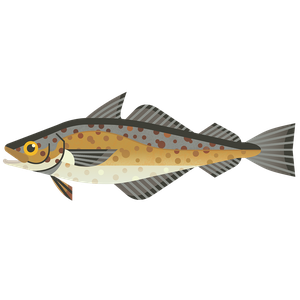
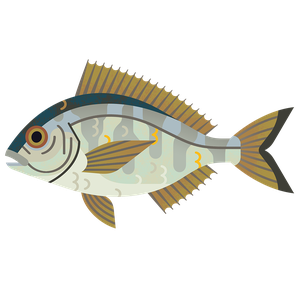
Haddock
Melanogrammus aeglefinus
What to check for
Location
North Sea, West of Scotland, Skagerrak
Technical location
Atlantic, Northeast, North Sea, Skagerrak, West of Scotland
Caught by
Hook & line (longline)
Rating summary
Haddock in the North Sea, West of Scotland, and Skagerrak is not overfished and not subject to overfishing. Management is following scientific advice, and catches are in line with management measures. However, there are some concerns about discarding of unwanted fish. A small amount of haddock in this area is caught by longlining. Longlining can have a bycatch of species such as seabirds.Rating last updated August 2024
Technical consultation summary
Haddock in the North Sea, West of Scotland, and Skagerrak are not overfished and not subject to overfishing. Management is following scientific advice, and catches are in line with management measures. However, there are some concerns about discarding of unwanted fish. A small amount of haddock in this area is caught by longlining. Longlining can have a bycatch of species such as seabirds.
How we worked out this Rating
Haddock in the North Sea, West of Scotland, and Skagerrak is not overfished and not subject to overfishing.Stock assessments are carried out annually by the International Council for the Exploration of the Sea (ICES). The most recent assessment was published in 2024 using data up to 2023. The next assessment is expected in 2025.The stock assessment defines reference points for fishing pressure (F) and biomass (B). For fishing pressure, there is a target to keep F at or below Maximum Sustainable Yield (MSY). For biomass, there is no target. However, there is a trigger point (MSY BTrigger). Below this level, F should be reduced to allow the stock to increase. Because BMSY is not defined, the Good Fish Guide (GFG) applies its own definition of 1.4 x MSY BTrigger.Haddock catches peaked at around 500,000 tonnes in the 1970s. They have since declined to around 40,000 tonnes over the past five years. In 2022, assessments significantly changed the historical estimates of stock size and the reference points against which the stock is measured. However, the overall perception of the stock remains the same. Spawning-stock biomass (SSB) declined from around 450,000 tonnes in the 1970s to fall below the level at which reproduction might be impaired (Blim, 141,339 tonnes) in the 1990s. After recovering to nearly 400,000t in the early 2000s, it again fell and was below Blim for most of the last 20 years. However, the SSB has dramatically increased from around 89,800t in 2019 to 680,608t in 2024. It is now 246% of the target level (MSY BTrigger, 196,402t), and 148% of the GFG definition of BMSY (274,963t) and therefore is not in an overfished state.Fishing mortality (F) declined from high levels of around 0.8 between 1971 and 2001 to fluctuate between 0.2 and 0.5 since. In 2023 it was 0.084 – 51% below levels associated with Maximum Sustainable Yield (FMSY, 0.174). Therefore, stock is not subject to overfishing.ICES advises that when the MSY approach is applied, total catches in 2025 should be no more than 112,435 tonnes. This is a 25% decrease on the previous year's advice owing to the changes in the FMSY reference point from 0.24 to 0.174.Recruitment of young fish into the stock has been low since 2000, but 2019 and 2020 were better years and the stock size is increasing as a result. However, recruitment for 2023 and estimates for 2024 are lower.
Management measures are in place and generally effective, and there is a precautionary management plan for this fishery.Catches of haddock in the North Sea, Skagerrak and West of Scotland are mainly made by the (around 80% of the landings), followed by Denmark and Norway. The EU has a Multiannual Plan (MAP) for its fleets, but Norway and the UK are not part of it. Instead, there is a separate agreed management approach between the EU, UK, and Norway, which includes an agreement to develop a joint long-term management plan.Catch limits, known as Total Allowable Catches (TACs), are the main management measure. TACs are determined based on annual stock assessments by the International Council for the Exploration of the Sea (ICES) and are divided among different fishing areas. The North Sea gets 85%, West of Scotland gets 10%, and the Skagerrak gets 5%.In 2023, the combined TACs were 54% of advice and in 2024 80% of the ICES advice, indicating that management is following scientific recommendations. Total catches (landings + discards) from 2017-2021 averaged 90% of the advice and in 2023 was 52% of the advice and 97% of the TACs. Catches are therefore complying with advice and regulations. In 2021, the recommended maximum catch for the haddock stock increased by 66% and increased by a further 86% in 2022. However, haddock is caught alongside North Sea cod, which is at dangerously low levels, and therefore increasing catches could have a detrimental effect on the cod stock. Managers recognised this and chose to set catch limits at 72% of the advice in 2021 and 41% in 2022. In 2024, the advice catch has decreased by 25% and a 5.5% decrease in TACs.Other management measures include:Real-time closures: For cod, haddock, saithe and whiting in the North Sea and Skagerrak, if more than 10% of the catch by weight is juveniles (smaller than 35cm, 30cm, 35cm, or 27cm respectively), the area in which they were caught is closed for 3 weeks.Minimum conservation reference size: haddock can legally be caught and sold at 30 cm. Below this size, haddock have to be landed but can't be sold for human consumption and so have a lower value.Landing obligation: it is illegal to discard unwanted (e.g. below-minimum-size, BMS) haddock at sea, although there some exemptions. Reported landings of BMS haddock are very low, and observer data indicates that illegal discarding is taking place at sea. Estimated discards in 2021 were 37% of the total catch by weight. This could be related to good spawning years in 2019 and 2020, increasing the number of small haddock in the fishery.The Scottish Conservation Credits scheme, which aimed to reduce cod mortality, improve gear selectivity, and reduce discards, ended in 2016 but was successful until then. It also successfully reduced mortality of associated species, such as haddock.Various other measures are in place to protect young fish, spawning areas, sensitive species, and marine habitats. There are some closed areas to protect juveniles and vulnerable habitats. In the EU and UK, the minimum mesh size that trawl nets may use is 120mm, to prevent catching undersize cod, haddock or saithe. Smaller mesh can be used if by-catches of those species do not exceed 20% of the total by weight, or if there are selectivity modifications. In Norway, the minimum mesh size is 120mm south of 64 degrees N and 130mm north of it.The EU and UK both have fishery management measures, which can include catch limits, population targets, and gear restrictions. However, compliance in the EU and UK has been inconsistent, with ongoing challenges in implementing some regulations. The goal of reaching Maximum Sustainable Yield (MSY) by 2020 was missed, with less than half of UK TACs in 2024 following ICES advice. In 2024, the EU and UK reaffirmed their commitment to sustainable fisheries by aligning management with scientific advice to gradually approach MSY. However, no new target date has been set for achieving MSY across all fisheries. The Marine Conservation Society views Remote Electronic Monitoring (REM) with cameras is one of the most cost-effective tools for providing reliable fisheries data and aiding informed management decisions. Fully monitored fisheries enhance collaboration, data accuracy, stock recovery, and reduce impacts on marine wildlife and habitats. However, the full potential of REM may only be achieved when it tracks fishing location and documents catch and bycatch, particularly where vulnerable species and habitats are at risk. As of January 2024, the EU is introducing a Remote Electronic Monitoring (REM) mandate for EU vessels, including CCTV cameras on vessels 18m or more that pose a potential risk of non-compliance, within the next 4 years. Across the UK, different approaches to REM are being taken and legislation is expected to be in place across all 4 countries within the next few years.The Fisheries Act (2020) requires the development of Fisheries Management Plans (FMPs) (replacing EU Multi-Annual Plans) in the UK. 43 FMPs have been proposed and are at various stages of development and implementation, these should all be published by the end of 2028. FMPs have the potential to be very important tools for managing UK fisheries, although data limitations may delay them for some stocks. It is also essential the UK governments define and adopt a standardised approach or model across the four nations to a universally defined FMP design, to ensure the consistence, quality and coherence of all the proposal FMPs. The Marine Conservation Society is keen to see publicly available Fishery Management Plans for all commercially exploited stocks, especially where stocks are depleted, that include: An overview of the fishery including current stock status, spatial coverage, current fishing methods and impacts Targets for fishing pressure and biomass, and additional management when those targets are not being met, based on the best scientific evidence Timeframes for stock recovery Improved data collection, transparency, and accountability, supported by technologies such as Remote Electronic Monitoring (REM) Consideration of wider environmental impacts of the fishery, including habitat impacts and minimising bycatch Stakeholder engagement A North Sea and West Coast of Scotland Haddock FMP has been proposed, coordinated by Marine Scotland that incorporates this stock. At the time of writing, it is too soon to know whether proposed management measures will be effective in managing the stock. For more information about this FMP and expected progress and timelines, see [https://www.gov.uk/government/collections/fisheries-management-plans#published-fmps].

A small proportion of haddock are caught by longlining. Bycatch is moderate and may include vulnerable species such as seabirds.Less than 4% of haddock in this fishery are caught by longlining. Bycatch data is limited in many UK and EU fisheries as they are generally not well monitored.ICES reports that longlines have a bycatch of northern fulmars in the northern North Sea and west of Scotland. This species is listed as endangered in Europe. Bycatch estimates are very uncertain, as observer coverage is very low. For the UK offshore longline fleet, which is mainly targeting hake, they range from around 2,000-9,000 fulmars per year, with a point estimate of around 5,000. The fulmar population from a census in 1998-2002 was around 500,000, but it is thought to have declined by as much as 50% since then. The cause of this decline is unclear, and could be related to reductions in the amount of fish and offal being discarded at sea by trawlers. However, a recent study estimated that removing all bycatch mortality for the species in the UK could allow a population increase of 2% over 25 years.While much of the UK longline fleet is implementing bycatch mitigation, studies have noted that bycatch mitigation may not be in place for other longline fleets. ACAP (the Agreement on the Conservation of Albatrosses and Petrels) recommends best practice for reducing seabird bycatch in longline fisheries. This includes the simultaneous use of weighted hooks, bird scaring lines and night setting, or hook-shielding or underwater bait setting devices. A recent review of the longline hake fishery in offshore Scottish waters found that the best practice was not being met, and more research and mitigation measures were needed. It is unclear whether the haddock longline fishery is implementing best practice.The demersal haddock longline fishery is unlikely to be driving population trends in seabirds because of its small size. Because it is demersal, it is less accessible to seabirds and therefore less likely to be a risk. However, without more data on the fishery this is difficult to evidence the Marine Conservation Society therefore considers it possible that haddock longlining is contributing to population decline of fulmars, and / or is preventing recovery.There may also be bycatch of skates, rays, and sharks. More data is needed to understand the level of catch and impact that this is having.Fisheries that are used to supply bait for longlines must also be sustainably managed, but there is not enough data to confirm the source of the bait and assess baitfish stocks. It is therefore possible that this fishery is overexploiting other species.Longline fisheries tend to have a much lower impact on seabed habitats than trawling. However, if the longlines are dragged across the seabed during fishing and hauling they can negatively impact on vulnerable species such as corals and sponges, which can be slow to recover.
References
ACAP, 2021. ACAP Review of mitigation measures and Best Practice Advice for Reducing the Impact of Pelagic Longline Fisheries on Seabirds. Reviewed at the Twelfth Meeting of the Advisory Committee Virtual meeting, 31 August – 2 September 2021. Available at https://www.acap.aq/resources/bycatch-mitigation/mitigation-advice/3956-acap-2021-pelagic-longlines-mitigation-review-bpa/file [Accessed on 26.07.2024] .BirdLife International. 2015. Fulmarus glacialis. The IUCN Red List of Threatened Species 2015: e.T22697866A60171190. Available at https://www.iucnredlist.org/species/22697866/60171190 [Accessed on 26.07.2024] .Clark, M.R., Althaus, F., Schlacher, T.A., Williams, A., Bowden, D.A., and Rowden, A.A., 2015. The impacts of deep-sea fisheries on benthic communities: a review. ICES J Mar Sci: 73, p.i51–69. https://doi.org/10.1093/icesjms/fsv123.EU, 2018. Commission Delegated Regulation (EU) 2018/2035 of 18 October 2018 specifying details of implementation of the landing obligation for certain demersal fisheries in the North Sea for the period 2019-2021. Available at https://eur-lex.europa.eu/legal-content/EN/TXT/?uri=uriserv:OJ.L_.2018.327.01.0017.01.ENG [Accessed on 26.07.2024].ICES, 2024a. Celtic Seas Ecoregion – Ecosystem overview. In Report of the ICES Advisory Committee, 2024. ICES Advice 2024, Section 7.1, Available at: https://doi.org/10.17895/ices.advice.25713033 [Accessed on 25.07.2024]ICES, 2024b. Greater North Sea ecoregion – Ecosystem overview. In Report of the ICES Advisory Committee, 2024. ICES Advice 2024, Section 7.1, Available at: https://doi.org/10.17895/ices.advice.25714239 [Accessed on 25.07.2024]ICES, 2024c. Haddock (Melanogrammus aeglefinus) in Subarea 4, Division 6.a, and Subdivision 20 (North Sea, West of Scotland, Skagerrak). In Report of the ICES Advisory Committee, 2024. ICES Advice 2024, had.27.46a20, Available at: https://doi.org/10.17895/ices.advice.25019252 [Accessed on 25.07.2024].ICES, 2024d. Working Group on the Assessment of Demersal Stocks in the North Sea and Skagerrak (WGNSSK). ICES Scientific Reports. 6:38. 1249 pp. Available at: https://doi.org/10.17895/ices.pub.25605639 [Accessed on 26.07.2024].JNCC, 2021. Seabird Monitoring Programme Report 1986–2019: Northern fulmar (Fulmarus glacialis). Available at https://jncc.gov.uk/our-work/northern-fulmar-fulmarus-glacialis/ [Accessed on 26.07.2024].Miles, J., Parsons, M. and O’Brien, S. 2020. Preliminary assessment of seabird population response to potential bycatch mitigation in the UK-registered fishing fleet. Report prepared for the Department for Environment Food and Rural Affairs (Project Code ME6024). Available at http://sciencesearch.defra.gov.uk/Default.aspx?Menu=Menu&Module=More&Location=None&Completed=0&ProjectID=20461 [Accessed on 26.07.2024].Northridge, S., Kingston, A., and Coram, A., 2020. Preliminary estimates of seabird bycatch by UK vessels in UK and adjacent waters. Report prepared for the Department for Environment Food and Rural Affairs (Project Code ME6024). Available at http://sciencesearch.defra.gov.uk/Default.aspx?Menu=Menu&Module=More&Location=None&Completed=0&ProjectID=20461 [Accessed on 26.07.2024].Pham, C.K., Diogo, H, Menezes, G., Porteiro, F., Braga-Henriques, A., Vandeperre, F. and Morato, T., 2014. Deep-water longline fishing has reduced impact on Vulnerable Marine Ecosystems. Sci Reports 4: 4837. https://doi.org/10.1038/srep04837.Rouxel, Y., Crawford, R., Forti Buratti, J.P and Cleasby, I.R., 2022. Slow sink rate in floated-demersal longline and implications for seabird bycatch risk. PlosONE. https://doi.org/10.1371/journal.pone.0267169.Scottish Government, 2023. Agreed record of fisheries consultations between the European Union, Norway and the United Kingdom for 2024. Available at https://assets.publishing.service.gov.uk/media/6573270158fa300013b1416e/fisheries-agreed-record-EU-Norway-UK-2024.pdf [Accessed on 25.07.2024].
Sustainable swaps
Learn more about how we calculate our sustainability ratings.
How our ratings work