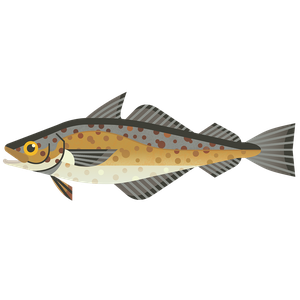
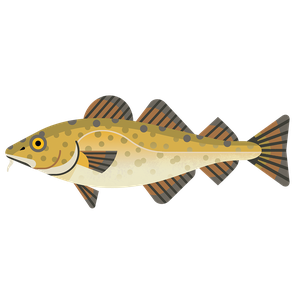
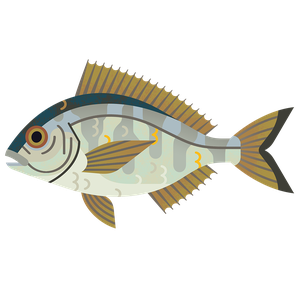
Haddock
Melanogrammus aeglefinus
What to check for
Location
Rockall
Technical location
Atlantic, Northeast, Rockall
Caught by
Bottom trawl (otter)
Rating summary
Rockall haddock is abundant and is not being overfished. Some appropriate management measures are in place, but there is no joint management plan between involved parties. Most haddock catches are by otter trawls. Bycatch of cod and whiting in this fishery is likely hindering the recovery of these populations, and there are concerns that trawling is damaging vulnerable marine habitats.Rating last updated July 2025.
Technical consultation summary
The haddock population in Rockall is abundant and not overfished. Biomass has rapidly increased to 85,868 tonnes in 2025 following a strong recruitment year in 2022. This exceeds the MSY Btrigger of 12,877 tonnes and the BMSY proxy of 18,028 tonnes. Fishing mortality remains below FMSY (0.28), falling to the lowest in the time series at 0.059 in 2024. ICES advises a maximum catch of 20,432 tonnes in 2026, a 35% reduction from 2025, reflecting a downward revision of the estimated strong year class of 2022. While some management measures are in place, there is no joint management plan involving all parties. TACs for Rockall haddock have generally aligned with scientific advice, except in 2021, and catches have remained below limits. Despite a 60% drop in landings since 2019, the UK retains a share of around 85% of the total TAC. Following evidence of incursions into closed areas protecting juvenile haddock and VMEs, MSC certification was suspended. Part of the fishery is now In-Transition to MSC (ITM), working to improve compliance, monitoring, and reporting. However, the risk of incursions and potential damage persists. Most Rockall haddock is caught using otter trawls (>99%), which also results in bycatch of cod and whiting. Bycatch levels likely hinder the recovery of these populations, as catches regularly exceed advice, and no scenario in the Celtic Seas mixed fishery ensures SSB above Blim for cod and whiting by 2026. There are also concerns about trawling damage to vulnerable marine habitats. Evidence indicates damage to cold-water corals (biogenic reefs) on the Rockall-Hatton Plateau, but limited historical data makes it difficult to fully assess the impact of trawling in Rockall.
How we worked out this Rating
The population of haddock in Rockall is abundant and harvested sustainably.Stock assessments are conducted by the International Council for the Exploration of the Sea (ICES). The most recent assessment was published in 2025 using data up to 2024. In 2024, the stock assessment was benchmarked and changed from category 3 to category 1 (data-rich) with revised reference points. After shifting to an age-based assessment (SAM), survey data has been revised and biological parameters updated.The stock assessment defines reference points for fishing pressure (F) and biomass (B). For fishing pressure, there is a target to keep F at or below Maximum Sustainable Yield (MSY). For biomass, there is no target. However, there is a trigger point (MSY Btrigger). Below this level, F should be reduced to allow the stock to increase. Because BMSY is not defined, the Good Fish Guide applies its own definition of 1.4 x MSY Btrigger.Between 2011 and 2013, biomass (B) dropped below Blim (8542 tonnes), reflecting a period of severely low recruitment from 2008 to 2012. Biomass has gradually increased from 8267 tonnes in 2013 to 36,702 tonnes in 2022. Following a very high recruitment year in 2022, biomass has more than doubled to 85,868 tonnes in 2025. This exceeds the MSY Btrigger set at 12,877 tonnes, as well as the BMSY proxy at 18,028 tonnes. Therefore, the stock is considered to be underfished.Fishing mortality (F) has been gradually decreased from 0.84 in 1991 to 0.22 in 2011, falling below FMSY (0.28). Fishing mortality has remained relatively stable below FMSY since 2011, peaking at FMSY in 2021 and 2022. In 2024, F was estimated at 0.059, which is the lowest it has been in the timeseries. As this is also below FMSY, the stock is considered to be harvested sustainably.ICES advises that when the MSY approach is applied, catches in 2026 should be no more than 20,432 tonnes. This is a 35% decrease from 2025, reflecting a downward revision of the estimated strong year class of 2022.
Some appropriate management measures are in place, but there is no joint management plan between all parties involved in this fishery. After evidence of incursions into closed areas, steps are being taken to address non-compliance. However, it is too early to determine if the associated improvement plan has been successful.Rockall haddock is a straddling stock, caught by the EU, UK and in international waters, but lacks a joint management plan. Instead, it is managed by the North-East Atlantic Fisheries Commission (NEAFC), and an EU multiannual management plan (MAP), which the UK is not involved with. Despite this, the EU and UK have agreed on Total Allowable Catch (TAC) limits.In 2024, most landings were by the UK – mainly a few large Scottish trawlers (2307 tonnes) – followed by Ireland (418 tonnes). In previous years, Russia dominated the fishery, peaking at 5844 tonnes in 2004, but this has declined to an estimated 0 tonnes since 2023. Although TAC limits are only applicable to UK/EU vessels, the small catch volumes of countries such as Norway are unlikely to impact the stock assessment and advice.TACs for Rockall haddock have generally followed scientific advice since 2014, with catches staying below limits – except in 2021, when the TAC exceeded recommendations. Although UK landings have dropped by over 60% since 2019, the UK retains a share of around 85% of the total TAC. Currently, Rockall haddock is not overfished, but the lack of coordinated management poses risks.To protect juvenile haddock, the Rockall Haddock Box was closed to fishing in 2001. This protected area, spanning international (NEAFC), EU, and UK waters, permits only longlining, as it is more size-selective and less likely to catch juveniles. While the box aligns with higher densities of both juveniles and adults, its effectiveness is unclear due to variable stock size and recruitment trends. However, it also protects vulnerable marine ecosystems (VMEs) such as sea pens, sponges, and corals.In June 2022, the MSC certification for Rockall haddock was suspended due to illegal incursions into the haddock box and other closed areas, as well as evidence of tampering with vessel monitoring systems (VMS). Marine Scotland and Scottish Fisheries Sustainable Accreditation Group (SFSAG) have taken action to address non-compliance, including legal proceedings and additional monitoring and reporting requirements. To regain certification, the fishery must follow an improvement plan and report non-compliance. The loss of earnings from the suspended certification provides financial motivation to improve compliance. However, for the uncertified fishery, there is no financial incentive, and the risk of continued incursions and compliance issues may persist.Other management measures include:A minimum conservation reference size (MCRS) of 30 cm for haddock caught by EU and UK vessels, but not for non-EU vessels or those in international waters. UK landings from international waters have decreased from 30% in 2021 to less than 10% in 2024.Rockall haddock is subject to the Landing Obligation (LO). This requires haddock below the MCRS to be landed but prohibits them from being sold for human consumption, reducing their value. Discards have significantly declined from over 50% of catches in the 1990s, to about 15% in recent years.In UK waters of Rockall, a minimum mesh size of 100 mm is required for trawl cod-ends. This helps reduce juvenile catches and discards or haddock, saithe, and cod. Other specified mesh sizes can be used if by-catches of these species do not exceed 20% of the total catch weight.Management compliance in the EU and UK has been inconsistent, with ongoing challenges in enforcing some regulations. The Landing Obligation, an EU law retained by the UK post-Brexit, aims to promote more selective fishing methods, reduce bycatch, and improve catch reporting. However, compliance has been poor, and accurately measuring discard levels remains difficult with current monitoring programmes. The UK is in the process of replacing the LO with country-specific Catching Policies.The Marine Conservation Society views Remote Electronic Monitoring (REM) with cameras is one of the most cost-effective tools for providing reliable fisheries data and aiding informed management decisions. Fully monitored fisheries enhance collaboration, data accuracy, stock recovery, and reduce impacts on marine wildlife and habitats. However, the full potential of REM may only be achieved when it tracks fishing location and documents catch and bycatch, particularly where vulnerable species and habitats are at risk. As of January 2024, the EU is introducing a Remote Electronic Monitoring (REM) mandate for EU vessels, including CCTV cameras on vessels 18m or more that pose a potential risk of non-compliance, within the next 4 years. Across the UK, different approaches to REM are being taken and legislation is expected to be in place across all 4 countries within the next few years.The Fisheries Act (2020) requires the development of Fisheries Management Plans (FMPs) (replacing EU Multi-Annual Plans) in the UK. 43 FMPs have been proposed and are at various stages of development and implementation, these should all be published by the end of 2028. FMPs have the potential to be very important tools for managing UK fisheries, although data limitations may delay them for some stocks. It is also essential the UK governments define and adopt a standardised approach or model across the four nations to a universally defined FMP design, to ensure the consistence, quality and coherence of all the proposal FMPs.The Marine Conservation Society is keen to see publicly available Fishery Management Plans for all commercially exploited stocks, especially where stocks are depleted, that include:An overview of the fishery including current stock status, spatial coverage, current fishing methods and impactsTargets for fishing pressure and biomass, and additional management when those targets are not being met, based on the best scientific evidenceTimeframes for stock recoveryImproved data collection, transparency, and accountability, supported by technologies such as Remote Electronic Monitoring (REM)Consideration of wider environmental impacts of the fishery, including habitat impacts and minimising bycatchStakeholder engagementAn Atlantic Haddock FMP has been proposed, coordinated by the Scottish Government, which incorporates this stock. At the time of writing, it is too soon to know whether proposed management measures will be effective in managing the stock. For more information about this FMP and expected progress and timelines, see [https://www.gov.uk/government/collections/fisheries-management-plans#published-fmps].
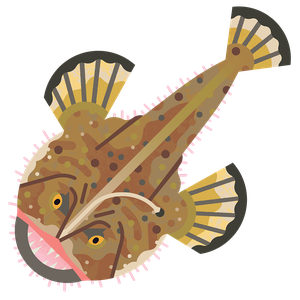
Most haddock catches are by otter trawls. Bycatch of cod and whiting in this fishery is likely hindering the recovery of these populations. There are also concerns that trawling may be damaging vulnerable marine habitats.In 2024, most haddock landings (>99%) were from demersal otter trawls, which can result in significant bycatch. In the Northeast Atlantic, reported bycatch includes endangered, threatened and protected (ETP) species, such as sharks, rays, and marine mammals. However, bycatch data is limited due to poor monitoring in many UK and EU fisheries.For Rockall haddock, bycatch is primarily anglerfish but can also include cod, whiting, and the critically endangered common skate complex (blue and flapper skate). Stocks of Rockall anglerfish are above MSY Btrigger, and fishing mortality is below FMSY, suggesting little concern for this species as bycatch. In contrast, cod and whiting stocks are data-limited, and their catches exceed advice limits. No scenario can ensure SSB above Blim for cod and whiting by 2026 in the Celtic Seas mixed fishery, indicating that the haddock fishery is overexploiting and preventing the recovery of these populations.Blue and flapper skate populations have been recovering since 2010, following management measures introduced in 2009, such as landing prohibitions and designation of nursery areas. Low bycatch levels (75 tonnes annually from 2017 to 2022), combined with high post-capture survival rates and protected refuge areas, suggest the haddock fishery does not significantly hinder skate recovery. However, ongoing monitoring of common skate bycatch remains essential to detect and respond to risks, as required for MSC recertification.Demersal trawls have contact with the seabed resulting in penetration and abrasion. The impact of trawling and the seabed and habitat features depends on its location and scale. Areas frequently exposed to natural disturbances from tides and waves are less sensitive to trawling. Whereas deeper waters like those in Rockall, home to Vulnerable Marine Ecosystems (VMEs), such as corals, spongers, and sea pens, are more susceptible.In 2022, an estimated 66% of the Celtic Seas region at 0-200m depths, and 59% at 200-800m depths were trawled. To protect VMEs, bottom trawling is banned below 800m, with restrictions between 400-600m. Despite measures to protect VMEs, recent evidence shows damage to biogenic reef VMEs in Rockall, particularly cold-water corals outside of protected areas, with recovery potentially taking decades.VMS data from the Rockall-Hatton Plateau, managed by NEAFC, reveals trawling hotspots near closed areas and the Haddock Box. Repeated trawling hinders benthic recovery, reduces habitat complexity, and risks smothering nearby VMEs. However, limited historical data makes it difficult to fully assess the impact if these trawling patterns in Rockall. Recent evidence of incursions into closed areas suggests that the fishery continues to pose some threat to VMEs. For certification, fishers are required to move on if they encounter VMEs outside protected areas, however, this rule does not apply to non-certified fishers, raising concerns about the effectiveness of VME protection in the haddock fishery.Marine Protected Areas (MPAs), if well managed, can safeguard VMEs from harmful fishing practices. The Marine Conservation Society urges businesses to verify if their sources originate from within MPAs. If so, the Marine Conservation Society advises business to confirm if fishing activities are conducted legally and to request evidence from the fishery or managing authority that ensure these activities do not harm protected features or compromise the conservation objectives of the site(s).
References
Eigaard, O. R., Bastardie, F., Breen, M., Dinesen, G. E., Hintzen, N. T., Laffargue, P., Mortensen, L. O., Nielsen, J. R., Nilsson, H. C., O- Neill, F. G., Polet, H., Reid, D. G., Sala, A., Skold, M., Smith, C., Sorensen, T. K., Tully, O., Zengin, M. and Rijnsdorp, A. D., 2016. Estimating seabed pressure from demersal trawls, seines, and dredges based on gear design and dimensions. ICES Journal of Marine Science, 73:1, pp. i27- i43. https://doi.org/10.1093/icesjms/fsv099.Hiddink, J., Jennings, S., Sciberras, M., Szostek, C.L., Hughes, K.M., Ellis, N., Rijnsdorp, A.D., McConnaughey, R.A., Mazor, T., Hilborn, R., Collie, J.S., Pitcher, C.R., Amoroso, R.O., Parma, A.M., Suuronen, P. and Kaiser, M.J. 2017. Global analysis of depletion and recovery of seabed biota after bottom trawling disturbance. PNAS. 114:31, pp. 8301-8306. https://doi.org/10.1073/pnas.1618858114.ICES, 2019. NEAFC request to evaluate a harvest control component of a long-term management plan for haddock at Rockall. In Report of the ICES Advisory Committee, 2019. ICES Advice 2019, sr.2019.17, https://doi.org/10.17895/ices.advice.5588. [Accessed on 16.09.2025].ICES, 2020. Stock Annex: Haddock in Division 6b. Available at https://ices-library.figshare.com/articles/report/Stock_Annex_Haddock_Melanogrammus_aeglefinus_in_Division_6_b_Rockall_/18622496. [Accessed on 16.09.2025].ICES, 2020. Vulnerable marine ecosystems in the NEAFC Regulatory Area closed to fishing for purposes other than VME protection. In Report of the ICES Advisory Committee, 2020. ICES Advice 2020, vme.neafc.2. https://doi.org/10.17895/ices.advice.7427. [Accessed on 16.09.2025].ICES, 2022. NEAFC request on the efficacy of the Rockall haddock closure in protection of juvenile haddock. In Report of the ICES Advisory Committee, 2022. ICES Advice 2022, sr.2022.03. https://doi.org/10.17895/ices.advice.10057. [Accessed on 16.09.2025]ICES, 2024. Benchmark workshop on selected haddock and saithe stocks (WKBGAD). ICES Scientific Reports. 6:7. 393 pp. https://doi.org/10.17895/ices.pub.25002470 [Accessed on 16.09.2025].ICES. 2024. Celtic Seas Ecoregion – Ecosystem overview. In Report of the ICES Advisory Committee, 2024. ICES Advice 2024, Section 7.1, https://doi.org/10.17895/ices.advice.25713033 [Accessed on 16.09.2025].ICES, 2025. Working Group for the Celtic Seas Ecoregion (WGCSE). ICES Scientific Reports. 7:52. 957pp. https://doi.org/10.17895/ices.pub.29401877 [Accessed on 16.09.2025].ICES, 2025. Haddock (Melanogrammus aeglefinus) in Division 6.b (Rockall). In Report of the ICES Advisory Committee, 2025. ICES Advice 2025, had.27.6b. https://doi.org/10.17895/ices.advice.27202602 [Accessed on 16.09.2025].ICES, 2025. Working Group for the Celtic Seas Ecoregion (WGCSE). ICES Scientific Reports. 7:52. 957pp. https://doi.org/10.17895/ices.pub.29401877 [Accessed on 16.09.2025]Jones, H., des Clers, S. and Duggan, D, 2022. Marine Stewardship Council (MSC) 3rd Surveillance Audit Report: SFSAG Rockall haddock. Prepared by Control Union (UK) Limited on behalf of Scottish Fisheries Sustainable Accreditation Group (SFSAG). Published on 23.06.2022. Available at https://fisheries.msc.org/en/fisheries/scottish-fisheries-sustainable-accreditation-group-sfsag-rockall-haddock/@@assessments [Accessed on 28.07.2022].Kennelly, S. J. & Broadhurst, M. K., 2021. A review of bycatch reduction in demersal fish trawls. Rev Fish Biol Fisheries 31, 289–318. https://doi.org/10.1007/s11160-021-09644-0.Kynoch, R., Fryer, R. & Neat, F., 2015. A simple technical measure to reduce bycatch and discard of skates and sharks in mixed-species bottom-trawl fisheries. ICES J Mar Sci,72(6):1861.Marshall, C.T. Macdonald, P. Torgerson, E. Asare, J.L. Turner, R. 2021. Design, development and deployment of a software platform for real-time reporting in the west of Scotland demersal fleet. A study commissioned by Fisheries Innovation Scotland (FIS). Available at http://www.fiscot.org/ [Accessed on 27.07.2022].Silva, F., Ellis, J. & Catchpole, T., 2012. Species composition of skates (Rajidae) in commercial fisheries around the British Isles and their discarding patterns. J Fish Biol., 80:1678–1703.van Denderen, P. Bolam, S., Hiddink, J.G., Jennings, S., Kenny, A., Rijnsdorp, A., and van Kooten, T., 2015. Similar effects of bottom trawling and natural disturbance on composition and function of benthic communities across habitats. Mar Ecol Prog Ser. 2015;541:31–43.Wilson, D. and Hoare, D. 2022. Marine Stewardship Council (MSC) Expedited Audit Report: Scottish Fisheries Sustainable Accreditation Group (SFSAG) Rockall haddock. Carried out by Control Union (UK) Limited on behalf of The Scottish Fisheries Sustainable Accreditation Group. 19 December 2022. Available at https://fisheries.msc.org/en/fisheries/scottish-fisheries-sustainable-accreditation-group-sfsag-rockall-haddock/@@assessments [Accessed on 18.07.2023].

Sustainable swaps
Learn more about how we calculate our sustainability ratings.
How our ratings work