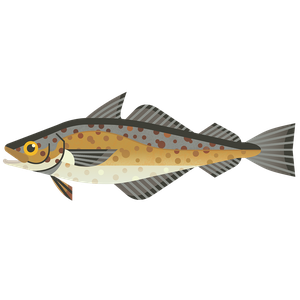
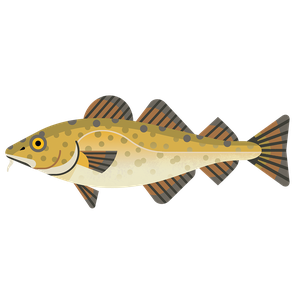
Some but not all appropriate relevant management measures are in place, for Irish Sea haddock. The stock is in a good state, but discards are relatively high, there is no management plan in place.There is no management plan for Irish Sea haddock. This stock is assessed by various countries. The stock is covered by the EU Multi Annual Plan (MAP) for Western Waters, however there is no joint management plan between the EU and UK. Most catches are by Ireland, followed by the UK. Around 20% of landings and 82% of discards are by trawlers fishing for Nephrops.The main management measure is a catch limit (Total Allowable Catch, TAC) for all vessels targeting haddock. Historically, TACs were set much higher than the scientifically recommended limits, but have been equal to or less than the advice since 2017. Total catches have been well below the TACs and advice. On average, from 2019-2023, catches were 1,415 tonnes, or 44% of the average TAC (3,190t). The TACs for 2024 are in line with advice (2263t). This could indicate that this management measure is not limiting the fishery.Stock assessment and management units match up. Landings reported by vessels in the southern most parts of the Irish Sea, have been reassigned to Celtic Sea stock (7.b-k) since 2003, as they believed to be part of the Celtic Sea stock. In recent years, this has accounted for around 600 tonnes of haddock. For Northern Irish vessels targeting haddock 23% of trips are observed.The minimum conservation reference size for haddock in the UK is 30 cm. Below this size, haddock have to be landed but can't be sold for human consumption and so have a lower value. A large number of juvenile haddock are caught and discarded. From 2019-2021, the average discard rate was 18% of the total catch. Most (82%) of the discarding was by Nephrops trawlers. Some selectivity measures to avoid cod (see below) are likely to reduce juvenile haddock catch.A number of Cod Conservation measures are in place that affect the haddock trawl fishery.Technical specifications: Haddock trawlers, which caught 36% of all Irish Sea cod in 2021, must have a minimum mesh size of 120mm or an eliminator trawl. These allow unwanted or small fish to escape from the net. There are no requirements for midwater or beam trawlers, which caught 18% and 10%, respectively.Seasonal closure: On the east coast of Ireland, between February and April, towed nets, static nets, and hooks and lines are prohibited. This doesn't ban highly selective gears, so Nephrops and haddock trawlers are still allowed to fish.Observers: there is an enhanced scientific observer programme to collect data on catches, and to monitor the development of cod and other stocks in the Irish Sea. Vessels should have scientific observers on board, or set aside part of their catch for sampling on shore.Licensing: only 8 vessels using eliminator trawls are allowed to fish for haddock in 2021, and must be able to demonstrate clean catches (no bycatch).Move on rules: if the catch is more than 5% cod, the vessel has to move 3 miles away and report it. Reports of high cod concentrations will be shared to allow vessels to avoid those areas.The maximum cod allocation to the fishery is 16 tonnes.Gear trials are underway to find more selective gears that can be used to reduce cod catches.The EU and UK both have fishery management measures, which can include catch limits, population targets, and gear restrictions. However, compliance in the EU and UK has been inconsistent, with ongoing challenges in implementing some regulations. The goal of reaching Maximum Sustainable Yield (MSY) by 2020 was missed, with less than half of UK TACs in 2024 following ICES advice. In 2024, the EU and UK reaffirmed their commitment to sustainable fisheries by aligning management with scientific advice to gradually approach MSY. However, no new target date has been set for achieving MSY across all fisheries. The Landing Obligation (LO), an EU law retained by the UK post-Brexit, requires all quota fish to be landed, even if unwanted (over-quota or below minimum size). It aims to encourage more selective fishing methods, reduce bycatch, and improve catch reporting. However, compliance is poor, and accurate discard levels are hard to quantify with current monitoring programmes. The UK is in the process of replacing the LO with country-specific Catching Policies. The Marine Conservation Society views Remote Electronic Monitoring (REM) with cameras is one of the most cost-effective tools for providing reliable fisheries data and aiding informed management decisions. Fully monitored fisheries enhance collaboration, data accuracy, stock recovery, and reduce impacts on marine wildlife and habitats. However, the full potential of REM may only be achieved when it tracks fishing location and documents catch and bycatch, particularly where vulnerable species and habitats are at risk. As of January 2024, the EU is introducing a Remote Electronic Monitoring (REM) mandate for EU vessels, including CCTV cameras on vessels 18m or more that pose a potential risk of non-compliance, within the next 4 years. Across the UK, different approaches to REM are being taken and legislation is expected to be in place across all 4 countries within the next few years.The Fisheries Act (2020) requires the development of Fisheries Management Plans (FMPs) (replacing EU Multi-Annual Plans) in the UK. 43 FMPs have been proposed and are at various stages of development and implementation, these should all be published by the end of 2028. FMPs have the potential to be very important tools for managing UK fisheries, although data limitations may delay them for some stocks. It is also essential the UK governments define and adopt a standardised approach or model across the four nations to a universally defined FMP design, to ensure the consistence, quality and coherence of all the proposal FMPs.The Marine Conservation Society is keen to see publicly available Fishery Management Plans for all commercially exploited stocks, especially where stocks are depleted, that include:An overview of the fishery including current stock status, spatial coverage, current fishing methods and impactsTargets for fishing pressure and biomass, and additional management when those targets are not being met, based on the best scientific evidenceTimeframes for stock recoveryImproved data collection, transparency, and accountability, supported by technologies such as Remote Electronic Monitoring (REM)Consideration of wider environmental impacts of the fishery, including habitat impacts and minimising bycatchStakeholder engagementA Irish Sea Demersal FMP has been proposed, coordinated by DAERA that incorporates this stock. At the time of writing, it is too soon to know whether proposed management measures will be effective in managing the stock. For more information about this FMP and expected progress and timelines, see [https://www.gov.uk/government/collections/fisheries-management-plans#published-fmps].