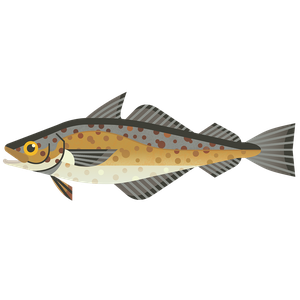
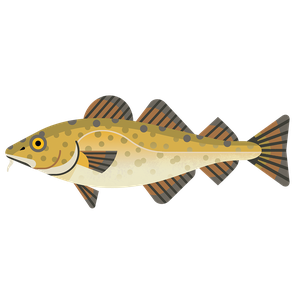
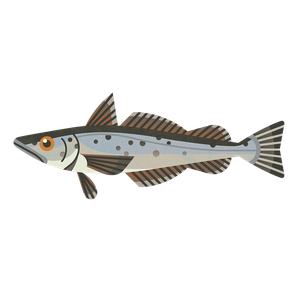
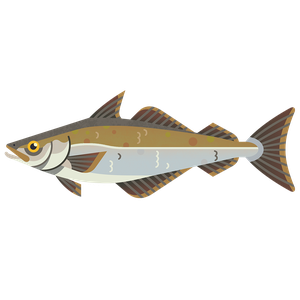
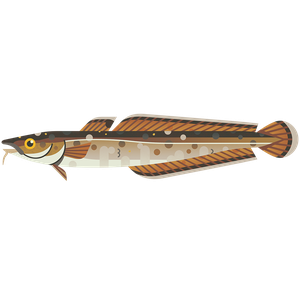
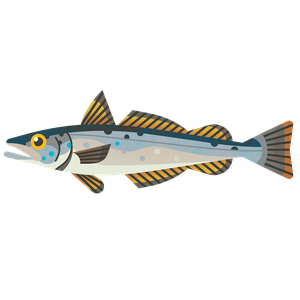
Bottom trawling can damage or remove seabed habitats. It may also bycatch vulnerable species. In New Zealand, habitats are protected by closed areas and measures are in place to reduce seabird bycatch.Around 50-70% of hoki catches are by bottom trawling, with the rest by midwater trawling. Observer coverage has increased from 28% in 2015/16 to 48% in 2020/21. New Zealand also monitors the footprint of its trawl fisheries. This oversight helps to obtain accurate data on fisheries impacts.Bottom trawling for hoki, like trawling for other species, is likely to have effects on benthic community structure and function and there may be consequences for benthic productivity. Around 90% of New Zealand's waters have never been trawled, primarily because they are too deep (over 1,250m). The hoki trawl footprint from 1989-2019 has been estimated at about 167,650 km2. This is 4.1% of New Zealand's waters, and 12% of the ‘fishable area’ (depths of less than 1,600 m that are not closed to trawling). The hoki trawl footprint has been declining over time. In the 2018–19 fishing year, it was 24,392 km2, equivalent to 0.6% of NZ waters and 1.8 % of the fishable area.Roughly 30% of New Zealand’s exclusive economic zone (EEZ), which extends out to 200 nautical miles, is closed to bottom trawling. In the territorial sea, within 12nm of the coast, vessels over 46m are prohibited from trawling and 21% of the area is protected from trawling of all types. The network of closed areas was selected to be representative of marine habitats, and protects 52% of New Zealand's seamounts and 88% of hydrothermal vents. Some closed areas also protect marine mammals, recreational areas and submarine cables. Therefore, habitats are protected to some extent from bottom trawling.There may be a bycatch of other species in this fishery. Hoki, hake, and ling made up 84%, 2%, and 3%, respectively, of the observed catch in target hoki trawls. Other species include silver warehou and white warehou. Together, these are considered one combined fishery and account for 90% of catches. The three first species are MSC certified. The main non-target species caught in the combined fishery off the west coast South Island and Sub-Antarctic are rattails, javelinfish, and spiny dogfish.Incidental captures of protected species have been recorded. In New Zealand, protected marine species include all marine mammals, all seabirds (except black-backed gulls), all sea turtles, some corals, and some fish. The fish species are black-spotted grouper, white pointer sharks, spinetail devil rays, manta rays, basking sharks, nurse sharks, giant grouper. New Zealand has National Plans of Action (NPOAs) for protecting sharks and seabirds.In the hoki fishery, there are recorded interactions with fur seals, basking sharks, and seabirds.Estimated captures of New Zealand fur seals in the hoki fishery have accounted for 44% (749 out of 1,691) of all fur seals caught in the EEZ between 2002/03 and 2017/18. However, this species is abundant and classified as ‘least concern’ by the Department of Conservation because population levels are increasing. Therefore, this fishery is not preventing the population from increasing.It is mandatory to report all captures of basking sharks. Capture rates appear to be relatively stable. There were 8 captures from the observed fleets (30% of total tows) between 2009/10 and 2019/20. Risk assessments carried out via NPOA-Sharks conclude that there is a low risk of unsustainable fishing impacts for most shark species, including basking sharks.Seabirds are attracted to fishing activities and can get entangled in wires or nets, or suffer damage by flying into trawl warps. In the 2019/20 fishing year there were 113 observed seabird captures in hoki trawl fisheries, and an estimated total of 239 captures. Observed captures since 2002/03 have been dominated by six species: Salvin’s, southern Buller’s, and New Zealand white-capped albatrosses, and sooty shearwaters, white-chinned petrels, and cape petrels. NPOA-Seabirds lists Salvin's and southern Buller's albatrosses as high risk species. For Salvin's albatross, the inshore trawl fishery is the highest risk, followed by the hoki trawl fishery which has a medium risk. For southern Buller's albatross, the hoki trawl fishery has a medium risk, but has a higher risk score than any other fishery.Mitigation methods such as streamer (tori) lines, Brady bird bafflers, warp deflectors, and offal management are used in the hoki trawl fishery. Warp mitigation was voluntarily introduced from about 2004 and made mandatory in April 2006. Trawlers over 28m must use a seabird scaring device such as paired streamer lines, bird baffler, or warp deflector.New Zealand sea lions are rarely captured by vessels trawling for hoki, with only 3 recorded captures since 2002/03. Spatial overlap is low. Three common dolphins have been observed captured in the hoki trawl fishery since 2002/03.Hoki is the species with the highest biomass in the bottom fish community of the upper slope (200–800 m), particularly around the South Island and is considered to be a key biological component of the upper slope ecosystem. Understanding the predator-prey relationships between hoki and other species in the slope community is important, particularly because substantial changes in the biomass of hoki have taken place since the fishery began. The diet of hoki overlaps with that of alfonsino, arrow squid, hake, javelinfish, Ray’s bream, and shovelnose dogfish. Hoki are prey to several piscivores, particularly hake but also stargazers, smooth skates, several deepwater shark species, and ling. The proportion of hoki in the diet of hake averages 38% by weight and declined from 1992 to 2008, possibly because of a decline in the relative abundance of hoki.


 Marine Stewardship Council (MSC)