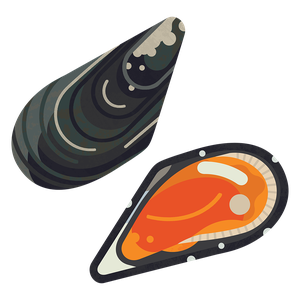
King scallop
Pecten maximus
What to check for
Location
England (English Channel - North East: 7d.N)
Technical location
Atlantic, Northeast, English Channel (East)
Caught by
Dredge
Certification
Fishery Improvement Project (FIP)
Rating summary
King scallops from the northeast English Channel are increasing in abundance and fishing levels are close to sustainable levels. Therefore, there is no concern for biomass or fishing pressure. Few appropriate management measures are in place to control king scallop fishing in the northeastern English Channel. There are currently no catch limits, and fishing effort is not responsive to stock size. Scallop dredging can be very damaging to seabed habitats and species. However, some MPAs in this region are closed to bottom towed gear, providing some protection to vulnerable ecosystems.Last updated June 2025.
Technical consultation summary
King scallops from the northeast English Channel are increasing in abundance, with the 2024 estimates at 70,203 tonnes, which is above the average from 2021-2023 (42,571 tonnes). There is also a downward trend in harvest rate, and the 2023 estimate (23.42%) is only marginally above MSY proxy (23.4%). Therefore, there is no concern for biomass or fishing pressure. Few appropriate management measures are in place to control king scallop fishing in the northeastern English Channel. Although a seasonal closure exists, it does not fully protect breeding stock, and there are currently no catch limits. As fishing effort is not in line with stock status, there remains risk of overexploitation. Scallop dredging can be very damaging to seabed habitats and species. While some MPAs in the region are now closed to bottom-towed gear, offering some protection to vulnerable ecosystems, these closures are relatively recent. As such, data on potential incursions is currently unavailable, and some risk of damage may still remain.
How we worked out this Rating
King scallops from the northeast English Channel are increasing in abundance and fishing levels are close to sustainable levels. Therefore, there is no concern for biomass or fishing pressure.Since 2017, Cefas has conducted annual stock assessment for king scallops in ICES Divisions 27.7.e, 27.7.d, 27.7.f, and 27.4.b. Specific assessment areas were selected within these based on regional differences in scallop growth and fishery exploitation rates. This rating focuses on the northeast region of the English Channel (7.d.N). Between 2017 and 2023, international landings average around 11,950 tonnes per year.Scoring for this stock is based on assessments published in 2025, using data up to 2023/2024. Due to the absence of a biomass reference pointed needed to estimate Maximum Sustainable Yield (MSY), there is some uncertainty in the assessment. As a result, Route 2 scoring has been applied, with king scallops considered to have a high resilience to fishing pressure.Harvestable biomass (the weight of scallops above the minimum landing size and within areas open to dredging) has fluctuated between 22,900 and 45,400 tonnes from 2017 to 2023. In 2024, a sharp increase in harvestable biomass was observed, reaching 70,203 tonnes. That said, without reference points, it remains unclear as to what a healthy stock level should be. However, as this latest figure (70,203 tonnes) is above the average from 2021 to 2023 (42,571 tonnes), there is no concern for biomass.Fishing pressure is assessed using the harvest rate (HR), defined as the proportion of harvestable biomass removed by fishing in the 12 months following each stock survey. Cefas estimates that a harvest rate of 23.4% corresponds to MSY, which would maintain the stock at 35% unfished levels. In 2023, the estimated HR was 23.42% - only marginally above the MSY proxy (23.4%) – and follows a declining trend from 32.81% in 2021 and 27.66% in 2022. Given this downward trend, and the small margin above the MSY proxy, there is currently no concern for fishing pressure.Nonetheless, there remains some uncertainties with this assessment. Biomass surveys use both dredging and underwater video systems to account for areas where dredging is not possible (e.g., conservation zones or unsuitable habitats). Additional scallop stocks are known to exist outside of survey areas, but it remains unclear how these unfished areas interact with fish stock, and specifically, whether larval exchange occurs or if dredged areas are self-sustaining.
Few appropriate management measures are in place to control king scallop fishing in the northeastern English Channel. There are currently no catch limits, and fishing effort is not responsive to stock size.Stock assessments for king scallops in the English Channel only began in 2017. While data quality has improved since then, some uncertainties still remain, which may limit the effectiveness of evidence-based management measures. It is also possible that inshore and offshore scallop stocks are connected, potentially through larval exchange, which suggests a more coordinated approach is needed across management areas.Scallop beds in the northeast English Channel extend from within the 6 nautical mile limit out into offshore UK waters and French waters. This rating focuses on the offshore dredge fishery for king scallops within the UK portion of the northeast English Channel.In offshore English waters, the main regulatory framework for scallop dredging is the Scallop Fishing (England) Order 2012, which applies beyond 6nm. Key measures include:UK scallop licence required for vessels over 10m.Maximum of 16 dredges permitted (0-12nm)Minimum Conservation Reference Size (MCRS): 110mm in ICES area 7dBycatch limit: 10% of total catch under shellfish permitGear specifications and restrictionsEffort limit under the Western waters regime: vessels 15m and above are restricted to 70 days at sea in ICES area 7 between January 1 and March 31.The 110mm MCRS helps to protect juvenile scallops (which mature around 80mm), but may not fully support long-term stock stability as reproductive output increases with size.Importantly, there is no Total Allowable Catch (TAC) for scallops, meaning there are no binding catch limits to prevent overfishing. However, seasonal closures have been introduced to reduce fishing pressure during the scallop spawning season (May to October). Since 2013, ICES area 7d (eastern English Channel) has been subject to seasonal closures. In 2025, dredging in 7d will be prohibited from 1 July to 30 September for both UK and EU vessels over 10m. To prevent effort displacement, a parallel closure applies in the Lyme Bay area of 7e, for vessels over 12m.As vessels over 10m are responsible for around 94.4% of scallop landings in the region, these closures can significantly reduce fishing pressure during part of the spawning season. While these measures align with scientific advice, they are not part of a formal harvest strategy, as fishing effort is not linked to stock size and catch limits are absent. Furthermore, the closures don’t cover the full spawning period, and displaced effort may still impact other scallop grounds.Although fishing pressure is now approaching sustainable levels and biomass is increasing, there is still no agreed reference point for stock status, and the impact of recent closures has not yet been assessed. With the likely connectivity between scallop populations, high fishing pressure in neighbouring areas could still affect the northeastern English Channel stock.Marine Protected Areas (MPAs) in the region prohibit bottom-towed gear to protect vulnerable benthic habitats. However, these MPAs are not designated to protect scallop beds specifically, and therefore offer limited protection to scallop stocks.EU vessels (mostly French) operating in the same waters may be subject to a different management regime, as not joint framework exists. French regulations include a limited number of scallop licences, gear specifications (though no dredge limit), a closed season from May 15 to 30 September, and weekly catch limits based on vessel size and time of year. However, these catch limits are not based on stock status, and overfishing may still occur.This fishery is also part of the UK King Scallop Fishery Improvement Project (FIP), a six-year initiative launched in March 2025. The project aims to elevate king scallop fisheries to a level which meets the certification standards set by the Marine Stewardship Council (MSC).Management compliance in the EU and UK has been inconsistent, with ongoing challenges in enforcing some regulations.The Marine Conservation Society views Remote Electronic Monitoring (REM) with cameras is one of the most cost-effective tools for providing reliable fisheries data and aiding informed management decisions. Fully monitored fisheries enhance collaboration, data accuracy, stock recovery, and reduce impacts on marine wildlife and habitats. However, the full potential of REM may only be achieved when it tracks fishing location and documents catch and bycatch, particularly where vulnerable species and habitats are at risk. As of January 2024, the EU is introducing a Remote Electronic Monitoring (REM) mandate for EU vessels, including CCTV cameras on vessels 18m or more that pose a potential risk of non-compliance, within the next 4 years. Across the UK, different approaches to REM are being taken and legislation is expected to be in place across all 4 countries within the next few years.The Fisheries Act (2020) requires the development of Fisheries Management Plans (FMPs) (replacing EU Multi-Annual Plans) in the UK. 43 FMPs have been proposed and are at various stages of development and implementation, these should all be published by the end of 2028. FMPs have the potential to be very important tools for managing UK fisheries, although data limitations may delay them for some stocks. It is also essential the UK governments define and adopt a standardised approach or model across the four nations to a universally defined FMP design, to ensure the consistence, quality and coherence of all the proposal FMPs.The Marine Conservation Society is keen to see publicly available Fishery Management Plans for all commercially exploited stocks, especially where stocks are depleted, that include:An overview of the fishery including current stock status, spatial coverage, current fishing methods and impactsTargets for fishing pressure and biomass, and additional management when those targets are not being met, based on the best scientific evidenceTimeframes for stock recoveryImproved data collection, transparency, and accountability, supported by technologies such as Remote Electronic Monitoring (REM)Consideration of wider environmental impacts of the fishery, including habitat impacts and minimising bycatchStakeholder engagementKing scallop is included in the King scallop FMP, coordinated by Defra. At the time of writing, it is too soon to know whether proposed management measures will be effective in managing the stock. For more information about this FMP and expected progress and timelines, see [https://www.gov.uk/government/publications/joint-fisheries-statement-jfs/list-of-fisheries-management-plans].
Scallop dredging can be very damaging to seabed habitats and species. However, some MPAs in this region are closed to bottom towed gear, providing some protection to vulnerable ecosystems.According to MMO landings data in the Northeast area of the English Channel, dredging accounts for approximately 99.9% of king scallop landings. This method remains dominant due to its efficiency, but poses significant environmental risks, particularly to sensitive seabed habitats.A standard king scallop dredge (Newhaven dredge) consists of a heavy steel frame and chainmail net, with a toothed bar that flips scallops into the net. Dredges are attached to tow bars dragged along the seabed, with up to 2 dredges per bar. The number of dredges used is limited by vessel engine power and regional legislation.On average, scallop dredging penetrates the seabed by up to 6cm, and can reduce species abundance and richness by 8-12% per pass. Recovery times vary depending on the species and habitat, ranging from months to years. More dynamic environments, such as sandy or wave-exposed areas, support faster-growing species that recover more quickly. In contrast, sheltered habitats like gravel beds or inshore zones, often host slow-growing, long-lived species such as maerl, horse mussels, seagrass, and sea fans, which are more vulnerable to damage and slower to recover.The seabed in this area is primarily composed of sand and coarse sediments, such as gravel, pebbles, shingle, and cobbles. However, it also includes highly diverse and vulnerable habitats, including rocky reefs – some of which are designated as Marine Protected Areas (MPAs). In offshore waters, MPAs where bottom towed gear is now prohibited include the South Dorset MCZ, Wight-Barfleur Reef SAC, and part of Offshore Brighton MCZ. Scallop dredging in these sensitive habitats can have long-lasting ecosystem impacts, with recovery potentially taking decades. Prior to the introduction of these byelaws – enforced in 2022 and 2024 – dredging activity did take place within these sites. As the closures are relatively recent, data on any potential incursions is not yet available for scallop dredgers. However, vessel monitoring systems (iVMS and VMS) can support enforcement by providing detailed tracking of fishing activity in the region.Other MPAs in the region are also designated for benthic features but are still undergoing assessment for potential gear restrictions. Until such measures are implemented, known vulnerable seabed habitats remain exposed to potential damage from scallop dredging in the area.Bycatch is another key concern. Since 2019, scallop dredgers have been required to land all quota species under the EU Landing Obligation, with the exception of skates and rays. For non-quota species, bycatch must not exceed 5% of total retained catch. In general, bycatch from scallop dredging in the English Channel has a bycatch rate of around 19% of the total catch biomass. Common bycatch species include queen scallop, brown crab, and spider crab. While bycatch levels are not currently thought to threaten theses populations, it is not fully recorded, and some organisms remain on the seabed after the dredge passes, of which can experience high mortality from incurred damage. This raises concerns about unmeasured impacts on vulnerable species and habitats.Discarding, often due to minimum size restrictions, also occurs. While post-release survival is believed to be relatively high, no quantitative assessments of discard rates or survival have been conducted.
References
Cappell, R., Huntington, T., Nimmo, F., and MacNab, S. 2018. UK scallop fishery: current trends, future management options and recommendations. Report produced by Poseidon Aquatic Resource Management Ltd. Available at http://www.nwwac.org/_fileupload/Papers%20and%20Presentations/2019/Madrid_2019/1417%20Poseidon%20UK%20Scallop%20final%20report%2011_10_18.pdf [Accessed on 14.06.2022]. Cefas. 2025. Assessment of king scallop stock status for selected waters around the English coast 2024. Available at: https://assets.publishing.service.gov.uk/media/68308562b33f68eaba953a59/SCE_assessment_report_2024.pdf [Accessed on 18.06.2025]GOV.UK. 2025. Minimum Conservation Reference Sizes (MCRS) in UK waters. Available at: https://www.gov.uk/government/publications/minimum-conservation-reference-sizes-mcrs/minimum-conservation-reference-sizes-mcrs-in-uk-waters [Accessed on 26.06.2025].GOV.UK. 2024. Marine Protected Areas Bottom Towed Fishing Gear Byelaw 2023. Available at: https://www.gov.uk/government/publications/marine-protected-areas-bottom-towed-fishing-gear-byelaw-2023 [Accessed on 25.06.2025]Hiddink, J., Jennings, S., Sciberras, M., Szostek, C.L., Hughes, K.M., Ellis, N., Rijnsdorp, A.D., McConnaughey, R.A., Mazor, T., Hilborn, R., Collie, J.S., Pitcher, C.R., Amoroso, R.O., Parma, A.M., Suuronen, P. and Kaiser, M.J. 2017. Global analysis of depletion and recovery of seabed biota after bottom trawling disturbance. PNAS. 114:31, pp. 8301-8306. https://doi.org/10.1073/pnas.1618858114Howarth, L. M. & Stewart, B. D. 2014. The dredge fishery for scallops in the United Kingdom (UK): effects on marine ecosystems and proposals for future management. Report to the Sustainable Inshore Fisheries Trust. Marine Ecosystem Management Report no. 5, University of York, 54 pp. Available at http://eprints.whiterose.ac.uk/79233/1/Howarth_and_Stewart_2014_Ecosystem_effects_management_of_UK_scallop_fisheries.pdf [Accessed on 14.06.2022]. ICES. 2024. Greater North Sea ecoregion – Ecosystem overview. In Report of the ICES Advisory Committee, 2024. ICES Advice 2024, Section 7.1, https://doi.org/10.17895/ices.advice.25714239ICES. 2024. Scallop Assessment Working Group (WGScallop). ICES Scientific Reports. 06:104. 96 pp. https://doi.org/10.17895/ices.pub.28015394 [Accessed on 09.05.2025].Kent & Essex IFCA. 2025. Regulations. Available at: https://www.kentandessex-ifca.gov.uk/i-want-to-find-out-about/regulations [Accessed on 26.06.2025]Lambert, G.I., Jennings, S., Kaiser, M.J., Davies, T.W. and Hiddink, J.G., 2014. Quantifying recovery rates and resilience of seabed habitats impacted by bottom fishing. Journal of Applied Ecology. 51:5, pp. 1326-1336. https://doi.org/10.1111/1365-2664.12277Marshall, C.E. & Wilson, E. 2008. Pecten maximus Great scallop. In Tyler-Walters H. Marine Life Information Network: Biology and Sensitivity Key Information Reviews. Plymouth: Marine Biological Association of the United Kingdom. Available at: https://www.marlin.ac.uk/species/detail/1398 [Accessed on 17.06.2025].MMO, 2025. Manage your fishing effort: Western Waters crabs and scallops. Available at: https://www.gov.uk/guidance/manage-your-fishing-effort-western-waters-crabs#western-water-scallops [Accessed on 16.06.2025].MMO, 2023. Official Statistics: UK sea fisheries annual statistics report 2023. Marine Management Organisation. Available at: https://www.gov.uk/government/statistics/uk-sea-fisheries-annual-statistics-report-2023 [Accessed on 12.03.2025]Palomares, M.L.D. and D. Pauly. Editors. 2025. SeaLifeBase. Available at: https://www.sealifebase.se/summary/Pecten-maximus.html [Accessed on: 09.05.2025].Pitcher, C.R., Hiddink, J.G., Jennings, S., Collie, J., Parma, A.M., Amoroso, R., Mazor, T., Sciberras, M., McConnaughey, R.A., Rijnsdorp, A.D., Kaiser, M.J., Suuronen, P. and Hilborn, R., 2022. Trawl impacts on the relative status of biotic communities of seabed sedimentary habitats in 24 regions worldwide. PNAS 119:2. https://doi.org/10.1073/pnas.2109449119Republique Francaise, 2023. Arrêté du 21 août 2020 portant approbation d'une délibération du Comité national des pêches maritimes et des élevages marins relative aux conditions d'exercice de la pêche à la coquille Saint-Jacques. Available at https://www.legifrance.gouv.fr/loda/id/JORFTEXT000042263089 [Accessed on 27.06.2025].Sciberras, M., Hiddink, J.G., Jennings, S., Szostek, C.L., Hughes, K.M., Kneafsey, B., Clarke, L.J., Ellis, N., Rijnsdorp, A.D., McConnaughey, R.A., Hilborn, R., Collie J.S., Pitcher, C.R., Amoroso, R.O., Parma, A.M., Suuronen, P. and Kaiser, M.J. 2018. Response of benthic fauna to experimental bottom fishing: A global meta- analysis. Fish and Fisheries, 19:4, pp 698-715. https://doi.org/10.1111/faf.12283 [Accessed on 15.06.2022]. Southern IFCA. 2024. Regulations. Available at: https://www.southern-ifca.gov.uk/all-regulations [Accessed on 23.06.2025].Sussex IFCA. 2025. Regulations. Available at: https://www.sussex-ifca.gov.uk/regulations#mpa-byelaw [Accessed on 26.06.2025].Szostek, C.L., Murray, L.G., Bell, E., Lambert, G. and Kaiser, M.J., 2017. Regional variation in bycatches associated with king scallop (Pecten maximus L.) dredge fisheries. Marine environmental research, 123, pp.1-13.UK Government, 2012. UK Statutory Instrument 2012 No. 2283: The Scallop Fishing (England) Order 2012. Available at https://www.legislation.gov.uk/uksi/2012/2283/made [Accessed on 26.06.2025].

Sustainable swaps
Learn more about how we calculate our sustainability ratings.
How our ratings work