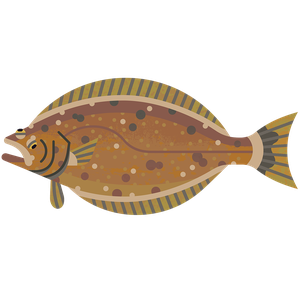
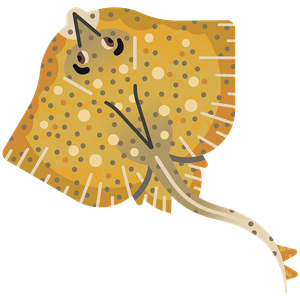
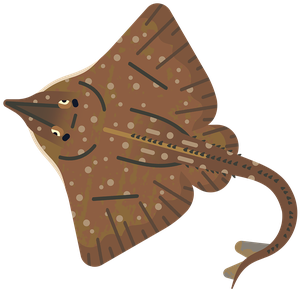
Megrim
Lepidorhombus whiffiagonis, Lepidorhombus boscii
What to check for
Location
North Sea (North), West of Scotland
Technical location
Atlantic, Northeast, North Sea (North), West of Scotland
Caught by
Bottom trawl (otter)
Rating summary
Megrim in the northern North Sea and West of Scotland is in a healthy state and fishing pressure is within sustainable limits. Megrim are mainly caught as part of the targeted fishery for monkfish or anglerfish, and as bycatch in fisheries for demersal species such as cod and haddock. The advice is given for two species of megrim combined, as they are caught together, however, available information indicates that L. boscii are a negligible proportion of catches. While fishing is within sustainable limits, management measures (Total Allowable Catches) do not match up to the stock areas, which could in theory allow overfishing to take place. Otter trawling is likely to cause some damage to the seabed. Bycatch is moderate and may include vulnerable species.Rating last updated July 2022.
How we worked out this Rating
The stock is in a healthy state and fishing pressure is within sustainable limits.The stock biomass (B) has mostly increased since the mid-2000s and has been above MSY Btrigger (0.5) (the value of B, below which, a specific management action is triggered in order to recover the B above Btrigger) for the entire time-series (1985-2020).Fishing pressure (F) has mostly declined since the mid-1990s and F has been below the Maximum Sustainable Yield (FMSY) since 2002. In 2021, the ratio of F:FMSY was 0.52. This is the highest F has been since 2010.ICES advises that when the MSY approach is applied, catches in 2023 should be no more than 7200 tonnes. Two species of megrim are landed, megrim (Lepidorhombus whiffiagonis) and four-spot megrim (L. boscii). The former is more common and the only one assessed. Available information indicates that L. boscii are a negligible proportion of catches, based on historical sampling of the Scottish and Irish catch.
There are management measures in place, which are partly effective in managing the stock.Megrim species (Lepidorhombus spp.) are not separated within landings data and Total Allowable Catch (TAC) limits apply to megrim species combined. Stock structure and even species identification/differentiation in landings is problematic for Megrim. The management of megrim catches under a combined TAC, prevents the effective control of single-species exploitation rates and could lead to overexploitation of individual species (L. whiffiagonis and L. boscii).The TAC and assessment area are incompatible. The TAC is for subareas 4 and 6 and includes Division 6b, for which ICES gives separate stock advice. ICES advises that management should be implemented at the stock level.Beyond TACs, the fishery is managed by a Minimum Conservation Reference Size (MCRS) of 20cm (25cm in Skagerrak/Kattegat) for megrim, which is smaller than the average length of maturity for the species. Dependant on distribution, length at first maturity ranges between 19 and 28 cm, but is on average 26 cm. Consequently, megrim can be caught before they have had chance to reproduce.Megrim is a bycatch species in the mixed demersal trawl fishery in Division 4a and 6a. Management measures for other species have constrained the fishery, and reduced effort and fishing mortality on megrim since the early 2000s may have contributed to the increase in biomass. The general increase in mesh size in Subareas 6 and 4 since 2010 has also benefited the stock. Both the EU and UK have fishery management measures in place, which can include catch limits, targets for population sizes and fishing mortality, and controls on what fishing gear can be used and where. In the EU, compliance with regulations has been variable, and there are ongoing challenges with implementing some of them. There was a target for fishing to be at Maximum Sustainable Yield by 2020, but this was not achieved. The Landing Obligation (LO), an EU law that the UK has kept after Brexit, requires all quota fish to be landed, even if they are unwanted (over-quota or below minimum size). It aims to promote more selective fishing methods, reduce bycatch, and improve recording of everything that is caught, not just what is wanted. Compliance with the LO is generally poor and actual levels of discards are difficult to quantify using the current fisheries observer programme. UK administrations are in the process of replacing the landing obligation with country-specific Catching Policies.In the UK, it is too early to tell how effective management is, as the Fisheries Act only came into force in January 2021. The Act requires the development of Fisheries Management Plans (FMPs) (replacing EU Multi-Annual Plans). FMPs are currently in development, but the scope of them remains unclear. They have the potential to be very important tools for managing UK fisheries, although data limitations may delay them for some stocks. MCS is keen to see publicly available FMPs for all commercially exploited stocks, especially where stocks are depleted, that include:Targets for fishing pressure and biomass, and additional management when those targets are not being met, based on the best available scientific evidenceTimeframes for stock recoveryImproved data collection, transparency and accountability, supported by technologies such as Remote Electronic Monitoring (REM)Consideration of wider environmental impacts of the fishery
Otter trawling is likely to cause some damage to the seabed. Bycatch is moderate and may include vulnerable species.Megrim is caught by demersal otter trawls in the northern North Sea and West of Scotland. They are caught as bycatch in the mixed demersal trawl fishery, and in association with anglerfish (monkfish) by some fleets.Megrim are predominately taken by otter trawls and to a lesser extent by Scottish seine. Finfish trawls (i.e. demersal otter trawls) accounted for 98% of the megrim catch, with <1% of catch taken by Nephrops trawls and 1.6% by other gears, in 2021. Most of the catch is taken by Scotland, with some from Ireland, Spain and France, mainly caught as part of the targeted fishery for monkfish or anglerfish, and as bycatch in fisheries for demersal species such as cod and haddock.Demersal otter trawls have the potential to take relatively high quantities of bycatch. In the Northeast Atlantic there are reported catches of demersal elasmobranchs and endangered, threatened and protected (ETP) species (e.g. sharks, rays and marine mammals). Bycatch data is limited in many UK and EU fisheries as they are generally not well monitored. However, a proportion of the trawl fisheries in the North Sea are Marine Stewardship Council-certified and record bycatch. MCS assumes these records will be indicative of bycatch in the uncertified component. Bycatch includes the vulnerable North Sea cod, which is below safe reproductive levels. Endangered, threatened or protected species included the Critically Endangered common skate complex (blue skate and flapper skate), porbeagle, and other skates and rays.Some mitigation measures are in place in some areas. There is a UK North Sea cod avoidance plan, requiring a minimum 120mm mesh size in the Scottish North Sea, seasonal closures to protect spawning stocks, and a requirement to move away from areas where large numbers of cod are observed in catches.For blue and flapper skate, mitigation measures include a prohibition on landing either species, and some protection for nursery areas. It is not clear if this fishery is having an impact at population level for any of these species. Given that bycatch is ongoing, MCS considers it possible that the bycatch level is contributing to population decline and/or preventing recovery.Demersal trawls have contact with the seabed resulting in penetration and abrasion of habitat features. The impact of trawling on the seabed depends on the location and scale in which trawling occurs. For example, areas that are used to natural disturbance through tides and waves, are less sensitive to habitat impacts. Areas not used to mobile towed gears are typically more sensitive to trawling.In the North Sea area, impacts from bottom trawling are variable. Fishing grounds vary, but the habitat is generally mud and sand, which are less vulnerable to trawling than features such as reefs and seagrass. Data from 2018 indicates that trawling was happening on 73% of the seabed area. Fishing effort in the region has halved since 2002, mainly in the trawl fisheries, which is reducing pressure on the seabed and on bycatch species. However, fishing in the North Sea in general has reduced the number of large fish in the ecosystem (mostly cod, saithe, ling, sturgeon, and some elasmobranchs). There are concerns about the impact of North Sea trawling on sea pens.There are Marine Protected Areas (MPAs) in this area, some of which are designated to protect seabed features from damaging activities. This fishery overlaps with parts of these MPAs, but the proportion of the catch coming from these areas is expected to be relatively low in relation to the unit of assessment (i.e. less than 20% of the catch or effort), and so these impacts have not been assessed within the scale of this rating. Given the important role that MPAs have in recovering the health and function of our seas, MCS encourages the supply chain to identify if their specific sources are being caught from within MPAs. If sources are suspected of coming from within designated and managed MPAs, MCS advises businesses to establish if the fishing activity is operating legally inside a designated and managed MPA, and request evidence from the fishery or managing authority to demonstrate that the activity is not damaging to protected features or a threat to the conservation objectives of the site(s).To improve monitoring and reporting of fishing activity, MCS would like to see remote electronic monitoring (REM) with cameras implemented, used and enforced. To reduce the impacts of fishing on the marine environment we would like to see a just transition to the complete removal of bottom towed gear from offshore Marine Protected Areas designated to protect the seabed. We also want to see reduction and mitigation of environmental impacts including emissions and blue carbon habitat damage.
References
Abad, E., Pennino, M., Valeiras, J., Vilela, R., Bellido, J., Punzon, A. and Velasco, F. 2020. Integrating spatial management measures into fisheries: TheLepidorhombus spp. case study. Marine Policy, 116 (103739), Available at https://www.sciencedirect.com/science/article/pii/S0308597X18308509?via%3Dihub [Accessed 20.07.2022].Cook, R., Gaudian, G., des Clers, S. and Seip- Markensteijn, C.M., 2022. Marine Stewardship Council (MSC) Public Certification Report: Scottish Fisheries Sustainable Accreditation Group (SFSAG) Northern Demersal Stocks. Prepared by Control Union (UK) Limited on behalf of Scottish Fisheries Sustainable Accreditation Group (SFSAG). May 2022. Available at https://cert.msc.org/FileLoader/FileLinkDownload.asmx/GetFile?encryptedKey=BdxOJoY7Sf4DmNJEB/m47M6xx0rRfgP/niGx3vj5Ud8hadYI3XCNrnlSFL/jlTgK [Accessed on 13.07.2022].Eigaard, O.R., Bastardie, F., Breen, M., Dinesen, G.E., Hintzen, N.T., Laffargue, P., Mortensen, L.O., Nielsen, J.R., Nilsson, H.C., O'Neill, F.G., Polet, H., Reid, D.G., Sala, A., SkOld, M., Smith, C., Sorensen, T.K., Tully, O., Zengin, M., Rijnsdorp, A.D., 2016. Estimating seabed pressure from demersal trawls, seines, and dredges based on gear design and dimensions. ICES Journal of Marine Science, Volume 73, Issue suppl 1. Pages i27-i43. Available at https://academic.oup.com/icesjms/article/73/suppl_1/i27/2573989 [Accessed on 12.07.2022].Hiddink, J., Jennings, S., Sciberras, M., Szostek, C.L., Hughes, K.M., Ellis, N., Rijnsdorp, A.D., McConnaughey, R.A., Mazor, T., Hilborn, R., Collie, J.S., Pitcher, C.R., Amoroso, R.O., Parma, A.M., Suuronen, P. and Kaiser, M.J. 2017. Global analysis of depletion and recovery of seabed biota after bottom trawling disturbance. PNAS. 114:31, pp. 8301-8306. https://doi.org/10.1073/pnas.1618858114.ICES. 2022. Megrim (Lepidorhombus spp.) in divisions 4.a and 6.a (northern North Sea, West of Scotland). In Report of the ICES Advisory Committee, 2022. ICES Advice 2022, lez.27.4a6a. Available at https://doi.org/10.17895/ices.advice.19448042. [Accessed on 22.07.2022].ICES. 2022. Working Group for the Bay of Biscay and the Iberian Waters Ecoregion (WGBIE). ICES Scientific Reports. 4:52. Available at http://doi.org/10.17895/ices.pub.20068988 [Accessed on 22.07.2022].ICES. 2018. Report of the Working Group for the Bay of Biscay and the Iberian Waters Ecoregion (WGBIE), 3–10 May 2018, ICES HQ, Copenhagen, Denmark. ICES CM 2018/ACOM:12. 569 pp. Available at https://doi.org/10.17895/ices.pub.5343 [Accessed on 22.07.2022].Kennelly, S. J. & Broadhurst, M. K., 2021. A review of bycatch reduction in demersal fish trawls. Rev Fish Biol Fisheries 31, 289–318. https://doi.org/10.1007/s11160-021-09644-0.Kynoch, R., Fryer, R. & Neat, F., 2015. A simple technical measure to reduce bycatch and discard of skates and sharks in mixed-species bottom-trawl fisheries. ICES J Mar Sci,72(6):1861.Macdonald, P. 2014. Increasing understanding of a data poor species to improve resource management: megrim (lepidorhumbus whiffiagonis) in the Northern North Sea, University of Aberdeen, UK, pp.11-198. Available at https://www.nafc.uhi.ac.uk/t4-media/one-web/nafc/research/document/report-2014-paul-macdonald-megrim-thesis.pdf [Accessed 20.07.2022].MMO. 2019. Fishing Gear requirements and Landing Obligation exemptions 2019 Applicable to Demersal Towed Gears Fishing in the Celtic Sea (Excluding Nephrops Vessels and Beam Trawlers). Available at https://assets.publishing.service.gov.uk/government/uploads/system/uploads/attachment_data/file/824987/Gear_use_-_Celtic_Sea_-_General_Dem_and_Pel_Tow__v2_final_draft.pdf[Accessed 16.07.2020].Rainer, F. and Luna, S. 2020. Megrim, Lepidorhumbus whiffiagonis. Available at https://www.fishbase.se/summary/Lepidorhombus-whiffiagonis.html [Accessed 20.07.2022.].Silva, F., Ellis, J. & Catchpole, T., 2012. Species composition of skates (Rajidae) in commercial fisheries around the British Isles and their discarding patterns. J Fish Biol., 80:1678–1703.van Denderen, P. Bolam, S., Hiddink, J.G., Jennings, S., Kenny, A., Rijnsdorp, A., and van Kooten, T., 2015. Similar effects of bottom trawling and natural disturbance on composition and function of benthic communities across habitats. Mar Ecol Prog Ser. 2015;541:31–43.

Sustainable swaps
Learn more about how we calculate our sustainability ratings.
How our ratings work