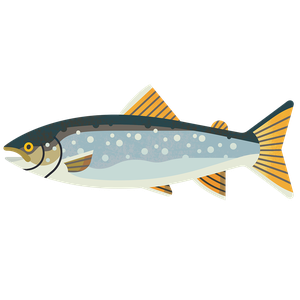
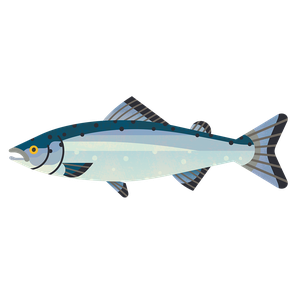
Pink salmon
Oncorhynchus gorbuscha
What to check for
Location
Alaska
Technical location
Pacific, Northeast, All areas
Caught by
Net (gill or fixed; beach seine)
Certification
Marine Stewardship Council (MSC)
Rating summary
Some pink salmon stocks in Alaska have previously had low returns but currently, there are no stocks of concern. This fishery is Marine Stewardship Council (MSC) certified and is largely well-managed. However, management requires some improvement regarding monitoring and management of enhancement programmes. Alaskan salmon fisheries are generally very selective, with negligible bycatch rates. Beach seines and set gillnets have some interaction with the seafloor but environmental impact is thought to be low.Rating last updated December 2022.
Technical consultation summary
Some pink salmon stocks in Alaska have previously had low returns but currently, there are no stocks of concern. There is no concern for biomass, or for fishing mortality. Pink salmon has a medium resilience to fishing pressure. This fishery is Marine Stewardship Council (MSC) certified and is largely well-managed as it largely meets its objective (to achieve escapement goals for the majority of the time). However, management requires some improvement regarding improved monitoring and management of enhancement programmes. Alaskan salmon fisheries are generally very selective, with negligible bycatch rates. Beach seines and set gillnets have some interaction with the seafloor but environmental impact is thought to be low.
How we worked out this Rating
There is no concern for biomass or fishing mortality of pink salmon.Route 2 scoring has been used as this rating covers multiple Stock Management Units (SMUs). Pink salmon has a medium resilience to fishing pressure.Within the Marine Stewardship Council (MSC) Alaska salmon fishery, there are 10 main SMUs that are relevant to pink salmon (Southeast, Yakutat, Prince William Sounds, Lower Cook Inlet, Upper Cook Inlet, Bristol Bay, Norton Sound, Kodiak, Chignik, Peninsula/Aleutian Islands).As there are so many stocks in Alaska, the stock assessments identify 'index rivers' as indicators to monitor abundance. These index rivers represent population levels in each of these SMUs. The target reference point (TRP) is based on escapement goals. When salmon hatch, they migrate from the rivers to the sea and when they become adults, they travel back to the rivers to spawn and are harvested along the way. To ensure that there are enough salmon to spawn and replenish the next generation, the Alaska Department of Fisheries and Game set limits on the amount of salmon that can be caught, which is called an escapement goal. A fishery is assessed on how well the TRP is met by reviewing how well the escapement goals have been met over the previous last decade.Pink salmon have generally met or exceeded their escapement goals. Some underages (where escapement goals have not been met) occurred where lower levels of salmon occurred for some years in some stocks. Drought conditions and sea surface temperatures can impact pink salmon populations. However, fishery managers estimates and forecast salmon population sizes during salmon seasons and set limits accordingly to ensure that there are enough salmon left to spawn.Extremely low returns of pink salmon, particularly in the Southern Alaska Peninsula, Kodiak, Chignik, Prince William Sound (PWS), Lower Cook Inlet and Southeast units of certification (UoC's), in 2016 led to the declaration of a federal disaster and failure to achieve escapement goals in all these UoCs (excepts PWS). However, numbers have subsequently rebounded in most areas. There are not currently any pink salmon stocks of concern and there are no pink salmon listed on the Endangered Species Act.
This fishery is Marine Stewardship Council (MSC) certified. It is largely well-managed as it meets stock objectives the majority of the time. However, management requires some improvement regarding monitoring and management of enhancement programmes.Alaskan salmon fisheries are managed nationally, by Alaskan state agencies (the Alaska Board of Fisheries (BOF) and Alaska Department of Fish and Game (ADFG); federally, by the North Pacific Fishery Management Council (NPFMC)) and internationally via the North Pacific Anadromous Fish Commission (NPAFC) and the Pacific Salmon Commission. Alaskan salmon are managed under Fishery Management Plans (FMPs) under the Magnuson-Stevens Fishery Conservation and Management Act covering chinook, keta (chum), coho, pink and red (sockeye) salmon. The BOF applies regulations to conserve salmon, such as quotas, open and closed seasons, bag limits, harvest levels and harvesting methods, which the ADFG implements.The main method used to manage salmon is by ensuring they meet their escapement goals. The ADFG conduct forecasts during the salmon season (called in-season management) to estimate how many salmon there are and the catch limits and open or close the fishery when needed. Salmon populations are monitored on a daily basis, using a variety of methods, including aerial surveys, weir counts, genetic studies, sonar, monitoring catches, their migration, escapement, hatchery contributions (often monitored real-time via otolith marking), habitat quality and environmental conditions. However, there are some data gaps, such as abundance, productivity and exploitation rates of component stocks of Susitna sockeye salmon in the Upper Cook Inlet. Stock assessments are quantitative, conducted annually and reviewed every three years. The escapement goals act as reference points. Uncertainties are considered: some Stock Management Units (SMUs) such as Prince William Sound use risk-based methods to estimate escapement goals, however, other SMUs such as Kotzebue area, do not have adequate data to do this. There are three types of escapement goals, which accommodate for the type of fishery (commercial, sport or subsistence) and data availability. Biological Escapement Goals provide the greatest potential to reach Maximum Sustainable Yield. If stocks are consistently not achieving escapement goals and harvest levels, they are designated a 'Stock of Concern' (SOC), triggering stricter management, such as recovery plans. However, harvest strategies have not been entirely successful, as stocks in some SMUs have not been maintained throughout the reference period; some stocks remain stocks of concern.Around half of Alaska's SMUs conduct significant hatchery enhancement programs, which were designed in the 1890s to rebuild depleted salmon populations by supplementing the wild stock with young salmon grown in hatcheries. Hatchery-origin salmon now represent around one third of the total harvest, mostly consisting of pink and keta salmon. These species migrate relatively quickly to saltwater after hatching, compared to other salmon, which require storage and feeding in freshwater for a further year. There are concerns regarding the impact of hatchery programmes on the genetics of wild populations: reducing wild population fitness and diversity, increasing disease transmission, overfishing and competition, and impacts on other ecosystem components. Some areas impact wild population genetics, but others (e.g. Southeast keta salmon) indicate that enhancement activities do not exhibit significant negative impacts on wild stocks. Multiple policies were designed to protect wild salmon stocks including the ADFG Genetic Policy, which limits transportation of stocks, encourages sourcing from local stocks (e.g. prohibiting sourcing broodstock from interstate or inter-regional rivers), maintaining genetic diversity, Salmon Regional Planning Plans, a rigorous permitting process and separating hatchery fry from wild fry to reduce competition. Alaskan Fisheries require that the effects of the hatcheries are monitored. All hatchery pink and keta salmon are marked but the MSC has applied Conditions for hatchery programmes to better demonstrate that they not present significant negative impacts on wild populations.Non-compliance in the salmon fishery and hatcheries is rare. Compliance is enforced by the ADFG, where fishers must record catches via fish tickets, which help fishery managers monitor harvests. The ADFG also monitor hatchery outputs as required in their non-transferrable permits, which limit the salmon species, volume that can be released into the fishery and specific sourcing information.

Alaskan salmon fisheries are generally very selective, with negligible bycatch rates. Beach seines and set gillnets have some interaction with the seafloor but environmental impact is thought to be low.Most gear types used to catch salmon are designed to fish within the water column and do not interact with the substrate, however, beach seines and set gillnets do have some interaction. This is thought to have low impact on the substrate as the fishery is conducted in areas with fine to medium sediment with a generally flat seafloor topography. Therefore, there is limited environmental impact.There is minimal unwanted catch in salmon fisheries. Catches almost exclusively comprise salmon species. Some other finfish are allowed to be retained for personal use (mainly steelhead), but this is considered to be negligible (in terms of volume). Apart from in the Southeast and Yakutat fisheries, non-salmonid species are not allowed to be retained and sold. There are cross-boundary stocks of salmon, shared between Alaska and Canada. The Pacific Salmon Treaty includes instruments to manage trans-boundary stocks, which have achieved their escapement goals in most years.The US government agency monitoring interactions with Endangered, Threatened and Protected species concludes that the fishery does not pose a high risk to marine mammal species. However, there has been some interaction recorded by gillnets and beach seine gears, with some Alaskan salmon fisheries considered Category II fisheries, where some risk is considered to marine mammal species.There is minimal unwanted catch in salmon fisheries. Catches almost exclusively comprise salmon species. Some other finfish are allowed to be retained for personal use (mainly steelhead), but this is considered to be negligible (in terms of volume). Apart from in the Southeast and Yakutat fisheries, non-salmonid species are not allowed to be retained and sold. There are cross-boundary stocks of salmon, shared between Alaska and Canada. The Pacific Salmon Treaty includes instruments to manage trans-boundary stocks, which have achieved their escapement goals in most years.There are multiple measures in place to protect Endangered, Threatened and Protected (ETP) species, including the Endangered Species Act (ESA), the Marine Mammal Protection Act (MMPA) and the Migratory Birds Act (MBA). US government agencies (NMFS) monitor the state of ETP species and conclude that no salmon fisheries are considered high risk (Category I) to ETP species and that the interactions with ETP mammals are relatively low. Ten Alaskan salmon set and drift net fisheries were deemed Category II fisheries for their potential impact on marine mammal species. Two Alaskan salmon gillnet fisheries were listed as Category III, along with six seine (purse or beach) and one troll fishery. The species affected depend on the SMU, but generally include cetaceans, pinnipeds and otters. Category II indicates occasional incidental mortality and serious injury of marine mammals and Category III indicates a remote likelihood or no known incidental mortality or serious injury of marine mammals). NMFS does not consider there to be a significant number of interactions with ESA listed bird species. There are low levels of interaction between birds and the gillnet fisheries, but none of the species were listed under the ESA. In areas of overlap, they concluded the total number of birds exposed to gillnets in any of the overlap areas is small. However, there are a lack of data to determine if the hatcheries have an impact on ETP species. More understanding is required on the impacts of gillnets, largely on seabird species. Greater observer coverage is required to fully determine the impacts on ETP species.Multiple management measures are in-place to limit gear interactions and impacts with benthic environments. Hatchery programmes are monitored and managed under permits. Gear marking is required for all commercial fishing gear. In addition, Alaska state employs multiple management restrictions to protect waterways, which serve as important habitat to anadromous fish species. Through long-term habitat monitoring, the ADFG have not observed significant impacts on habitats from salmon fishing gear, and no significant impacts from gear loss. Essential Fish Habitats are designated to protect "habitat areas of particular concern" that salmon species rely on in Alaska throughout their life-history stages. This management is directed at Coho and Chinook salmon but chum and sockeye share similar habitats, so are likely to benefit. The impacts of the human activities on salmon is reviewed every five years. Purse seine gear is designed to operate in the water column and does not interact with the benthic environment. In addition, the salmon fisheries do not operate in any areas designated as Habitat Areas of Particular Concern. Recent reviews by NMFS have determined that the effects of the purse seine fisheries on Essential Fish Habitat are considered to be minimal.
References
Alaska Department of Fish and Game (ADFG). Species profile: Pink salmon. Available at https://www.adfg.alaska.gov/index.cfm?adfg=pinksalmon.main [Accessed on 01/12/2022].Alaska Department of Fish and Game (ADFG). Species profile: Sockeye salmon. Available at https://www.adfg.alaska.gov/index.cfm?adfg=sockeyesalmon.main [Accessed on 01/12/2022].Alaska Department of Fish and Game (ADFG). Species profile: Chum salmon. Available at https://www.adfg.alaska.gov/index.cfm?adfg=chumsalmon.main [Accessed on 01/12/2022].Alaska Department of Fish and Game (ADFG). State of Alaska Special Status. Species Fish Stocks of Concern. Available at https://www.adfg.alaska.gov/index.cfm?adfg=specialstatus.akfishstocks [Accessed on 01/12/2022].Alaska Seafood. 2022. Alaska Sockeye Salmon Outlook & Summary. Available at https://www.alaskaseafood.org/wp-content/uploads/2022-Sockeye-Salmon-Market-Bulletin.pdf [Accessed on 01/12/2022].Alaska Seafood. 2022. Alaska Pink Salmon Outlook & Summary. Available at https://www.alaskaseafood.org/wp-content/uploads/2021-Pink-Salmon-Market-Bulletin.pdf [Accessed on 01/12/2022].Jallen, D. M. Gleason, C. M., Borba, B. M. et al. 2022. Yukon River Salmon Stock Status and Salmon Fisheries, 2022: A Report to the Alaska Board of Fisheries, January 2023. Available at https://www.adfg.alaska.gov/FedAidPDFs/SP22-20.pdf [Accessed on 18/12/2022].Marine Stewardship Council. Alaska salmon. Available at https://fisheries.msc.org/en/fisheries/alaska-salmon/@@view [Accessed on 02/12/2022].NOAA Fisheries. 2022. Pink Salmon. Available at https://www.fisheries.noaa.gov/species/pink-salmon [Accessed on 18/12/2022].NOAA Fisheries. 2022. Chum Salmon. Available at https://www.fisheries.noaa.gov/species/chum-salmon [Accessed on 18/12/2022].NOAA Fisheries. 2022. Sockeye Salmon. Available at https://www.fisheries.noaa.gov/species/sockeye-salmon [Accessed on 18/12/2022].NOAA Fisheries. 2018. Volcanoes and Eelgrass Transform Salmon Habitat. Available at https://www.fisheries.noaa.gov/feature-story/volcanoes-and-eelgrass-transform-salmon-habitat. [Accessed on 18/12/2022].NOAA Fisheries. Stock SMART. Available at https://apps-st.fisheries.noaa.gov/stocksmart?app=browse-by-stock [Accessed on 18/12/2022].
Sustainable swaps
Learn more about how we calculate our sustainability ratings.
How our ratings work