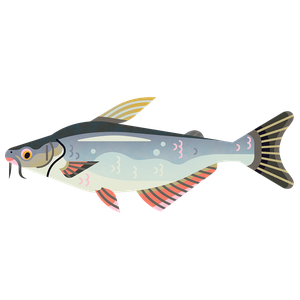
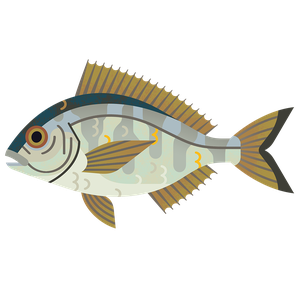
Red gurnard
Chelidonichthys cuculus
What to check for
Location
Northeast Atlantic
Technical location
Atlantic, Northeast, Bay of Biscay, Iceland and Faeroes Grounds, Irish Sea, Porcupine Bank, English Channel, Bristol Channel, Celtic Seas, West and Southwest of Ireland, North Sea, Rockall, West of Scotland, Skagerrak, Kattegat, Transition Area, Baltic Sea
Caught by
Bottom trawl (otter)
Rating summary
Red gurnard in the northeast Atlantic is data limited. However, there appears to be no concern for the biomass or fishing pressure. Management requires considerable improvement. There is no management plan in place and landings are not effectively reported or controlled. Red gurnard is mainly caught by otter trawling. Otter trawlers can damage the seabed and may have bycatch of vulnerable species. Rating last updated October 2025.
Technical consultation summary
Red gurnard in the northeast Atlantic is data limited. There is no concern for biomass as survey data shows an increasing trend in red gurnard biomass until around 2009, it has since fluctuated without trend. There is also no concern for fishing pressure at this time as it appears to be allowing the stock to remain at a stable level. Red gurnard is considered to have low resilience to fishing pressure. Management requires considerable improvement. There is no specific management plan in place and landings are not effectively reported or controlled. Red gurnard is mainly caught by otter trawling. Otter trawlers can damage the seabed and may have bycatch of vulnerable species.In December 2023, an English Channel Demersal Non-Quota Fishery Management Plan (FMP) was published, which included red gurnard, but this has not yet resulted in any changes to management and therefore has not affected our ratings.
How we worked out this Rating
This stock is data limited. There is no concern for the biomass of red gurnard in this area of the Northeast Atlantic. Landings have remained stable, decreasing slightly, there is no immediate concern for fishing pressure.Route 2 scoring has been applied to this rating owing to the lack of a reference points for biomass or fishing pressure. Red gurnard is considered to have low resilience to fishing pressure.Survey data shows an increasing trend in red gurnard biomass until around 2009 following which it has fluctuated without a trend. Therefore, there is no concern for the biomass.Landings information for red gurnard is of limited value as it is not always reported to species level, but rather as mixed gurnards or misidentified as tub or grey gurnard. However, reporting has improved since 2006. In previous years ICES provided advice on landing limits using a precautionary approach, however since 2022 ICES has provided no advice due to a lack of reliable catch data.Between 2016 and 2021, average landings were 3,308 tonnes, representing 98% of the average advice of 3,377 tonnes. In 2021, landings dropped to a record low of 2,692 tonnes, below the advised level. Since 2022, landings have remained relatively stable with slight decreases, and no new advice has been provided. As a result, there is currently no concern regarding fishing pressure.If future landings were to exceed previous advice levels, as seen in 2020, concern may arise. However, at present, there is no clear evidence of overfishing, and fishing pressure appears to be maintaining stock stability, despite being unknown.The lack of advice and reliable data in the ICES assessment mean it is difficult to estimate the outlook for red gurnard.
Management requires considerable improvement. Landings are not effectively controlled or reported and there is no Total Allowable Catch (TAC) or Minimum Conservation Reference Size (MCRS) in place.Red gurnard is mainly caught as bycatch, at low levels. No known fisheries target the species, although consistent landings are reported by several fishing operations. The majority of landings are from the English Channel and North Sea.There are no stock assessments for red gurnard in the area and no minimum landing size is set, though size of maturity is around 25cm. ICES have recently identified a need to improve data and update the assessment methods for red gurnard and other western stocks in the future.Landings data are improving but are not considered reliable due to poor resolution to species level. Red gurnard is a non-quota species that is not covered by the landings obligation, so they can be discarded at sea. Reporting of discarding is variable and ranges from 14-94% of catches. Therefore, landing trends can’t be accurately monitored. ICES recommends that species level reporting and additional observation methods to accurately assess discards are undertaken to address data problems.In 2021, ICES have highlighted that poor data means catch recommendations cannot be provided from 2022 onwards. Therefore, fishing pressure and landings are not effectively monitored or controlled.There are some indications of separate stocks of red gurnard within the assessment area, however, further research is needed to confirm this. If there are smaller spatial units, the current assessments for just one stock across subareas 3-8 would not be able to effectively manage the species sustainably. Further consideration is needed as the management area does not relate directly to the stock area, with 9a (Iberian coast) outside of the assessment area reporting commercial landings. The EU and UK both have fishery management measures, which can include catch limits, population targets, and gear restrictions. However, compliance in the EU and UK has been inconsistent, with ongoing challenges in implementing some regulations. The goal of reaching Maximum Sustainable Yield (MSY) by 2020 was missed, with less than half of UK TACs in 2024 following ICES advice. In 2024, the EU and UK reaffirmed their commitment to sustainable fisheries by aligning management with scientific advice to gradually approach MSY. However, no new target date has been set for achieving MSY across all fisheries. The Landing Obligation (LO), an EU law retained by the UK post-Brexit, requires all quota fish to be landed, even if unwanted (over-quota or below minimum size). It aims to encourage more selective fishing methods, reduce bycatch, and improve catch reporting. However, compliance is poor, and accurate discard levels are hard to quantify with current monitoring programmes. The UK is in the process of replacing the LO with country-specific Catching Policies. The Marine Conservation Society views Remote Electronic Monitoring (REM) with cameras is one of the most cost-effective tools for providing reliable fisheries data and aiding informed management decisions. Fully monitored fisheries enhance collaboration, data accuracy, stock recovery, and reduce impacts on marine wildlife and habitats. However, the full potential of REM may only be achieved when it tracks fishing location and documents catch and bycatch, particularly where vulnerable species and habitats are at risk. As of January 2024, the EU is introducing a Remote Electronic Monitoring (REM) mandate for EU vessels, including CCTV cameras on vessels 18m or more that pose a potential risk of non-compliance, within the next 4 years. Across the UK, different approaches to REM are being taken and legislation is expected to be in place across all 4 countries within the next few years. The Fisheries Act (2020) requires the development of Fisheries Management Plans (FMPs) (replacing EU Multi-Annual Plans) in the UK. 43 FMPs have been proposed and are at various stages of development and implementation, these should all be published by the end of 2028. FMPs have the potential to be very important tools for managing UK fisheries, although data limitations may delay them for some stocks. It is also essential the UK governments define and adopt a standardised approach or model across the four nations to a universally defined FMP design, to ensure the consistence, quality and coherence of all the proposal FMPs. The Marine Conservation Society is keen to see publicly available Fishery Management Plans for all commercially exploited stocks, especially where stocks are depleted, that include: An overview of the fishery including current stock status, spatial coverage, current fishing methods and impacts Targets for fishing pressure and biomass, and additional management when those targets are not being met, based on the best scientific evidence Timeframes for stock recovery Improved data collection, transparency, and accountability, supported by technologies such as Remote Electronic Monitoring (REM) Consideration of wider environmental impacts of the fishery, including habitat impacts and minimising bycatch Stakeholder engagement A Channel non-quota demersal FMP has been proposed, coordinated by DEFRA that incorporates this stock. At the time of writing, it is too soon to know whether proposed management measures will be effective in managing the stock. For more information about this FMP and expected progress and timelines, see [https://www.gov.uk/government/collections/fisheries-management-plans#published-fmps].

Red gurnard is mainly caught by otter trawling. Otter trawlers can damage the seabed and may have bycatch of vulnerable species. Red gurnard is mainly landed by demersal trawlers in mixed fisheries, mostly in the English Channel (ICES areas 7e and 7d), as well as areas 7h and 7f. The species is also landed, to a lesser extent, from the North Sea and the Bay of Biscay. Most reported landings are by France, with some by Belgium, the Netherlands, Spain and the UK.Demersal otter trawls have the potential to take relatively high quantities of bycatch (> 40% of catch weight). There are also reported catches of demersal elasmobranchs and endangered, protected and threatened (ETP) species (e.g. sharks and rays) in certain circumstances. Under EU legislation, bycatch species should be managed under the precautionary approach if scientific information is not available, and otherwise managed according to the key CFP objectives. If stocks fall below trigger levels, measures can be brought in such as limits on characteristics or use of gear (e.g. mesh size, depth); time/area closures; and minimum conservation reference sizes.Although otter trawls are considered to have a potential to cause significant habitat damage, damage to vulnerable and sensitive marine habitats is likely to be minimised given that the footprint of the fishery is within core areas, typically historically fished ground. Spatial management to reduce potential interactions with vulnerable habitats are being developed, as there remains uncertainties about the location of some sensitive seabed habitats so these remain at risk.The main mitigation measures are Marine Protected Areas, some of which are designated for benthic features. Given the important role that MPAs have in recovering the health and function of our seas, MCS encourages the supply chain to identify if their specific sources are being caught from within MPAs. If sources are suspected of coming from within designated and managed MPAs, MCS advises businesses to establish if the fishing activity is operating legally inside a designated and managed MPA, and to request evidence from the fishery or managing authority to demonstrate that the activity is not damaging to protected features or a threat to the conservation objectives of the site(s).
References
Angling Trust, 2025. Minimum Conservation Reference Sizes (MCRS). Available at: https://anglingtrust.net/minimum-conservation-reference-sizes-mcrss/ [Accessed on 16.10.2025].Froese R. and Pauly D. (Editors), 2025. Chelidonichthys cuculus, Red gurnard. Available at: https://www.fishbase.org/summary/Chelidonichthys_cuculus.html [Accessed on 16.10.2025].ICES, 2021. Benchmark Workshop on selected stocks in the Western Waters in 2021 (WKWEST). ICES Scientific Reports. 3:31. 504 pp. Available at: https://doi.org/10.17895/ices.pub.8137 [Accessed on 16.10.2025].ICES, 2025. Red gurnard (Chelidonichthys cuculus) in subareas 3-8 (Northeast Atlantic). In Report of the ICES Advisory Committee, 2025. ICES Advice 2025, Available at: gur.27.3-8. https://doi.org/10.17895/ices.advice.27202593 [Accessed on 16.10.2025].ICES, 2025. Working Group on Widely Distributed Stocks (WGWIDE). ICES Scientific Reports. 07:96. 921 pp. Available at: https://doi.org/10.17895/ices.pub.30233824 [Accessed on 16.10.2025].GOV.UK, 2025. UK fleet landings by rectangle stock and estimated EEZ 2019-2023. Available at: https://www.gov.uk/government/statistics/uk-sea-fisheries-annual-statistics-report-2023 [Accessed on 16.10.2025].GOV.UK, 2023. Policy paper: Channel demersal non-quota species fisheries management plan (FMP). Available at: https://www.gov.uk/government/publications/channel-demersal-non-quota-species-fisheries-management-plan-fmp [Accessed on 16.10.2025].
Sustainable swaps
Learn more about how we calculate our sustainability ratings.
How our ratings work