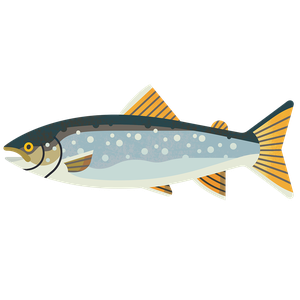
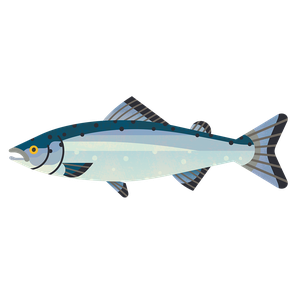
Sardine
Sardina pilchardus
What to check for
Location
Southern Celtic Seas and English Channel
Technical location
Atlantic, Northeast, Irish Sea, Porcupine Bank, English Channel, Bristol Channel, Celtic Seas, West and Southwest of Ireland
Caught by
Net (pelagic trawl; purse seine)
Rating summary
Sardine in the Southern Celtics Seas and the English Channel is abundant and there is no concern for fishing pressure. Sardine in the uncertified fishery in this area is poorly managed and requires considerable improvement. The fishing method used is primarily purse seiners and pelagic trawlers. These methods of fishing are unlikely to cause habitat impacts and bycatch is low.Rating last updated December 2025.
Technical consultation summary
This rating is for the uncertified sardine fishery Sardine in the Southern Celtic Seas and English Channel. For the rating for the certified component, see Cornwall Wildlife Trust Ratings (rating ID 954). The sardine stock in the Southern Celtics Seas and the English Channel is data limited. Route 2 scoring has been applied to this rating owing to the lack of reference points for fishing pressure and biomass. Sardine has a medium resilience to fishing pressure. Biomass in 2025 was 502,312t, the highest since the time series began, above the trigger value (Istat 120,751 tonnes). In 2024, ICES advised catches of no more than 13,459t. Total landings were 16,808t - above the advice and the 2020-2024 average (13,656t).However, there is conflicting advice. Cefas has provided catch advice for the certified component of this fishery, indicating that a catch of 11,150 tonnes by the certified fleet, equating to 3.31% of the total biomass in 2022, would not adversely affect the population. Total catches by all fleets (certified and uncertified) in 2024 accounted for 4.1% of the biomass estimate in 2024. It is unclear what would be a sustainable level of removals by all fleets combined. Consequently, there is concern for fishing pressure. The uncertified sardine fishery in this region is poorly managed and requires considerable improvement. There is no management plan for the population or catch limits in place. Minimum legal size (11cm) is smaller than length at fist maturity (average 14.8cm), offering limited protection to juveniles. Sardine fished in the area are caught by purse seiners and pelagic trawlers. These methods of fishing are unlikely to cause habitat impacts and bycatch is low.
How we worked out this Rating
Sardine in the southern Celtic Seas and English Channel is abundant and there is no concern for fishing pressure.This stock is assessed by the International Council for the Exploration of the Sea (ICES). The most recent assessment was published in 2025 using data up to 2025. The next assessment is expected in 2026.Route 2 (data limited) scoring has been applied to this rating owing to the lack of a reference point for fishing pressure. Sardines are considered to have medium resilience to fishing.Sardine in area 7 has been surveyed and assessed as a separate stock since 2017. It was very data limited until 2021, when a benchmark was carried out to improve the quality of the assessment. No MSY-based reference points have been defined for this stock to indicate what would be a sustainable level of fishing or biomass. However, there is an estimated trigger point, to safeguard the biomass, which has been set at 120,751 tonnes.Sardine is a short-lived species, and biomass can fluctuate considerably. While there have been some fluctuations since 2017, there has been an overall increasing trend. Biomass in 2025 was 502,312t, the highest since the time series began in 2017, and well above the trigger point. Therefore, there is no concern for the biomass of this stock.There is no indicator for fishing pressure. Stock-specific catch advice was provided for the first time in 2022. In 2024, ICES advised catches of no more than 13,459t. Total landings were 16,808t - above the advice and the 2020-2024 average (13,656t). This suggests that there could be concern for the fishing pressure. However, a number of caveats have been mentioned in relation to ICES advice for this stock, indicating that it may not be appropriate (further details below). Cefas have also provided separate catch advice for the MSC-certified component of the sardine fishery, indicating that higher catches would not be a threat to the biomass. Based on these caveats, and noting that the biomass has been able to increase under current levels of fishing, we do not consider there to be concern for fishing pressure.Following the 2021 benchmark and in the absence of MSY-based reference points, ICES’ approach to developing catch advice involved using average catches for the preceding two years. However, ICES noted some caveats, including that the stock is only moderately exploited and could withstand higher levels of fishing pressure; that catches from the past decade had been low; and that harvest rates from the most recent two years were the lowest in the time series. Catches fluctuate based on changes in fleet activity and which species are being targeted. Therefore, these low catches were not indicative of stock size.As a result of this, ICES noted that the 2021 benchmark would produce a low catch advice, and that the stock was likely to be able to support higher exploitation rates. The ICES approach in 2021 led to a harvest rate of 2.6%, whereas in 2017 and 2018 it had been 7%. It has been suggested that the approach may not be appropriate for moderately exploited stocks such as the Celtic Sea sardine.In Cornwall, the Cornish Sardine Management Association (CSMA) have sought additional catch advice for their MSC-certified fishery, which accounts for over 50% of the total catches of this stock. Each year, the CSMA proposes an annual catch limit for its fleet, based on capacity. This is reviewed by Cefas based on the likelihood of keeping the stock below FMSY and the risk of reducing biomass to Blim. In 2022, CSMA raised concerns about the new ICES approach and continued to liaise with Cefas for catch advice. In 2023, CSMA proposed an increased catch of 11,150t and Cefas advised that this rate of harvest would be precautionary and would not lead to overexploitation of the stock.Based on the above, ICES catch advice may not be appropriate for assessing fishing pressure until a new approach can be developed.
Sardine in this region is poorly managed and requires considerable improvement. There is no management plan for the population or catch limits in place.This is a non-quota stock and there are no management measures implemented at international level. Nevertheless, the Cornish Sardine Management Association (CSMA) has agreed specific regulations since 2018 for the sardine fishery around the Cornwall coast (UK) as it is subject to an MSC (Marine Stewardship Council) certification. A separate rating is available for this fishery at: http://www.cornwallgoodseafoodguide.org.uk/fish-guide/cornish-sardine.php.There are no catch limits for the stock and few controls on fishing effort. In 2024, catches exceeded scientific advice by 25%.A Minimum Conservation Reference Size (MCRS), i.e., minimum catch size, of 11 cm is in place for sardine caught in UK and European waters, which provides limited protection to immature fish. Sardine taken below the length at fist maturity (average 14.8cm, range 10.9-16.8cm) would likely not have had the chance to reproduce.As sardine is a non-quota species unwanted catch can be discarded at sea, thus total catches are therefore unlikely to be accurately recorded. Nonetheless, discarding in this fishery is considered negligible. The EU and UK both have fishery management measures, which can include catch limits, population targets, and gear restrictions. However, compliance in the EU and UK has been inconsistent, with ongoing challenges in implementing some regulations. The goal of reaching Maximum Sustainable Yield (MSY) by 2020 was missed, with less than half of UK TACs in 2024 following ICES advice. In 2024, the EU and UK reaffirmed their commitment to sustainable fisheries by aligning management with scientific advice to gradually approach MSY. However, no new target date has been set for achieving MSY across all fisheries. The Landing Obligation (LO), an EU law retained by the UK post-Brexit, requires all quota fish to be landed, even if unwanted (over-quota or below minimum size). It aims to encourage more selective fishing methods, reduce bycatch, and improve catch reporting. However, compliance is poor, and accurate discard levels are hard to quantify with current monitoring programmes. The UK is in the process of replacing the LO with country-specific Catching Policies. The Marine Conservation Society views Remote Electronic Monitoring (REM) with cameras is one of the most cost-effective tools for providing reliable fisheries data and aiding informed management decisions. Fully monitored fisheries enhance collaboration, data accuracy, stock recovery, and reduce impacts on marine wildlife and habitats. However, the full potential of REM may only be achieved when it tracks fishing location and documents catch and bycatch, particularly where vulnerable species and habitats are at risk. As of January 2024, the EU is introducing a Remote Electronic Monitoring (REM) mandate for EU vessels, including CCTV cameras on vessels 18m or more that pose a potential risk of non-compliance, within the next 4 years. Across the UK, different approaches to REM are being taken and legislation is expected to be in place across all 4 countries within the next few years. The Fisheries Act (2020) requires the development of Fisheries Management Plans (FMPs) (replacing EU Multi-Annual Plans) in the UK. 43 FMPs have been proposed and are at various stages of development and implementation, these should all be published by the end of 2028. FMPs have the potential to be very important tools for managing UK fisheries, although data limitations may delay them for some stocks. It is also essential the UK governments define and adopt a standardised approach or model across the four nations to a universally defined FMP design, to ensure the consistence, quality and coherence of all the proposal FMPs. The Marine Conservation Society is keen to see publicly available Fishery Management Plans for all commercially exploited stocks, especially where stocks are depleted, that include: An overview of the fishery including current stock status, spatial coverage, current fishing methods and impacts Targets for fishing pressure and biomass, and additional management when those targets are not being met, based on the best scientific evidence Timeframes for stock recovery Improved data collection, transparency, and accountability, supported by technologies such as Remote Electronic Monitoring (REM) Consideration of wider environmental impacts of the fishery, including habitat impacts and minimising bycatch Stakeholder engagement
Sardine fished in this area are caught by purse seine and pelagic trawl. These methods of fishing are unlikely to cause seabed impacts and have low risk of bycatch of unwanted species in this region.Sardines are a small schooling fish found in coastal shelf waters, mainly at depths above 150m. They form dense schools (or shoals) in pelagic waters which, in this region, are targeted mainly by UK fishers, and those from Denmark, France and Ireland. In 2024, purse seines and pelagic trawls accounted for 54% and 46% of total catch, respectively.Purse seines use a large net to encircle a school of fish in mid-water and is considered highly species-selective. Fishers can identify target species by their shape and behaviour using echo sounders and sonar, and even select fish size by targeting specific parts of the shoal, as larger fish typically occupy the outer edges. If the catch is the wrong species or size, the entire shoal can be released unharmed before hauling.Occasionally, larger non-target species or cetaceans may be encircled, but they can usually be released by dipping the float line, allowing them to swim out with minimal loss of the catch. This method has minimal seabed impact since the net does not contact the seafloor, except rarely in shallow waters, and even then, it is not dragged or towed.However, monitoring and reporting of bycatch in this fishery remain poor. Data from the MSC-certified Cornish area indicate that bycatch accounts for only a small portion of the annual catch, with species such as sharks, rays, sunfish, and tuna occasionally caught and released, though some do not survive. Endangered, threatened, and protected species (ETP), including gulls and seals, are also occasionally caught, with most released alive. Improvements in bycatch reporting across the full stock area are needed to better assess and evidence bycatch risk in this fishery.Pelagic trawling involves towing a large net in mid-water to herd schools of fish into the trawl. This method is generally species-selective, as fishers can identify target species by their shape and behaviour using echo sounders and sonar. Occasionally, larger non-target fish may enter the net but often escape through the large meshes at the front of the trawl. Cetaceans sometimes enter the net while chasing fish, and while rigid grids have been trialled to prevent this, they are unpopular due to handling difficulties. Acoustic pingers are being developed to reduce cetacean bycatch.Pelagic trawling has minimal seabed impact because the net does not normally touch the seafloor. In rare cases, the net may be towed close to the seabed, but fishers avoid contact to prevent gear damage. Bycatch rates in pelagic trawl fisheries are generally low, which has led to reduced monitoring. However, adequate monitoring in UK waters is still needed to respond to changes in dolphin distribution or fishing effort that could increase bycatch risk. Overlap in feeding preferences and variations in trawling techniques and dolphin behaviour can influence capture rates.The overall impact of the sardine fishery on the pelagic ecosystem in this region has not been fully assessed. Sardines are an important food source for many cetacean species, particularly common dolphins, highlighting the need for continued monitoring and evaluation of ecosystem effects.UK regulations to reduce the impacts of fishing on marine habitats and wider species are under development, in the meantime most EU regulations have been adopted. Under EU legislation, bycatch species should be managed within scientifically defined or, where data isn’t available, suitability precautionary sustainable exploration limits. If stocks fall below a certain threshold, measures can be brought in such as gear limitations (e.g., mesh size or depth of use), time and/or areas closures, and Minimum Conservation Reference Sizes (MCRS).
References
COUNCIL REGULATION (EC) No 850/98 of 30 March 1998 for the conservation of fishery resources through technical measures for the protection of juveniles of marine organisms. Available at https://eur-lex.europa.eu/legal-content/EN/TXT/PDF/?uri=CELEX:01998R0850-20150601&qid=1463153613173&from=EN [Accessed 17.12.2025].Cornwall IFCA, 1966. Sea fisheries regulation act 1966, Cornwall Inshore Fisheries and Conservation Authority. Available at https://secure.toolkitfiles.co.uk/clients/17099/sitedata/Byelaws%20and%20orders/Cornwall_SFC/Purse-seine-and-ring-net.pdf [Accessed 17.12.2025].Froese, R. and D. Pauly. Editors, 2025. Sardina pilchardus European pilchard. FishBase. Available at https://fishbase.mnhn.fr/summary/1350 [Accessed 17.12.2025].Jones, H., 2023. Marine Stewardship Council (MSC) 1st Surveillance Audit Report. Cornwall Sardine Fishery. Available to download at https://fisheries.msc.org/en/fisheries/cornwall-sardine-fishery/@@assessments [Accessed 17.12.2025].Jones, H., 2025. Marine Stewardship Council (MSC): 3rd surveillance audit report: Cornwall Sardine fishery. Prepared by Control Union (UK) Limited on behalf of Cornish Sardine Management Association. Published in November 2025. Available at: https://fisheries.msc.org/en/fisheries/cornwall-sardine-fishery/@@assessments [Accessed 17.12.2025].ICES, 2021. Stock Annex: Working Group on Southern Horse Mackerel, Anchovy and Sardine (WGHANSA). 34 pp. Available at: https://ices-library.figshare.com/articles/report/Stock_Annex_Sardine_Sardina_pilchardus_in_Subarea_7_Southern_Celtic_Seas_and_the_English_Channel_/20032127?file=35952149 [Accessed 17.12.2025].ICES, 2021. Benchmark Workshop on selected stocks in the Western Waters in 2021 (WKWEST). ICES Scientific Reports. 3:31. 504 pp. Available at: https://doi.org/10.17895/ices.pub.8137 [Accessed 17.12.2025].ICES, 2023. Working Group on Bycatch of Protected Species (WGBYC). ICES Scientific Reports. 5:111. 334 pp. Available at: https://doi.org/10.17895/ices.pub.24659484 [Accessed 17.12.2025].ICES, 2024. Celtic Seas Ecoregion – Ecosystem overview. In Report of the ICES Advisory Committee, 2024. ICES Advice 2024, Section 7.1, Available at: https://doi.org/10.17895/ices.advice.25713033 [Accessed 17.12.2025].ICES, 2025. Sardine (Sardina pilchardus) in Subarea 7 (Southern Celtic Seas, English Channel). In Report of the ICES Advisory Committee, 2025. ICES Advice 2025, pil.27.7. Available at: https://doi.org/10.17895/ices.advice.27692106 [Accessed 17.12.2025].ICES, 2025. Working Group on Southern Horse Mackerel, Anchovy, and Sardine (WGHANSA). ICES Scientific Reports. 7:70. 631 pp. Available at: https://doi.org/10.17895/ices.pub.29335520 [Accessed 17.12.2025].Leaper, R., 2021. An evaluation of cetacean bycatch in UK fisheries: Problems and solutions. A report to WDC and HSI. Available at https://uk.whales.org/wp-content/uploads/sites/6/2021/02/cetacean-bycatch-uk-fisheries-problems-solutions.pdf [Accessed 17.12.2025].Mitchell, I., Macleod, K. and Pinn, E., 2018. Harbour Porpoise bycatch. UK Marine Online Assessment Tool, available at https://moat.cefas.co.uk/biodiversity-food-webs-and-marine-protected-areas/cetaceans/harbour-porpoise-bycatch/ [Accessed 17.12.2025].Marine Management Oragnisation (MMO), 2025. Statutory guidance: Minimum Conservation Reference Size (MCRS) in UK waters. Last updated 14 February 2025 Available at https://www.gov.uk/government/publications/minimum-conservation-reference-sizes-mcrs/minimum-conservation-reference-sizes-mcrs-in-uk-waters [Accessed 17.12.2025].Marine Stewardship Council, 2025. Cornwall Sardine Fishery. Available at https://fisheries.msc.org/en/fisheries/cornwall-sardine-fishery/@@view [Accessed 17.12.2025].Seafish, 2025. Gear: Pelagic trawl. Available at https://www.seafish.org/responsible-sourcing/fishing-gear-database/gear/pelagic-trawl/ [Accessed 17.12.2025].Seafish, 2025. Gear: PS - Purse seine. Available at https://www.seafish.org/responsible-sourcing/fishing-gear-database/gear/ps-purse-seine/ [Accessed 17.12.2025].Silva, A., Santos, M.B., Caneco, B., Pestana, G., C. Porteiro, C., Carrera, P., Stratoudakis, Y., 2006. Temporal and geographic variability of sardine maturity at length in the northeastern Atlantic and the western Mediterranean, ICES Journal of Marine Science, Volume 63, Issue 4, Pages 663–676, https://doi.org/10.1016/j.icesjms.2006.01.005
Sustainable swaps
Learn more about how we calculate our sustainability ratings.
How our ratings work