Scampi or langoustine
Scampi or langoustine
(Nephrops norvegicus)
Also known as: Dublin Bay prawn, Norway lobster
Overview
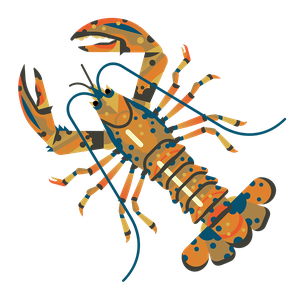
Norway Lobster (also known as langoustine or scampi) live in burrows on the seabed. They are limited to a muddy habitat and require sediment with a silt and clay content to excavate burrows. Their distribution therefore is determined by the availability of suitable habitat. They occur over a wide area in the North East Atlantic, from Iceland to North Africa and into the Mediterranean, and constitute a valuable fishery for many countries. Males grow relatively quickly to around 6 cm, but seldom exceed 10 years old. Females grow more slowly and can reach 20 years old. Females mature at about 3 years. In the autumn they lay eggs which remain attached to the tail for 9 months (known as being "berried"). During this time the berried females rarely emerge from their burrows and therefore do not commonly appear in trawl catches, although they may be caught using baited creels. This habit of remaining in their burrows has probably afforded their populations some resilience to fishing pressure. Egg hatching occurs in the spring, and females emerge in spring/summer to moult and mate.
Ratings
Showing 24 results for Scampi or langoustine