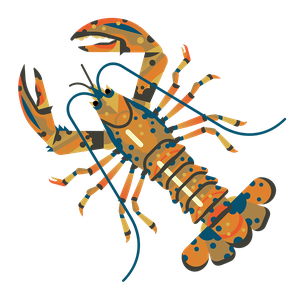
Scampi or langoustine
What to check for
Location
Firth of Forth (FU 8)
Technical location
Atlantic, Northeast, North Sea (Central)
Caught by
Bottom trawl (otter)
Certification
Fishery Improvement Project (FIP)
Rating summary
In the Firth of Forth, scampi, often referred to as Nephrops or Norway lobster, is not overfished or subject to overfishing. Some management measures are in place for Norway lobster in the Firth of Forth. Catch limits don't match the stock area, and have historically been too high, although they have recently declined. There is a relatively high level of discarding in this area, and more selectivity is needed to reduce catches of undersize Norway lobster. Almost all Norway lobster in this area are caught by otter trawling. Trawling for Norway lobster can have an impact on seabed habitats, and bycatch may be of concern. Trawling for Norway lobster can have an impact on seabed habitats, particularly on mud which is subjected to high disturbance by fishing. Bycatch may also be of concern.Rating last updated: December 2023.
Technical consultation summary
In the Firth of Forth, scampi, often referred to as Nephrops or Norway lobster, is not overfished. In 2023, stock abundance was estimated to be 801 million individuals, well above target levels (MSY BTrigger, 292 million). The total catch in 2022 was 2,489 tonnes, equivalent to a harvest rate of 12.6% of the population, which is below FMSY (16.3%), indicating that the stock is not subject to overfishing. Some management measures are in place. Catch limits don't match the stock area, meaning there is a risk of overfishing. Catches in this area have historically been too high, although they have recently declined. The recent 5 year average shows catches are currently below advice. However, there is a relatively high level of discarding in this area, and more selectivity is needed to reduce catches of undersize Norway lobster. Trawling for Norway lobster can have an impact on seabed habitats, particularly on mud which is subjected to high disturbance by fishing. A 2023 OSPAR report showed that 87% of offshore circalittoral mud has been subjected to high disturbance, suggesting that this habitat has not been suitably protected in this fishery. Disturbance from trawl gear on the seabed, especially over long periods of time, is likely to affect the structure, species composition, and biodiversity of the burrowed mud community. Bycatch in trawls may also be of concern.