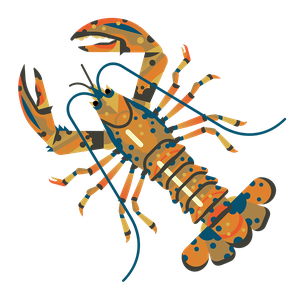
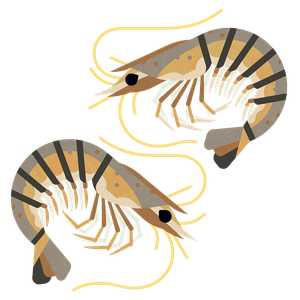
Scampi or langoustine
Nephrops norvegicus
What to check for
Location
Fladen Ground (FU 7)
Technical location
Atlantic, Northeast, North Sea (North)
Caught by
Bottom trawl (otter)
Certification
Fishery Improvement Project (FIP)
Rating summary
In Fladen Ground, scampi, often referred to as Nephrops or Norway lobster, is not overfished or subject to overfishing. Some management measures are in place. Catch limits don't match the stock area, but recent catches have been within the scientifically recommended limits. In this area, there are some bycatch avoidance measures, reducing bycatch concerns. However, trawling for Norway lobster can have an impact on seabed habitats, particularly on mud which is subjected to high disturbance by fishing.Rating last updated: December 2023.
Technical consultation summary
In Fladen Ground, scampi, often referred to as Nephrops or Norway lobster, is not overfished as although abundance has decreased, it is currently at 4,683 million individuals, well above target levels (MSY BTrigger, 2,767 million). It is also not subject to overfishing. The total catch in 2022 was 7,047 tonnes, equivalent to a harvest rate of 3.8% of the population, which is below FMSY (7.5%). Some management measures are in place. Catch limits don't match the stock area, but recent catches have been within the scientifically recommended limits. In this area, there are some bycatch avoidance measures, reducing bycatch concerns. However, trawling for Norway lobster can have an impact on seabed habitats, particularly on mud which is subjected to high disturbance by fishing. A 2023 OSPAR report showed that 87% of offshore circalittoral mud has been subjected to high disturbance, suggesting that this habitat has not been suitably protected in this fishery. Disturbance from trawl gear on the seabed, especially over long periods of time, is likely to affect the structure, species composition, and biodiversity of the burrowed mud community.
How we worked out this Rating
In Fladen Ground, scampi, often referred to as Nephrops or Norway lobster, is not overfished or subject to overfishing.Stock abundance in 2023 is estimated to be 4,683 million individuals. Abundance has increased since 2016 and fluctuated at a high level since then. It remains well above target levels (MSY BTrigger, 2,767 million). Therefore, the stock is not in an overfished state. Abundance in Fladen Ground is likely to be underestimated, as surveys are not carried out in the north of the functional unit where there are known to be Norway lobster grounds. The total catch in 2022 was 7,047 tonnes. This is equivalent to a harvest rate of 3.8% of the population (by number). It is below the level associated with Maximum Sustainable Yield (FMSY, 7.5%), indicating that the stock is not subject to overfishing.ICES advises that when the MSY approach is applied, catches in 2024 should be no more than 13,679 tonnes, assuming discard rates and fishery patterns don't change from recent years. This is a 10% reduction from the previous year's advice, because of the decrease in abundance observed between the 2022 and 2023 underwater tv (UWTV) surveys, as well as updated average weights and discard rates.A 2011 study on Norway lobster in the Clyde found a high prevalence of plastics and suggested that this could have implications for the health of the stock - this may have relevance for other Norway lobster stocks. Some of the plastics were sourced to fishing waste. Studies have shown that the effects of climate change - warmer waters, reduced oxygen levels, higher ocean acidity, and higher levels of heavy metals - can negatively impact Norway lobsters' larval development and make adults more susceptible to disease. Lower oxygen levels can also cause Norway lobster to leave their burrows, making them easier to catch.
Some management measures are in place for Norway lobster in Fladen Ground. Catch limits don't match the stock area, meaning there is a risk of overfishing, but current catches are within recommended limits.Norway lobster stock assessments are conducted by the International Council for the Exploration of the Sea (ICES). Stock assessments are produced for 33 areas across the Northeast Atlantic, called Functional Units (FUs). However, management is applied to 18 areas, called management units. These management units broadly overlap with the functional units, but not very effectively. Vessels are free to move between grounds, allowing relatively uncontrolled fishing on some stocks, and risking overfishing. Scientists have repeatedly advised over the years that management should be implemented at the functional unit level, to better protect Norway lobster. This would result in fishing controls that respond to changes within individual stocks. However, this advice is not being followed.This stock is mainly fished by the UK, primarily by Scottish fleets. It is covered by the EU's North Sea Multi Annual management Plan (MAP), but the UK is not signed up to the MAP. There is no UK management plan for it.Catch limits (Total Allowable Catches, TACs) are in place, but these are not specific to this Norway lobster stock. One TAC covers the whole of the North Sea, encompassing 7 different stocks. This does not protect stocks from overfishing. Fladen Ground accounts for a large proportion of the recommended total North Sea catch limit, but catches here have been in line with the advice. Because management is not stock-specific, there is a risk of other stocks suffering from displacement of unused catch from Fladen Ground.In addition to catch limits, the EU and UK have controls on what fishing gear can be used for North Sea Norway lobster trawling. These measures relate to the size and structure of trawl nets. The Scottish fleet accounts for most of the landings from the Fladen Ground. The fishery is seasonal and the fleet nomadic, moving between Fladen, Moray Firth, Firth of Forth, Devil's Hole, Farn Deeps and west coast of Scotland according to the time of the year and catch rates. In Fladen Ground, the Highly Selective Gear requirement on small mesh sizes resulted in the fleet changing gear to larger mesh sizes (100mm or more) to continue targeting Nephrops and whitefish.There is a Minimum Conservation Reference Size of 25mm in the North Sea. Below this size, Norway lobster must be landed but can't be sold for human consumption, and so have a lower value. Under the EU Landings Obligation (LO) and UK law, it is illegal to discard unwanted (e.g. undersized or over-quota) Norway lobster at sea. However, there are exemptions in this area, because this species survives well after being discarded, even from trawlers. Discarding is still allowed in all creel fisheries and up to 2% can be discarded from trawlers. Compliance with the LO is poor throughout European fisheries. However, based on observer data, it is estimated that only 2% of the total catch is discarded in this fishery.Project UK is implementing Fishery Improvement Projects (FIPs) on twelve UK fisheries that are important to the UK market. This includes nephrops caught by trawl or creel around the UK. The FIP began in 2019 and has an end date of April 2024, at which point it should be ready to undergo MSC certification.The FIP has been successful in tackling some issues, including providing research into habitat impacts and developing advice for potential approaches to a harvest strategy. These outcomes are not inconsiderable. However, there has been very little change to the footprint of the nephrops fishery, and requirements are not being met for outcomes for endangered, threatened and protected (ETP) species, despite research by the FIP indicating that trawling poses a significant risk to them. The advice on harvest strategy has also not resulted in any changes to management. Therefore, we do not consider the FIP to have addressed all key environmental issues in this fishery, and it does not meet GFG guidelines for application of a FIP Improver score.The FIP lists Fishery Management Plans (FMPs) as a delivery mechanism for improvements. The FMPs for Nephrops are expected in 2024 but have not yet been published for consultation. Given that the FIP will end on April 2024, and no FMPs will be delivering harvest strategies by that point, we not consider it possible for this key issue to be addressed within the FIP timescale.More information is available here and here.The UK Fisheries Act came into force in January 2021. The Act requires the development of Fisheries Management Plans (FMPs) (replacing EU Multi-Annual Plans) but there are no details yet on how and when these will be developed. FMPs have the potential to be very important tools for managing UK fisheries, although data limitations may delay them for some stocks. MCS is keen to see FMPs for all commercially exploited stocks, especially where stocks are depleted, that include:Targets for fishing pressure and biomass, and additional management when those targets are not being metTimeframes for stock recoveryTechnologies such as Remote Electronic Monitoring (REM) to support data collection and improve transparency and accountabilityConsideration of wider environmental impacts of the fishery
Trawling for Norway lobster can have an impact on seabed habitats, particularly on mud which is subjected to high disturbance by fishing. Bycatch may also be of concern.Norway lobster in Fladen Ground, in the northern North Sea, are mainly caught by trawling, which accounts for over 99% of catches. In general, Norway lobster trawlers use a small net mesh (70-99mm), which can result in higher bycatch than the nets used to trawl for species such as cod or haddock. However, in Fladen Ground, the nets have a larger mesh size of 100mm or more.Norway lobster are caught as part of a mixed demersal fishery, so bycatch can include cod, haddock, whiting, saithe, plaice and sole. There may be a high number of juvenile cod in this area, and efforts are being made to avoid cod capture. In Scotland this includes improved selectivity measures in gears which target Norway lobster (e.g. Gamrie Bay Trawl or Faithlie Cod Avoidance Panel). The UK introduced a national cod avoidance plan in 2020, which includes area closures to protect spawning cod and real-time closures when too many cod are being caught. In 2022, Nephrops trawls accounted for approximately 7.5% of all North Sea, West of Scotland, eastern English Channel and Skagerrak cod catches.Other bycatch could include skates, rays and sharks. These species are relatively hardy, and can survive when they are discarded, but their survival rates largely depend on how they were caught and handled. Mortality rates in otter trawls are shown to vary between 10-65%, depending on fishing and handling methods. Those vessels which employ codes of conduct on skate and ray handling and/or reduce the risk of their capture, will improve their survival rates, though many of these methods aren't implemented over whole functional unit or regional levels.Norway lobster are mainly found in soft mud, and therefore trawling for this species takes place primarily on mud habitats. Mud habitats feature on the OSPAR list of threatened and declining species due to the burrowing megafauna, which provide a complex habitat with deep oxygen penetration. Species that live in these habitats include the long-lived and slow-growing ocean quahog, polychaetae worms, soft corals and tall sea-pens. Mud is very disturbed by fishing specifically. A 2023 OSPAR report showed that 87% of offshore circalittoral mud has been subjected to high disturbance, suggesting that this habitat has not been suitably protected. Disturbance from trawl gear on the seabed, especially over long periods of time, is likely to affect the structure, species composition, and biodiversity of the burrowed mud community.There are Marine Protected Areas (MPAs) in this Functional Unit, some of which are designated to protect seabed features from damaging activities. This fishery overlaps with parts of these MPAs, but the proportion of the catch coming from these areas is expected to be relatively low in relation to the unit of assessment (i.e. less than 20% of the catch), and so these impacts have not been assessed within the scale of this rating. Given the important role that MPAs have in recovering the health and function of our seas, MCS encourages the supply chain to identify if their specific sources are being caught from within MPAs. If sources are suspected of coming from within designated and managed MPAs, MCS advises businesses to establish if the fishing activity is operating legally inside a designated and managed MPA, and request evidence from the fishery or managing authority to demonstrate that the activity is not damaging to protected features or a threat to the conservation objectives of the site(s).
References
BENTHIS. 2015. Deliverable 2.3: Benthic impact of fisheries in European waters: the distribution and intensity of bottom trawling. Available at: http://archimer.ifremer.fr/doc/00310/42138/54476.pdf [Accessed on 27.11.2023].CruCSChange, 2015. The crustacean chemosensory system: Consequences of climate and environmental change. EU Grant agreement ID: 331296. Available at https://cordis.europa.eu/article/id/182940-impact-of-environmental-change-on-norway-lobster [Accessed on 27.11.2023].Drewery, J., Edridge, A., Kinghorn, M., Kynoch, R.J., Mair, J., O’Neill, F.G. and Summerbell. K., 2015. Effects of Codend Mesh Size and Twine Number on Nephrops Selectivity. Report on FISA project 03/13. Scottish Marine and Freshwater Science Vol 6 No 3. Edinburgh: Scottish Government, 23pp. Available at https://www.gov.scot/publications/scottish-marine-freshwater-science-volume-6-number-3-effects-codend/ [Accessed on 27.11.2023].Ellis, J.R., McCully Phillips, S.R., and Poisson, F., 2017. A review of capture and post-release mortality of elasmobranchs. Journal of Fish Biology. 90: 3, pp.653–722. https://doi.org/10.1111/jfb.13197Enever R., Catchpole T.L., Ellis. J.R., and Grant A., 2009. The survival of skates (Rajidae) caught by demersal trawlers fishing in UK waters. Fisheries Research, 97: 1–2, pp. 72-76. https://doi.org/10.1016/j.fishres.2009.01.001.Hinz, H., Prieto, V., and Kaiser, M. J., 2009. Trawl disturbance on benthic communities: chronic effects and experimental predictions. Ecological Applications: A Publication of the Ecological Society of America, 19(3), 761-73. https://doi.org/10.1890/08-0351.1ICES, 2020. Celtic Seas Ecoregion – Ecosystem overview. In Report of the ICES Advisory Committee, 2020. ICES Advice 2020, Section 7.1. Available at https://doi.org/10.17895/ices.advice.7631 [Accessed on 24.01.2023].ICES.2022. Working Group for the Celtic Seas Ecoregion(WGCSE).ICES Scientific Reports. 4:45. 1413pp. Available at http://doi.org/10.17895/ices.pub.19863796 [Accessed on 25.01.2023].ICES. 2023. Norway lobster (Nephrops norvegicus) in Division 4.a, Functional Unit 7 (northern North Sea, Fladen Ground). In Report of the ICES Advisory Committee, 2023. ICES Advice 2023, nep.fu.7. Available at https://doi.org/10.17895/ices.advice.21975191 [Accessed on 27.11.2023].Kingma, I. and Walker, P. Rays of Hope - Discard survival in North Sea Skates and Rays. ICES CM 2014/O:09. Available at: http://www.ices.dk/sites/pub/CM%20Doccuments/CM-2014/Theme%20Session%20O%20contributions/O0914.pdf [Accessed on 27.11.2023].Mandelman, J.W., Cicia, A.M., Ingram Jr, G.W., Driggers III, W.B., Coutre, K.M. and Sulikowski, J.A., 2013. Short-term post-release mortality of skates (family Rajidae) discarded in a western North Atlantic commercial otter trawl fishery. Fisheries Research 139, pp. 76-84. https://doi.org/10.1016/j.fishres.2012.09.020.Matear, L., Vina-Herbon, C., Woodcock, K.A., Duncombe-Smith, S.W., Smith, A.P., Schmitt, P., Kreutle, A., Marra, S., Curtis, E.J., and Baigent, H.N. 2023. Extent of Physical Disturbance to Benthic Habitats: Fisheries. In: OSPAR, 2023: The 2023 Quality Status Report for the Northeast Atlantic. OSPAR Commission, London. Available at https://oap.ospar.org/en/ospar-assessments/quality-status-reports/qsr-2023/indicator-assessments/phys-dist-habs-fisheries/ [Accessed on 27.11.2023].Milligan, R., Albalat, A., and Neil, D., 2013. Scottish Nephrops Survey Phase III: Evaluation of Measures for Reducing Bycatch and Discards in a Nephrops Fishery. Report for the Scottish Government Rural Affairs and the Environment: Marine Directorate European Fisheries Fund Project NC/3/19. Available at: https://nsuworks.nova.edu/occ_facreports/104 [Accessed on 24.01.2023].Murray and Cowie, 2011. Plastic contamination in the decapod crustacean Nephrops norvegicus (Linnaeus, 1758). Marine Pollution Bulletin, 62: 6, pp.1207-1217. https://doi.org/10.1016/j.marpolbul.2011.03.032.NatureScot, 2021. SiteLink. Available at https://sitelink.nature.scot/home [Accessed on 19.11.2021].OSPAR. 2023. Sea Pen & Burrowing Megafauna. Available at https://www.ospar.org/work-areas/bdc/species-habitats/list-of-threatened-declining-species-habitats/habitats/sea-pen-burrowing-megafauna [Accessed on 27.11.2023].Palomares, M.L.D. and Pauly, D. (Editors), 2022. SeaLifeBase. Nephrops norvegicus: Norway lobster. Available at https://www.sealifebase.ca/summary/Nephrops-norvegicus.html [Accessed on 27.11.2023].Project UK. Nephrops. Available at https://www.projectukfisheries.co.uk/nephrops [Accessed on 27.11.2023].Scottish Fishermen's Federation, 2021. GITAG: The Gear Innovation and Technology Advisory Group. Available at https://www.sff.co.uk/gitag-2/ [Accessed on 19.01.2023].Williams, C. and Carpenter, G., 2016. NEF working paper: The Scottish Nephrops fishery: Applying social, economic, and environmental criteria. Available at https://griffincarpenter.org/briefings/the-scottish-nephrops-fishery-applying-social-economic-and-environmental-criteria/ [Accessed on 27.11.2023].Wood, H., Eriksson, S., Nordborg, M., and Styf, H., 2015. The effect of environmental stressors on the early development of the Norway lobster Nephrops norvegicus (L.). Journal of Experimental Marine Biology and Ecology. 473. pp. 35-42. http://dx.doi.org/10.1016%2Fj.jembe.2015.08.009.

Sustainable swaps
Learn more about how we calculate our sustainability ratings.
How our ratings work