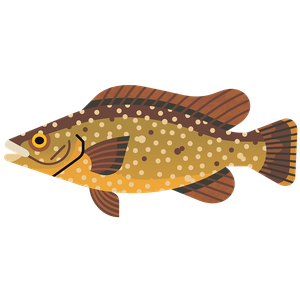
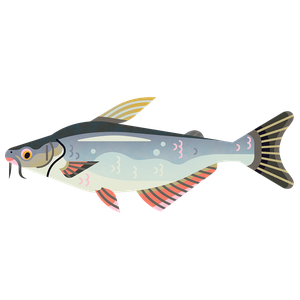
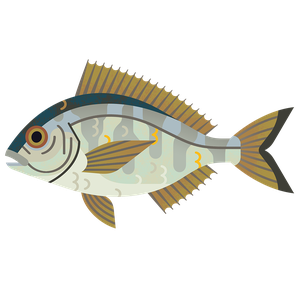
Seabass
Dicentrarchus labrax
What to check for
Location
Bay of Biscay (North and Central)
Technical location
Atlantic, Northeast, Bay of Biscay (Central), Bay of Biscay (North)
Caught by
Net (pelagic trawl)
Rating summary
The sea bass stock in the northern and central Bay of Biscay is harvested sustainably and fully fished. There are management measures in place, which are partly effective in managing the stock. A small amount of sea bass in areas 8a and b in the Bay of Biscay is caught by pelagic trawl, which cause limited damage to the seabed. The gear has low levels of fish bycatch, but there are serious concerns regarding bycatch of common dolphins in this area.Rating last updated April 2025
Technical consultation summary
Fishing pressure is below FMSY (0.205) at 0.088 in 2024, indicated the stock is harvested sustainably. The 2025 estimate of SSB (30,364 tonnes) is above the MSY Btrigger (21,782 tonnes), but just below the BMSY proxy (30,495 tonnes), so the stock is fully fished. There are management measures in place, which are partly effective in managing the stock. A small amount of sea bass in areas 8a and b in the Bay of Biscay is caught by pelagic trawl, which cause limited damage to the seabed. The gear has low levels of fish bycatch, but there are serious concerns regarding bycatch of common dolphins in this area. The extent of cetacean bycatch has led to temporal fishing closures in the Bay of Biscay, and the wider use of acoustic deterrents.
How we worked out this Rating
The sea bass stock in the northern and central Bay of Biscay is harvested sustainable and fully fished.Stock assessments are conducted by the International Council for the Exploration of the Sea (ICES). Following a benchmark in 2025, the latest assessment incorporates catch reallocation across connected ICES divisions and estuary-based recruitment data. These methodological updates have improved the accuracy of the assessment and reduced some uncertainties. However, recreational catches are only based on two years of data, and therefore continue to have a considerable level of uncertainty.The stock assessment defines reference points for fishing pressure (F) and biomass (B). For fishing pressure, there is a target to keep F at or below Maximum Sustainable Yield (MSY). For biomass, there is no target. However, there is a trigger point (MSY Btrigger) and precautionary reference point (Bpa) to ensure reproductive output is maintained. Because BMSY is not defined, the Good Fish Guide applies its own definition of 1.4 x MSY BTrigger.From 1985 to 2002, F fluctuated around 0.18, remaining below FMSY (0.205). However, in 2003, F exceeded MSY, reaching a peak of 0.23 in 2005 before falling back below the threshold in 2008. Since then, total fishing pressure, across both commercial and recreational catches, has steadily declined from 0.2 in 2008 to an estimated 0.088 in 2024. Therefore, F is currently well below FMSY, indicating the stock is harvested sustainably. During the early 2000s, spawning stock biomass (SSB) hovered just above Blim (17,273 tonnes). After 2006, SSB began rising, surpassing MSY Btrigger (21,782 tonnes) from 2010 to 2014, before falling close to Blim again in 2017. In recent years, SSB has gradually increased, exceeding MSY Btrigger again in 2021 and is now estimated at 30,364 tonnes in 2025. Given that the proxy for BMSY is 30,495 tonnes, the 2025 SSB falls just below this level, so we consider the stock fully fished.Despite fishing pressure remaining below FMSY since 2008, SSB declined from 2011 to 2017. This suggests that stock dynamics are not only influence by fishing activity but also by variability in recruitment. Across the time series, annual recruitment has become increasingly variable. The highest recorded recruitment was in 2018, at approximately 179 million individuals. This figure dropped significantly to approximately 31 million in 2021. That said, the 2025 estimate (~89.9 million) exceeds the average for the previous three years (2022-2024), which stood at ~61.6 million.For 2026, ICES advises that under the EU multiannual plan (MAP) for Western Waters and adjacent waters, total catches (commercial and recreational) should be between 6423 and 7618 tonnes. This is a 187-190% increase from the 2025 advice, reflecting an updated assessment of stock status following the benchmark. It is important to note that a portion of this stock is harvested in neighbouring ICES divisions, which should be incorporated into broader management to avoid exceeding advice.
There are management measures in place, which are partly effective in managing the stock.Sea bass in the Bay of Biscay (ICES divisions 8a, 8b) is managed under the European Union’s multiannual management plan (MAP) for Western Waters. Although this stock is not subject to EU Total Allowable Catches (TACs) and quotas, it has been governed by the MAP since 2019. The plan applies to demersal stocks, including sea bass, and sets out conditions for determining fishing opportunities based on stock status and the current FMSY for the stock. It aims to ensure that stocks, particularly sea bass, are fished sustainably, and that management decisions reflect the best available scientific advice. ICES considers the FMSY range used in the MAP to be precautionary for sea bass in this region. Recreational fishing exerts a significant pressure on the stock, and since 2019, these catches, and a 5% post-release mortality rate, have been accounted for in ICES catch advice. Recreational removals are estimates based on observed data in 2010 and 2022, with 2024 recreational activity (kept and dead releases) estimated to have accounted for 26.9% of total removals.As sea bass is a non-TAC species, there is concern about potential displacement of fishing effort from other species with limiting quotas. Management measures are in place to mitigate risk and maintain stocks. A Minimum Landing Size (MLS) of 40cm was introduced for commercial catches in 2020, while recreational catches have been subject to a 42cm MLS since 2013. However, these offer only partial protection, as approximately 50% of females reach maturity at 42.14cm. This means a significant proportion of fish may be removed before the chance of reproducing, which can impact the long-term stock stability.In 2024, the French fleet accounted for 98.7% of sea bass landings in the Bay of Biscay, with the remaining 1.3% landed by Spanish vessels. The discard rate for France has gradually decreased, from 8.80% in 2021 to 7.06% in 2023. While Spanish discards are likely to occur, they are not fully quantified.In France, the dominant fishing party, several national management measures are in place to support the stock. These include a quota system for commercial sea bass fishing licenses (implemented in 2012), a voluntary closed season from February to mid-March for longline and handline fisheries in Brittany, and a recreational daily bag limit of two fish in 2025. Additionally, in January 2024, a one-month fishing ban was introduced in part of the Bay of Biscay for certain vessels and gear types, aiming to reduce cetacean bycatch. Although not designed for sea bass, the ban overlaps with their spawning period and may offer indirect benefits by reducing fishing pressure during their reproductive window. The closure is set to reoccur in January/February of 2025 and 2026.Despite these management measures, there are some limitations relating to data for recreational fisheries. Continued monitoring and research are essential to improve data quality and ensue effective management of the sea bass stock in this region.The EU and UK both have fishery management measures, which can include catch limits, population targets, and gear restrictions. However, compliance in the EU and UK has been inconsistent, with ongoing challenges in implementing some regulations. The goal of reaching Maximum Sustainable Yield (MSY) by 2020 was missed, with less than half of UK TACs in 2024 following ICES advice. In 2024, the EU and UK reaffirmed their commitment to sustainable fisheries by aligning management with scientific advice to gradually approach MSY. However, no new target date has been set for achieving MSY across all fisheries. The Landing Obligation (LO), an EU law retained by the UK post-Brexit, requires all quota fish to be landed, even if unwanted (over-quota or below minimum size). It aims to encourage more selective fishing methods, reduce bycatch, and improve catch reporting. However, compliance is poor, and accurate discard levels are hard to quantify with current monitoring programmes. The UK is in the process of replacing the LO with country-specific Catching Policies. The Marine Conservation Society views Remote Electronic Monitoring (REM) with cameras is one of the most cost-effective tools for providing reliable fisheries data and aiding informed management decisions. Fully monitored fisheries enhance collaboration, data accuracy, stock recovery, and reduce impacts on marine wildlife and habitats. However, the full potential of REM may only be achieved when it tracks fishing location and documents catch and bycatch, particularly where vulnerable species and habitats are at risk. As of January 2024, the EU is introducing a Remote Electronic Monitoring (REM) mandate for EU vessels, including CCTV cameras on vessels 18m or more that pose a potential risk of non-compliance, within the next 4 years. Across the UK, different approaches to REM are being taken and legislation is expected to be in place across all 4 countries within the next few years.
A small amount of sea bass in areas 8a and b in the Bay of Biscay is caught by pelagic trawl, which cause limited damage to the seabed. The gear has low levels of fish bycatch, however there are serious concerns regarding bycatch of common dolphins in this area.In 2024, 1% of sea bass were caught using pelagic trawls, with the majority caught using lines (35%), nets (27%), and bottom trawling (16%). The French fleet dominated landings, accounting for 98.7% of total catch, with Spanish vessels contributing the remaining 1.3%. An estimated 864 tonnes were also removed through recreational fishing, making up 26.9% of total removals.Although incidental bycatch of non-target fish species is generally low in this fishery, there are ongoing concerns regarding interactions with marine mammals and seabirds. Reported bycatch includes grey seals, gannets, harbour porpoises, striped dolphins, and common dolphins. The bycatch rates of common dolphins (Delphinus delphis) are of significant ecological concern within the Bay of Biscay, with populations now at unfavourable conservation status in the region.During autumn and winter, sea bass mainly feed on small pelagic fish, including mackerel, scads, anchovy, and sardine. These fish are also key prey species for common dolphins. This overlap in feeding preferences is thought to increase the risk of dolphins being caught by pelagic trawls while feeding among sea bass, and may be an underlying mechanism to explain the high rate of common dolphin bycatch observed in the pelagic trawl fishery for sea bass in the Bay of Biscay. As a result, the winter months (December to March) are considered a high-risk period for cetacean bycatch, as this coincides with the peak activity of pelagic trawling targeting pre-spawning and spawning sea bass, which occurs from November to April.In 2023, 1756 common dolphin strandings were reported along the French and Iberian coasts, with at least 70% showing evidence of being bycaught. Based on strandings data and drift modelling, it is estimated that 11,330 common dolphins died in 2023 from being bycaught in French waters of the Bay of Biscay and Western Channel. This exceeds the Potential Biological Removal (PBR) threshold of 4927 individuals per year, highlighting a serious threat to common dolphin populations in the Northeast Atlantic.These concerns led the European Commission to request that France, Spain, and Sweden take stronger action under the Habitats Directive and Common Fisheries Policy to reduce unsustainable bycatch of cetaceans. To study, protect, and reduce accidental capture of cetaceans, both France and Spain have national legislation in place:France:A government action plan to improve bycatch monitoring (observers and electronic monitoring), build knowledge, and develop mitigation strategies.A national action plan for cetacean protection, aiming to reduce anthropogenic pressures from fishing, noise pollution, and coastal pollution.Order MERM2033160A (2020), requiring pelagic trawlers in the Bay of Biscay to use acoustic deterrent devices (pingers).Spain:A national plan with steps to reduce fisheries bycatch.Order APA/1200/2020, which mandates acoustic deterrents (pingers), movement rules, mandatory landing of accidental cetacean bycatch, and establishes a commitment to improving knowledge of cetacean populations.Pingers have shown up to 85% effectiveness in reducing common dolphin bycatch when used correctly. However, the ICES Workshop on mitigation measures to reduce bycatch of short-beaked common dolphins in the Bay of Biscay (WKEMBYC2) also recommends the modification, and possible extension, of existing temporal fishing closures. These encompass high risk gears, including pelagic trawls, and their banned use during the December to March peak bycatch mortality window. As closures overlap with peak fishing effort of pelagic trawls targeting spawning bass, there is a trade-off between the fishery and mitigation measures, with uncertainties surrounding the promise of financial compensation. Ongoing monitoring and data collection will be critical in assessing the effectiveness of mitigation measures and for establishing long-term effective protection against cetacean bycatch.In terms of physical impacts of pelagic trawling, seabed contact is minimal. While some benthic disturbance may occur, it is currently considered low and not of concern.To improve monitoring and reporting of fishing activity, The Marine Conservation Society would like to see remote electronic monitoring (REM) with cameras implemented, used and enforced.
References
ACAP (2024) ACAP Review of mitigation measures and Best Practice Advice for Reducing the Impact of Pelagic Longline Fisheries on Seabirds [2024]. In: ACAP - 14th Meeting of the Advisory Committee. Lima, Peru Available at: https://www.bmis-bycatch.org/references/b8w4f6bn [Accessed on 23.04.2025].Almeida, A., Alonso, H., Oliveira, N., Silva, E., and Andrade, J. 2023. Using a visual deterrent to reduce seabird interactions with gillnets. Biological Conservation, 285: 110236. https://doi.org/10.1016/j.biocon.2023.110236Bycatch Management Information System (2020). Purse seine. Available at https://www.bmis-bycatch.org/fishing-gear/purse-seine [Accessed 24.04.2025]Conseil d’État (2024) Protection of dolphins and porpoises: the Conseil d’État confirms the need for a fishing ban in the Bay of Biscay for four weeks in winter. Available at: https://www.conseil-etat.fr/en/news/protection-of-dolphins-and-porpoises-the-conseil-d-etat-confirms-the-need-for-a-fishing-ban-in-the-bay-of-biscay-for-four-weeks-in-winter [Accessed on 10.04.2025]Earth.org (2024) Why Did France Introduce a One-Month Ban on Commercial Fishing in the Bay of Biscay? Available at: https://earth.org/france-ban-on-commercial-fishing-bay-of-biscay/ [Accessed on 10.04.2025]Eigaard, O. R., Bastardie, F., Breen, M., Dinesen, G. E., Hintzen, N. T., Laffargue, P., Mortensen, L. O., Nielsen, J. R., Nilsson, H. C., O- Neill, F. G., Polet, H., Reid, D. G., Sala, A., Skold, M., Smith, C., Sorensen, T. K., Tully, O., Zengin, M. and Rijnsdorp, A. D., 2016. Estimating seabed pressure from demersal trawls, seines, and dredges based on gear design and dimensions. ICES Journal of Marine Science, 73:1, pp. i27- i43. https://doi.org/10.1093/icesjms/fsv099.European Commission, 2020. Nature and Fisheries: Commission urges FRANCE, SPAIN and SWEDEN to take action to reduce bycatch. Available at: https://ec.europa.eu/commission/presscorner/detail/en/inf_20_1212 [Accessed on 17.04.2025]Hiddink, J., Jennings, S., Sciberras, M., Szostek, C.L., Hughes, K.M., Ellis, N., Rijnsdorp, A.D., McConnaughey, R.A., Mazor, T., Hilborn, R., Collie, J.S., Pitcher, C.R., Amoroso, R.O., Parma, A.M., Suuronen, P. and Kaiser, M.J. 2017. Global analysis of depletion and recovery of seabed biota after bottom trawling disturbance. PNAS. 114:31, pp. 8301-8306. https://doi.org/10.1073/pnas.1618858114.ICES. 2025. Seabass (Dicentrarchus labrax) in divisions 8.a-b (northern and central Bay of Biscay). In Report of the ICES Advisory Committee, 2025. ICES Advice 2025, bss.27.8ab. https://doi.org/10.17895/ices.advice.27202530 ICES. 2024. Bay of Biscay and the Iberian Coast ecoregion – Ecosystem overview. In Report of the ICES Advisory Committee, 2024. ICES Advice 2024, Section 6.1, https://doi.org/10.17895/ices.advice.27899889 [Accessed on 16.04.2025]ICES. 2024. Bay of Biscay mixed fisheries considerations. In Report of the ICES Advisory Committee, 2024. ICES Advice 2024. https://doi.org/10.17895/ices.advice.26763901 [Accessed on 17.04.2025]ICES. 2024. Bycatch of endangered, threatened and protected species of marine mammals, seabirds and marine turtles, and selected fish species of bycatch relevance. In Report of the ICES Advisory Committee, 2024. ICES Advice 2024, byc.eu. https://doi.org/10.17895/ices.advice.27999401 [Accessed on 17.04.2025]ICES. 2024. Sea bass (Dicentrarchus labrax) in divisions 8.a-b (northern and central Bay of Biscay). In Report of the ICES Advisory Committee, 2024. ICES Advice 2024, bss.27.8ab. https://doi.org/10.17895/ices.advice.25019186 [Accessed on 08.04.2025]ICES. 2024. Working Group for the Bay of Biscay and Iberian Waters Ecoregion (WGBIE). ICES Scientific Reports. 6:59. 762 pp. https://doi.org/10.17895/ices.pub.25908130 [Accessed on 08.04.2025]ICES. 2023. EU additional request on mitigation measures to reduce by-catches of common dolphin (Delphinus delphis) in the Bay of Biscay and Iberian Coast. In Report of the ICES Advisory Committee, 2023. ICES Advice 2023, sr.2023.01. https://doi.org/10.17895/ices.advice.21946634 [Accessed on 17.04.2025]ICES. 2023. Pollack (Pollachius pollachius) in Subarea 8 and Division 9.a (Bay of Biscay and Atlantic Iberian waters). In Report of the ICES Advisory Committee, 2023. ICES Advice 2023, pol.27.89a. https://doi.org/10.17895/ices.advice.21841014 [Accessed 23.04.2025]ICES. 2023. Workshop on mitigation measures to reduce bycatch of short-beaked common dolphins in the Bay of Biscay (WKEMBYC2). ICES Scientific Reports. 5:3. 96 pp. https://doi.org/10.17895/ices.pub.21940337 [Accessed on 22.04.2025]ICES. 2022. Bay of Biscay and the Iberian Coast ecoregion – Fisheries Overview. In Report of the ICES Advisory Committee, 2022. ICES Advice 2022, section 6.2. https://doi.org/10.17895/ices.advice.21641396 [Accessed 17.04.2025]ICES. 2020. Workshop on fisheries Emergency Measures to minimize BYCatch of short-beaked common dolphins in the Bay of Biscay and harbour porpoise in the Baltic Sea (WKEMBYC). ICES Scientific Reports. 2:43. 295 pp. https://doi.org/10.17895/ices.pub.7472 [Accessed on 16.04.2025]ICES (2018): Stock Annex: Sea bass (Dicentrarchus labrax) in division 8.a–b (northern and central Bay of Biscay). ICES Stock Annexes. Report. https://doi.org/10.17895/ices.pub.18623219.v1 [Accessed 09.04.2025]Kennelly, S. J. & Broadhurst, M. K., 2021. A review of bycatch reduction in demersal fish trawls. Rev Fish Biol Fisheries 31, 289–318. https://doi.org/10.1007/s11160-021-09644-0.Kynoch, R., Fryer, R. & Neat, F., 2015. A simple technical measure to reduce bycatch and discard of skates and sharks in mixed-species bottom-trawl fisheries. ICES J Mar Sci,72(6):1861.Peltier, H., Authier, M., Deaville, R., Dabin, W., Jepson, P. D., van Canneyt, O., Daniel, P., and Ridoux, V., 2016. Small cetacean bycatch as estimated from stranding schemes: The common dolphin case in the northeast Atlantic. Environmental Science & Policy, 63 : 7–18. https://doi.org/10.1016/j.envsci.2016.05.004 Seafish, 2025. Fishing Gear Database: Pelagic trawl & Gill nets & Long line. Available at https://www.seafish.org/responsible-sourcing/fishing-gear-database/?t=docGear [Accessed on 22.04.2025]Silva, F., Ellis, J. & Catchpole, T., 2012. Species composition of skates (Rajidae) in commercial fisheries around the British Isles and their discarding patterns. J Fish Biol., 80:1678–1703Spitz, J., Chouvelon, T., Cardinaud, M., Kostecki, C., and Lorance, P. 2013. Prey preferences of adult sea bass Dicentrarchus labrax in the northeastern Atlantic: implications for bycatch of common dolphin Delphinus delphis – ICES Journal of Marine Science, 70: 452–461.van Denderen, P. Bolam, S., Hiddink, J.G., Jennings, S., Kenny, A., Rijnsdorp, A., and van Kooten, T., 2015. Similar effects of bottom trawling and natural disturbance on composition and function of benthic communities across habitats. Mar Ecol Prog Ser. 2015;541:31–43. https://doi.org/10.3354/meps11550.

Sustainable swaps
Learn more about how we calculate our sustainability ratings.
How our ratings work