Shagreen ray
Leucoraja fullonica
What to check for
Location
Celtic Sea and West of Scotland
Technical location
Atlantic, Northeast, Irish Sea, Porcupine Bank, English Channel, Bristol Channel, Celtic Seas, West and Southwest of Ireland, Rockall, West of Scotland
Caught by
Bottom trawl (beam)
Rating summary
Updated: October 2020.Shagreen ray stock in this area is data limited. The biomass and fishing pressure are unknown as there are no reference points available. However, landings have decreased and there is no concern for fishing pressure. There is no specific management plan for skates and rays in these waters. They are managed under a total allowable catch (TAC) for many skates and rays and greater protection is needed. Further management of the species is advised e.g. through fishery closures to allow them to reproduce. Beam trawling is one of the least selective and high impact methods of fishing.
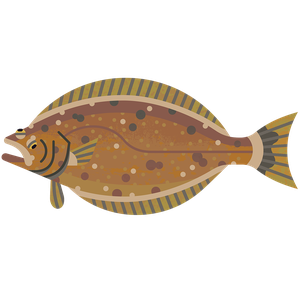
How we worked out this Rating
There is concern for the biomass of shagreen ray in the Celtic Sea and West of Scotland, and concern for the fishing pressure.Route 2 (data limited) scoring has been applied to this rating owing to the lack of reference points for biomass and fishing pressure. Shagreen ray is considered to have a low resilience to fishing pressure.There is no information available about abundance of this stock and therefore, there is concern for biomass.There is also a lack of information on fishing pressure, landings have been stable over the last couple of years, but are exceeding advice. Therefore, there is concern for fishing pressure.ICES advises that when the precautionary approach is applied, landings should be no more than 134 tonnes in each of the years 2023 and 2024. This is a reduction of 20% from the advice for 2021 and 2022. It is unknown whether the current level of exploitation is appropriate for the stock and therefore the precautionary buffer has been applied.
There is no management plan for skates and rays and the joint TAC has been deemed an unsuitable method for protecting individual species.There is no direct management plan for skates and rays in these waters. They are usually caught as bycatch in otter and beam trawl fisheries, which target finfish (including flatfish and gadoids).Skates and rays are managed under five regional quotas (called TACs) which are applied to a group of species, rather than individual skate and ray species. This includes cuckoo ray, thornback ray, blonde ray, spotted ray, and small-eyed ray (undulate ray has a separate TAC). This has been deemed as an unsuitable method for protecting individual species, but species-specific quotas may increase discarding. Alternatives to the current TAC system are being explored, which may include the possible introduction of individual TACs for key stocks.A high-survivability exemption to the Landings Obligation was provided for skates and rays in the Celtic Seas ecoregion. Any skates and rays that are discarded are required to be released immediately and below the sea surface.Other management methods being considered are fishing gear modifications, education, conservation measures (such as closed seasons during spawning times). Some protected areas have been designated in these waters but offshore areas are not sufficiently managed. There are no official minimum landing sizes except for some IFCAs, which, mandate a minimum landing size (40-45 cm disc width) in inshore waters in England and Wales.Whilst some of these measures may be effective at protecting the species, minimum size restrictions may be limited in their efficacy as some skate and ray species are not mature at this size e.g. a 45cm disc width for blonde ray correspond to 63.6cm long, yet around 50% of blonde rays only mature at 78.2cm and 85.6cm for males and females respectively. All rays below the minimum size are handled with care and returned immediately to the sea in order to increase its chance of survival.Both the EU and UK have fishery management measures in place, which can include catch limits, targets for population sizes and fishing mortality, and controls on what fishing gear can be used and where. In the EU, compliance with regulations has been variable, and there are ongoing challenges with implementing some of them. There was a target for fishing to be at Maximum Sustainable Yield by 2020, but this was not achieved. The Landing Obligation (LO), an EU law that the UK has kept after Brexit, requires all quota fish to be landed, even if they are unwanted (over-quota or below minimum size). It aims to promote more selective fishing methods, reduce bycatch, and improve recording of everything that is caught, not just what is wanted. Compliance with the LO is generally poor and actual levels of discards are difficult to quantify using the current fisheries observer programme. UK administrations are in the process of replacing the landing obligation with country-specific Catching Policies.In the UK, it is too early to tell how effective management is, as the Fisheries Act only came into force in January 2021. The Act requires the development of Fisheries Management Plans (FMPs) (replacing EU Multi-Annual Plans). FMPs are currently in development, but the scope of them remains unclear. They have the potential to be very important tools for managing UK fisheries, although data limitations may delay them for some stocks. MCS is keen to see publicly available FMPs for all commercially exploited stocks, especially where stocks are depleted, that include:Targets for fishing pressure and biomass, and additional management when those targets are not being met, based on the best available scientific evidenceTimeframes for stock recoveryImproved data collection, transparency and accountability, supported by technologies such as Remote Electronic Monitoring (REM)Consideration of wider environmental impacts of the fishery
Shagreen ray are an outer shelf species. They represent a small amount of bycatch and are usually caught in trawl and gillnet fisheries and mixed demersal fisheries which target hake, anglerfish, and megrim. They are not normally targeted, though it can be an important non-target retained species in the south-western Celtic Sea or in some deep-water fisheries on the continental slopes and offshore banks.
It's difficult to avoid catching skates and rays in nets and because of their peculiar shape and size; it's also difficult for them to escape the net once captured. Therefore, selectivity programmes are in place reduce skate and rays catches and their survival rates. Discard rates of skates and rays vary dramatically (30 - 70%), depending on the marketability and management measures in place. For example, nearly all skates below 30 cm LT are discarded by English vessels.
Bycatch can include juvenile skate as they can hatch from their egg cases at sizes of 10-20 cm LT and therefore, may be able to escape through the nets. Their survival rates upon discarding is extremely variable, depending on the fishing and handling methods used to capture them. Elasmobranchs have the potential for relatively high survival rates because they do not have swim bladders (and thereby are not as impacted by pressure changes), they can have thick and abrasive skins and thorns (which protect them) and some have spiracles and a buccal-pump respiratory which excrete a mucus, which allows the skate or ray to ventilate and acquire oxygen when out of the water. Inshore and coastal fisheries using trawls, longlines, gillnets and tangle nets generally show low at-vessel mortality. There are a lack of studies available on long-term skate and ray survival when they are released into the wild.
As part of the cod-recovery plan trawlers have Square Mesh Panels (SMPs) which allows bycatch species to escape the nets including dogfish. Dogfish have really rough skin which harms other species in the net. By allowing them to escape, it means that skates and rays are more likely to be discarded alive. Discards of other species may include undersized or unmarketable fish or because they are choke species.
Beam trawling is one of the least selective and high impact methods of fishing. Beam trawling, especially using chain-mat gear, is damaging to the seabed and known to have a significant impact on the benthic communities, although less so on soft substrates. Heavy gear tends to have a higher seabed impact than otter trawling. Seabed penetration depends on the sediment, and varies between 1 cm and 8 cm. In the Celtic Seas, beam trawling causes abrasion (this pressure principally affects the seabed habitats and it is associated with bottom-contacting mobile fishing gear), and smothering, which can be caused by bottom trawling in soft sediment areas. In the Celtic seas beam trawlers operate on sandy grounds, where the seabed is suitable for beam trawling, and where sole, anglerfish, cuttlefish, and megrim are abundant. There are several areas of deep-water seabed on which all bottom trawling is banned to protect vulnerable deep-water habitats within the Celtic Seas and Bay of Biscay.
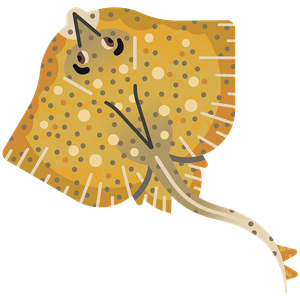
Beam trawling is not a well-targeted fishing activity, with poor selectivity and the potential to catch a wide variety of non-target species including seabed dwelling organisms and invertebrates such as crabs, starfish and other shellfish.
References
Ellis, J. R., Burt, G.J., Grilli, G., McCully Phillips, S.R., Catchpole, T.L., Maxwell, D.L. 2018. At-vessel mortality of skates (Rajidae) taken in coastal fisheries and evidence of longer-term survival. Journal of Fish Biology. 92, 1702-1719. doi:10.1111/jfb.13597
Froese, R. and D. Pauly. Editors. 2019. FishBase. Shagreen ray, Leucoraja fullonica. World Wide Web electronic publication. Available at https://www.fishbase.de/Summary/SpeciesSummary.php?ID=7619&AT=shagreen+ray [Accessed on 06.11.2020].
ICES. 2020. Shagreen ray (Leucoraja fullonica) in subareas 6- “7 (West of Scotland, southern Celtic Seas, English Channel). In Report of the ICES Advisory Committee, 2020. ICES Advice 2020, rjf.27.67. Available at https://doi.org/10.17895/ices.advice.5792. [Accessed on 06.11.2020].
ICES. 2020. Working Group on Elasmobranch Fishes (WGEF). ICES Scientific Reports, 2:77. Available at https://doi.org/10.17895/ices.pub.7470 [Accessed on 06.11.2020].
Mangi, S., Kupschus, S., Mackinson, S., Rodmell, D., Lee, A., Bourke, E., Rossiter, T., Masters, J., Hetherington, S., Catchpole, T. and Righton, D. 2018. Progress in designing and delivering effective fishing industry science data collection in the UK. Fish 00:1-21. https://doi.org/10.1111/faf.12279.
Sustainable swaps
Learn more about how we calculate our sustainability ratings.
How our ratings work