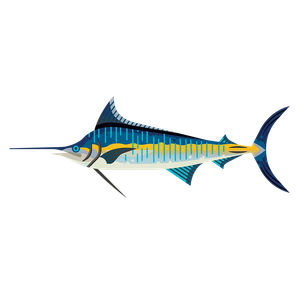
Swordfish
Xiphias gladius
What to check for
Location
Indian Ocean
Technical location
Indian Ocean, Eastern, Indian Ocean, Western, All areas, All areas
Caught by
Hook & line (longline)
Rating summary
The swordfish stock in the Indian Ocean is abundant and not subject to overfishing. Few appropriate management measures are in place for Indian Ocean swordfish, and monitoring and enforcement needs to be improved. Most swordfish catches from the Indian Ocean are by longline. While longlining is unlikely to have habitat impacts, it can have a bycatch of highly vulnerable species such as sharks, turtles, and seabirds.Commercial buyers should establish what measures the flag state and fleet relating to their source is taking to reduce impacts to and improve reporting of interactions with vulnerable species. Large buyers should consider supporting such improvements. MCS also advocates specifying the need for vessels, in particular purse seiners, to register on the ISSF Proactive Vessel Register.Rating last updated January 2024.
Technical consultation summary
The swordfish stock in the Indian Ocean is not overfished and not subject to overfishing. This stock is managed and assessed by the Indian Ocean Tuna Commission (IOTC). The last stock assessment was carried out in 2023, using data up to 2021. Spawning biomass (SB) is estimated to be 35% of unfished levels and 139% of SB MSY. Therefore, the stock is not in an overfished state. Fishing mortality (F) remained at 60% of FMSY. Therefore, the stock is not subject to overfishing. At 2021 catch levels (23,237t) the biomass is expected to increase. Few appropriate management measures are in place for Indian Ocean swordfish. There are some uncertainties in the catch data, and monitoring and enforcement needs to be improved. Since 2015 there have been MSY-based targets for the stock, but no harvest strategy or control rule to define what management actions should be taken to achieve them. Swordfish in the southern Indian Ocean is declining and there is evidence of localised depletion, so spatial or seasonal closures may be required. The main management measure for Indian Ocean swordfish dates from 2003: a freeze on the capacity of IOTC fleets to 2003 levels. This legislation is very generic, applying across all fleets, and would be better replaced by spatial and temporal closures and quota allocation. Monitoring and compliance with management measures in the IOTC region is generally poor. Some countries repeatedly fail to report catch data to the commission. Mandatory observer coverage is very low, at just 5% for most vessels. A number of countries fail to meet the threshold. In general, 20% is scientifically recommended to ensure adequate monitoring of catch and bycatch. Most swordfish catches from the Indian Ocean are by longline. While longlining is unlikely to have habitat impacts, it can have a bycatch of highly vulnerable species such as sharks, turtles, and seabirds. A number of Endangered and Critically Endangered species are caught as bycatch in Indian Ocean longline fisheries, but scientifically recommended gear modifications to reduce impacts have not been implemented. Monitoring and reporting of bycatch is poor. Longlining for swordfish and albacore tuna usually happens in shallower waters than other tuna species, making it more accessible to species such as seabirds and increasing the risk of bycatch.
How we worked out this Rating
The swordfish stock in the Indian Ocean is not overfished and not subject to overfishing.This stock is managed and assessed by the Indian Ocean Tuna Commission (IOTC). Indian Ocean swordfish has been caught since the 1950s. Catches have fluctuated, peaking at 40,000 tonnes in 2004 and 35,000t in the mid-2010s. Piracy in the western Indian Ocean significantly reduced catches to around 25,000t in the late 2000s. Recent catches are around 23,000t. The last stock assessment was carried out in 2023, using data up to 2021. The next stock assessment is expected in 2026.Spawning biomass (SB) declined from the mid-1990s to late 2000s, but did not fall below target levels (Maximum Sustainable Yield, MSY). It has been gradually increasing since then. In 2021, Indian Ocean swordfish biomass is estimated to be 35% of unfished levels and 139% of SB MSY. Therefore, the stock is not in an overfished state.Fishing mortality (F) increased sharply from the 1990s to peak in 2004, but did not exceed FMSY, and is currently stable. In 2021, fishing pressure remained at 60% of FMSY. Therefore, the stock is not subject to overfishing.There was a substantial decrease in catches (33%) from 2019-2021, driven by changes in longline effort. At 2021 catch levels (23,237t) the biomass is expected to increase. There is a very low (less than 1%) probability of the stock exceeding MSY-based reference points through to 2031. Provisional catch in 2022 is 23,596t, which is below MSY (30,000t).Swordfish stocks are not fully understood, and it is not known where breeding grounds are. Swordfish biomass is declining In the southwest region, indicating higher depletion, which is of concern to the scientific committee. The southwest component has previously been subject to intense fishing pressure and up until 2016 was treated separately to the rest of the IOTC swordfish stock.It is not fully understood where the boundary lies between the Atlantic and Indian Ocean populations of swordfish, and therefore catch data from this region may be inaccurate.
Few appropriate management measures are in place for Indian Ocean swordfish. There are no catch limits or quotas to prevent overfishing. There are some uncertainties in the catch data, and monitoring and enforcement needs to be improved.Tuna, marlin, and swordfish are highly migratory species, found on the high seas and in numerous countries' waters. This makes harmonised and effective management challenging. Regional Fisheries Management Organisations (RFMOs) are responsible for monitoring and managing these stocks on behalf of the countries that access them. However, the degree to which management is implemented, monitored and enforced by each country varies significantly.This stock is managed and assessed by the Indian Ocean Tuna Commission (IOTC). There is no catch limit, but since 2015 there have been targets to keep fishing mortality (F) and spawning biomass (B) at the levels which would produce Maximum Sustainable Yield (MSY). There are also limit reference points (0.4 BMSY and 1.4 FMSY) which would indicate the need for further management actions, if the stock reached them. However, there is no harvest strategy or harvest control rule (HCR) to define what those management actions should be. Without catch limits or other controls, appropriate management measures are not in place for this stock.There are regular stock assessments, including an estimate of Maximum Sustainable Yield and predictions of the likelihood of the stock meeting its targets. The 2023 stock assessment indicated that MSY is 30,000 tonnes. Provisional catch in 2022 was 23, 596t and the 2018-2022 average is 28,994t. There is a very low (less than 1%) risk of the stock exceeding MSY-based reference points through to 2031 if recent catches are maintained. Therefore, the stock is likely to stay in its current state of not being overfished or subject to overfishing. However, swordfish in the southern Indian Ocean is declining and there is evidence of localised depletion, so spatial or seasonal closures may be required.The main management measure for Indian Ocean swordfish dates from 2003: a freeze on the capacity of IOTC fleets to 2003 levels, to prevent them from growing. This legislation is very generic, applying across all fleets, and would be better replaced by spatial and temporal closures and quota allocation. There also appear to be concerns that the freeze has not been well enforced thus far. Monitoring and compliance with management measures in the IOTC region is generally poor. Some countries repeatedly fail to report catch data to the commission. Since 2018, IOTC has introduced several measures aimed at improving reporting on catch and bycatch, including prohibiting a country from retaining a species if they fail to report catches for it. However, the scientific committee continues to record issues with data reporting. Mandatory observer coverage is very low, at just 5% for all vessels over 24m or under 24m and fishing outside of their Exclusive Economic Zone (EEZ). A number of countries fail to meet the 5% threshold. In general, 20% is scientifically recommended to ensure adequate monitoring of catch and bycatch. In 2019 a proposal was put forward to increase coverage to at least 20%, but consensus could not be reached.Other IOTC conservation and management measures of note include:To help address Illegal, Unregulated, and Unreported fishing (IUU), the IOTC maintains an active vessel register and an IUU Vessel List. In 2021, all transhipments at sea were banned, except for large scale tuna longliners, which must be pre-approved, monitored by an observer and the vessel uses a Vessel Monitoring System (VMS).In 2012 IOTC banned the use of driftnets on the high seas. In 2022 this was extended to the entire IOTC area (i.e. including countries' EEZs).Using aircraft and unmanned aerial vehicles as fishing aids, which significantly contribute to fishing effort by helping to detect fish, is banned.Using artificial lights to attract tuna and tuna-like species beyond territorial waters is banned.
Most swordfish catches from the Indian Ocean are by longline. While longlining is unlikely to have habitat impacts, it can have a bycatch of highly vulnerable species such as sharks, turtles, and seabirds.Around 80% of the swordfish catch in the Indian Ocean is taken in pelagic and coastal longline fisheries. Some of the catch (around 15%) is by gillnet, which would receive a default red rating on the Good Fish Guide owing to the very high levels of cetacean and turtle bycatch. Most of the rest is by handlines and trolls, which are very selective and low-impact.A number of Endangered and Critically Endangered species are caught as bycatch in Indian Ocean longline fisheries, but scientifically recommended gear modifications to reduce impacts have not been implemented. Several countries have failed to implement national plans of action (NPOAs) for sharks, seabirds and turtles as required. Monitoring and reporting of bycatch in fisheries managed by IOTC is poor. Most data come from scientific observers on vessels. Scientific recommendations are that 20% of a fishery should be observed for accurate data. IOTC only requires coverage of 5%. Many fleets are not reaching this level. This makes it difficult to assess the impact of these fisheries on vulnerable species.Longlining for swordfish and albacore tuna usually happens in shallower waters than other tuna species, making it more accessible to species such as seabirds and increasing the risk of bycatch.Seabirds caught in IOTC fisheries include a number of endangered albatrosses, including the critically endangered Tristan albatross. Albatrosses and large petrels are amongst the most threatened groups of birds in the world, due in a large part to the impacts of bycatch in longline fisheries. Data on interactions is not regularly submitted, so the full extent of bycatch is unknown. Available information suggests higher sea bird bycatch at higher latitudes, and in coastal areas in the southern Indian Ocean. Impacts have been assessed in more detail in areas south of 25 degrees, and very high seabird bycatch rates have been recorded. This coincides with the greatest densities of albatrosses and large petrels. A recent assessment estimated that approximately 30,000-40,000 seabirds were killed by longlining in the Southern Hemisphere (including south Indian Ocean) between 2012 and 2016. The IOTC states that its aim is to reduce seabird bycatch to zero, especially for albatrosses and petrels. However, the required longline mitigation measures do not follow recommended best practice by ACAP (the Agreement on the Conservation of Albatrosses and Petrels). IOTC requires two measures from a set list of options, including weighted hooks, bird scaring lines and night setting. From 2024, countries can use hook-shielding instead of these options. ACAP recommends the simultaneous use of all three, or hook-shielding or underwater bait setting devices.In 2021, around 80,000t of sharks and rays were caught. Longlines were responsible for around 40% of the catch, followed by gillnet (35%), and handline and trolling (15%). Much of the data is not reported to species levels, and data on sharks that are not retained is poor, so data on total interactions is poor. At least 25,000t is blue shark, which is targeted and is not overfished or subject to overfishing. However, species such as the critically endangered oceanic whitetip and scalloped hammerhead, and the endangered shortfin mako and pelagic thresher are known to be caught in the Indian Ocean. The available evidence indicates some risk to these species. Rays accounted for around 860t. Mobulid rays are are declining across the Indian Ocean. There are some mitigation measures, such as restrictions on finning, and bans on retaining some species. Most thresher sharks die after being hooked, even if released. Therefore the ban on retaining them is probably not effective at protecting them. There are no gear-specific measures, in spite of evidence that this could reduce impacts.The IOTC reports that flatback, green, hawksbill, leatherback, loggerhead and olive ridley turtles are caught in its fisheries. Of these, hawksbills, southwest Indian Ocean leatherbacks, and northwest Indian Ocean loggerheads are critically endangered. Data on interactions is not regularly submitted, so the extent of bycatch is unknown. Gillnetting is the biggest concern for turtles, with estimates ranging from 11,000-52,000 individuals being caught annually. Longlining is estimated to catch around 3,500 turtles annually. In the southwest, longlining could be threatening local populations. Turtles can also be entangled by Fish Aggregating Devices used by purse seiners, and around 250 turtles are estimated to be caught by purse seiners annually. An estimated 75% of turtles are released alive from longliners and purse seiners. The scientific committee advises that maintaining or increasing fishing effort in the Indian Ocean without appropriate measures in place will likely result in further population declines. Current mitigation measures include requirements to release turtles wherever possible. Longliners must carry cutters or de-hookers to aid with this but scientifically recommended gear modification, such as circle hooks, is not required.Most bycatch of cetaceans is by drift gillnetting, but interactions with longliners have been recorded. Cetaceans such as pilot whales, Risso's dolphins and killer whales can be attracted by the fish caught on the line. These interactions are not well recorded and the scale of impact by longlining is unclear. In 2023, a new resolution was brought in requiring countries to report all cetacean interactions. There are no mitigation measures for longline. The IOTC scientific committee notes that maintaining or increasing fishing effort in the Indian Ocean without appropriate mitigation measures in place will likely result in further declines in a number of cetacean species.
References
ACAP, 2023. ACAP Review of mitigation measures and Best Practice Advice for Reducing the Impact of Pelagic Longline Fisheries on Seabirds. Reviewed at the Thirteenth Meeting of the Advisory Committee. Edinburgh, United Kingdom, 22 - 26 May 2023. Available at https://www.acap.aq/resources/bycatch-mitigation/mitigation-advice/4548-acap-2023-pelagic-longlines-mitigation-review-and-bpa/file [Accessed on 24.01.2024].BirdLife South Africa, 2019. Report of the Final Seabird Bycatch Assessment Workshop, 25 February – 1 March 2019. GCP/GLO/365/GFF. FAO-GEF Project Sustainable Management of Tuna Fisheries and Biodiversity Conservation in the ABNJ. Available at https://www.fao.org/fileadmin/user_upload/common_oceans/docs/Tuna/ReportFinalGlobalSeabirdBycatchAssessmentWorkshop.pdf.Clarke, S., Sato, M., Small, C., Sullivan, B., Inoue, Y. & Ochi, D. 2014. Bycatch in longline fisheries for tuna and tuna-like species: a global review of status and mitigation measures. FAO Fisheries and Aquaculture Technical Paper No. 588. Rome, FAO. 199 pp. Available at https://www.fao.org/3/i4017e/i4017e.pdf.Fu, D., 2023. Indian Ocean Swordfish Stock Assessment 1950-2021 (Stock Synthesis). IOTC-2023-WPB21-19. 21st Working Party on Billfish, La Saline-les-Bains, Reunion, France, 6-9 September 2023. Available at https://iotc.org/documents/WPB/21/19 [Accessed on 25.01.2024].IOTC, 2023. Appendix 16: Executive Summary: Swordfish (2023). IOTC-2023-SC26-ES16. 4pp. 26th Session of the Scientific Committee, Mumbai, India, 4-8 December 2023. Available at https://iotc.org/documents/SC/26/ES16E [Accessed on 25.01.2024].IOTC, 2023. Appendix 26 Executive Summary: Cetaceans (2023). IOTC-2023-SC26-ES26. 26th Session of the Scientific Committee, Mumbai, India, 4-8 December 2023. Available at https://iotc.org/documents/SC/26/ES26E [Accessed on 25.01.2024].IOTC, 2023. Appendix 24 Executive Summary: Marine Turtles (2023). IOTC-2023-SC26-ES24. 26th Session of the Scientific Committee, Mumbai, India, 4-8 December 2023. Available at https://iotc.org/documents/SC/26/ES24E [Accessed on 25.01.2024].IOTC, 2023. Appendix 25 Executive Summary: Seabirds (2023). IOTC-2023-SC26-ES25. 26th Session of the Scientific Committee, Mumbai, India, 4-8 December 2023. Available at https://iotc.org/documents/SC/26/ES25E [Accessed on 25.01.2024].IOTC, 2023. Compendium of Active Conservation and Management Measures for the Indian Ocean Tuna Commission. Last updated: 16 September 2023. Available at https://iotc.org/sites/default/files/documents/2023/09/IOTC_-_Compendium_of_ACTIVE_CMMs_16_September_2023.pdf [Accessed on 25.01.2024].IOTC, 2023. Nominal catches by fleet, year, gear, IOTC area and species. IOTC-2023-WPEB19-DATA03. 19th Working Party on Ecosystems and Bycatch, La Saline-les-Bains, Reunion, France, 11-15 September 2023. Available at https://iotc.org/WPEB/19/Data/03-NC [Accessed on 25.01.2024].IOTC, 2023. Report of the 21st Session of the IOTC Working Party on Billfish. IOTC-2023-WPB21-R[E]. La Saline-les-Bains, Reunion, France, 6-9 September 2023. Available at https://iotc.org/documents/WPB/21/RE [Accessed on 25.01.2024].IOTC, 2023. Report of the 27th Session of the Indian Ocean Tuna Commission. IOTC–2023–S27–R[E]. Mauritius, 8-12 May 2023. Available at https://iotc.org/documents/COM/27/RE [Accessed on 25.01.2024].IOTC, 2023. Review of the statistical data available for IOTC bycatch species. IOTC-2023-WPEB19-07_rev2. 19th Working Party on Ecosystems and Bycatch, La Saline-les-Bains, Reunion, France, 11-15 September 2023. Available at https://iotc.org/documents/WPEB/19/07_rev2 [Accessed on 25.01.2024].ISSF, 2023. Position Statement 2023-02: Indian Ocean Tuna Commission (IOTC) 27th Annual Meeting, May 8–12, 2023. Published March 23, 2023. Available at https://www.iss-foundation.org/research-advocacy-recommendations/our-advocacy-efforts/position-statements/download-info/2023-iotc-position-statement/ [Accessed on 25.01.2024].Murua H, Santiago, J, Coelho, R, Zudaire I, Neves C, Rosa D, Semba Y, Geng Z, Bach P, Arrizabalaga, H., Baez JC, Ramos ML, Zhu JF and Ruiz J., 2018. Updated Ecological Risk Assessment (ERA) for shark species caught in fisheries managed by the Indian Ocean Tuna Commission (IOTC). IOTC–2018SC21–14_Rev_1. Available from: https://iotc.org/documents/SC/21/14 [Accessed on 25.01.2024].
Sustainable swaps
Learn more about how we calculate our sustainability ratings.
How our ratings work