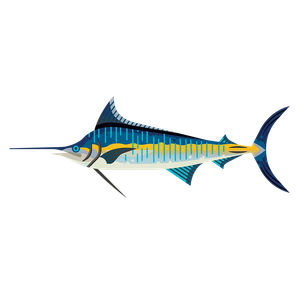
Swordfish
What to check for
Location
North Pacific
Technical location
Pacific, Eastern Central, Pacific, Northeast, Pacific, Northwest, Pacific, Western Central, All areas, All areas, All areas, All areas
Caught by
Hook & line (longline)
Rating summary
Swordfish in the western central north Pacific Ocean is not overfished and not subject to overfishing. Few appropriate management measures are in place to prevent overexploitation in future. Most swordfish is caught by longlining, which bycatches highly vulnerable and endangered species, including sharks, turtles, and seabirds.Commercial buyers should establish what measures the flag state and fleet relating to their source is taking to reduce impacts to and improve reporting of interactions with vulnerable species. Large buyers should consider supporting such improvements.Rating last updated January 2024.
Technical consultation summary
Swordfish in the north Pacific Ocean is not overfished and not subject to overfishing. This stock is assessed by the International Scientific Committee for Tuna and Tuna-like Species in the North Pacific Ocean (ISC) and managed by the Western and Central Pacific Fisheries Commission (WCPFC) and the Inter American Tropical Tuna Commission (IATTC). A new stock assessment was published in 2023 using data from 1975-2021 and covering the whole North Pacific. This is the first time that the north eastern portion of the stock has been assessed since 2007 and is an important improvement in monitoring the fishery. The spawning stock biomass (SSB) in 2021 was 35,778t, which is 218% of the level associated with Maximum Sustainable Yield (16,388t). Therefore, the stock is not in an overfished state. Fishing mortality (F) was around 0.09 in each year between 2019 and 2021, equating to 49% of FMSY (0.18). Therefore, the stock is not subject to overfishing. Few appropriate management measures are in place for north Pacific Ocean swordfish. There is no management plan and no catch limits. Observer coverage, which is important for ensuring accurate data on catch and bycatch, is too low. Management measures that apply to tuna fisheries, in particular albacore and bigeye, are expected to also benefit swordfish stocks. Catches overall have been declining while catch per unit effort has been increasing. However, while there are currently no concerns for stock status, there is little in place to prevent future overexploitation. The stock assessment indicates that a substantial proportion of the catch comes from south of 20N, where there are no swordfish management measures. Scientific recommendations are that both RFMOs work together to adopt reference points for fishery management. Most swordfish is caught by longlining. Only 5% observer coverage is required on large longliners, considered too low for accurate data: a minimum of 20% coverage is recommended. In addition, data recorded by longliners in the IATTC area is considered inadequate for scientific purposes and minimum data standards must be identified and introduced. While longlining is unlikely to have habitat impacts, it does bycatch highly vulnerable and endangered species, including sharks, turtles, and seabirds. In the WCPFC and IATTC areas, there are regulations for sharks and rays, turtles, seabirds and cetaceans. Most highlight the need for better data. Some bycatch mitigation measures are in place, but they often don't follow scientific recommendations for best practice, and their effectiveness has not been evaluated. Longlining for swordfish and albacore tuna usually happens in shallower waters than other tuna species, making it more accessible to species such as seabirds and increasing the risk of bycatch.