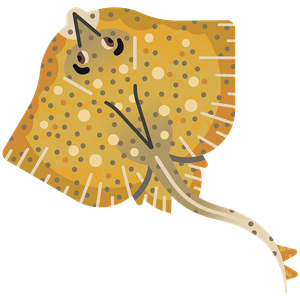
There is concern for the biomass of thornback ray the Western English Channel and concern for fishing pressure.Route 2 (data limited) scoring has been used owing to a lack of reference points for biomass and fishing pressure. Thornback ray has a low resilience to fishing pressure.There is no information available about the biomass and therefore, there is concern for the biomass.Landings have increased steadily since 2009, peaking at 538 tonnes in 2021. Landings in 2021 were more than triple the advice given by ICES (170 tonnes). Therefore, there is concern for fishing pressure.ICES advises that when the precautionary approach is applied, landings should be no more than 170 tonnes in each of the years 2023 and 2024.The stock structure of thornback ray in Division 7e is unclear, and it is unclear as to whether it is discrete or associated with the neighbouring stocks in either Subarea 4 and Division 7d, or with the stock in divisions 7a and 7f-g. Until the stock structure is clarified, ICES provides advice separately for Division 7e.