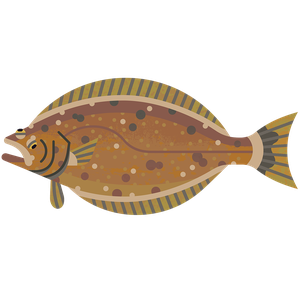
Turbot
What to check for
Location
All Areas
Production method
Tanks, flow through
Certification
 GLOBALG.A.P.
Rating summary
The GLOBALG.A.P. certification addresses a number of issues of environmental concern, the auditing of which requires farm inspections and standard criteria enforcement. GLOBALG.A.P. certified turbot feed is traceable and incorporates responsibly sourced fishmeal, soy, and palm oil. However, little is known about the composition of turbot feed and turbot is thought to have a large dependency on fish oil and fishmeal in it's diet, making it a net consumer of protein. Turbot farmed in flow-through systems in Spain have few environmental issues associated with their production. Chemicals and discharges are managed by the GLOBALG.A.P. standard and pathogens and parasites are not thought to be a regional level risk in flow-through systems. Hatchery-produced juveniles are used and escapes are unlikely. Lethal control of predators is permitted. GLOBALG.A.P. has criteria in place to ensure animal welfare and humane slaughter. For turbot production in Spain certified to the GLOBALG.A.P. standard, all regulations are in place and thought to be fully effective.This rating is based on full compliance with certification requirements. Commercial buyers should therefore ensure that full compliance has been achieved in order for this rating to be applicable.Rating last updated April 2024.
Technical consultation summary
Although turbot has a large dependency on wild fish in its diet, the GLOBALG.A.P. feed standard requires the majority of feed ingredients to be responsibly sourced. The GLOBALG.A.P. certification addresses a number of issues of environmental concern in turbot farming, the auditing of which requires farm inspections and standard criteria enforcement. Turbot farming in flow-through tanks is thought to be a small industry. GLOBALG.A.P. has criteria in place to ensure there is adequate animal welfare and humane slaughter in place. Spain has spatial planning in place.